What's new
Ram Heavy Duty Forum

Register a free account today to become a member! Once signed in, you'll be able to participate on this site by adding your own topics and posts, as well as connect with other members through your own private inbox!

Automatic Regen too often

I know this has been beat to death but I can’t find a good answer to this other than “drive it harder”. I have a 2022 Ram 2500 with a Cummins (not high output) at roughly 8500 miles I got the regen too often code and my mileage dropped from roughly 17 average to 14, took it to the dealer and they said I need to drive it harder. At this point my towing miles were at 2,000 miles so I’m towing 9k lbs 25% of the time. I know that’s not a lot.

At 9,00 miles (500 miles later) my mpg is down to 12.6 and I get another regents too often code. Back to the dealer and they tell me ”you need to drive it harder” they do the manual regen and send me on my way.

Now I start tracking my auto regen from the dpf screen, I leave the dealer still in auto regen, put 363 miles on the truck at highway speeds up and down canyons, auto regen finally shuts off…. For 22 miles, truck goes back into auto regen, I have 263 miles since then and the truck is still in auto regen. That 263 miles is me flooring it from every stop light and averaging roughly 90mph on the Highway, hitting 102 at times which apparently is the top speed for the truck. Around 150 miles into this regen I hooked a 4k lbs trailer to the truck and started just driving around with that trailer connected to try and get it out of regen. Mileage is still at 12.8ish.

Called the dealer last night and they said all they can do is put it in manual regen in the parking lot. They tell me they have one other person with this problem and that it’s my driving habits. At this point I’m calling BS, I have about 20 diesel trucks in my parking lot at work, most these guys live within 20 miles of this place and pretty much all of them still have brand new hitches on their trucks, all of them that I talk to either tow smaller trailers than I do, or less often or not at all. I’m having a hard time believing it’s my driving habits when 25% of my miles are towing and only one other customer has this problem. Has anyone else found a fix for this? Thanks!
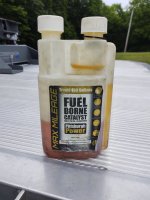
I had a trailer delivered from southn carolina the Guy who delivered it had a 3500 laramie set up nice for all types of towwing . I had recently purchased my 3500 BigHorn in our discusion he said he delivers for Kaufman trailers full time. He swore by and recommended Fuel Borne Catalyst from Pittsburgh Power it changes the burn rate of Diesel to a better burn = better fuel mielage and reduced soot. I have been using it since my order came in. he say he uses less DEF fluid gets better mielage and greatly reduces the soot . I received enough to treat 800 gall's for $73.00.
 

Attachments

  • IMG_20250529_075948160.jpg
    IMG_20250529_075948160.jpg
    392.4 KB · Views: 27
quick update from my never-ending saga. Ram came out to the dealer to do more test, and now they want to throw a set of injectors at it. Tech was driving it home and like before it was regenning every 60ish miles.
 
I suppose exhausting all avenues , but really, injectors.......how are injectors influencing regeneration.
 
I suppose exhausting all avenues , but really, injectors.......how are injectors influencing regeneration.
Yes leaking injectors can cause regen problems, dinky 503 here on HD Rams had regens problems, had his DPF replaced a few times, one of the things they found was he had leaking injectors that caused not only several oil contamination it also caused oil growth, this is a big reason to keep an eye on your oil level....
 
Wow this thread got bigger than I expected, I haven't been paying any attention to this really since my dealer installed the new DPF, well fast forward to ~33,000 miles and I get another Regen too frequently CEL. I've been tracking my regens since roughly 10k miles in the truck and since the new DPF I've been getting ~150 miles between automatic regens. All of a sudden I'm between 40-80 miles between automatic regens. The truck will go to the dealer next week where I'm sure they'll do a standing regrn and send me on my way by we'll see.

On a side note I took the truck on a road trip of around 2k miles over the spring while towing my ~9k lb car hauler, I averaged 8mpg and in the trucks defense I do tow around 75-85 mph this was a trip from SLC>Vegas>LA>Santa Cruz>SLC so a decent amount of hills too.

During that trip the truck didn't go into automatic regen once but I did use a full tank of DEF.

This is off topic for this post for sure and I can look elsewhere but I'm curious what MPG others are getting while towing similar to me.

Once the truck goes to the dealer and they update me I'll make sure to post an update but at this point if I have to go back down the road I did last time with a new DPF I'm going to seriously consider fixing the truck assuming it's under warranty still (4 years 34k miles) then selling it.
 
Wow this thread got bigger than I expected, I haven't been paying any attention to this really since my dealer installed the new DPF, well fast forward to ~33,000 miles and I get another Regen too frequently CEL. I've been tracking my regens since roughly 10k miles in the truck and since the new DPF I've been getting ~150 miles between automatic regens. All of a sudden I'm between 40-80 miles between automatic regens. The truck will go to the dealer next week where I'm sure they'll do a standing regrn and send me on my way by we'll see.

On a side note I took the truck on a road trip of around 2k miles over the spring while towing my ~9k lb car hauler, I averaged 8mpg and in the trucks defense I do tow around 75-85 mph this was a trip from SLC>Vegas>LA>Santa Cruz>SLC so a decent amount of hills too.

During that trip the truck didn't go into automatic regen once but I did use a full tank of DEF.

This is off topic for this post for sure and I can look elsewhere but I'm curious what MPG others are getting while towing similar to me.

Once the truck goes to the dealer and they update me I'll make sure to post an update but at this point if I have to go back down the road I did last time with a new DPF I'm going to seriously consider fixing the truck assuming it's under warranty still (4 years 34k miles) then selling it.
2 years and no dice. Craziness. Have you been continuing to use the same service department this whole time?
 
2 years and no dice. Craziness. Have you been continuing to use the same service department this whole time?
Initially I went to the dealer that I purchased the truck from, then swapped to a closer dealer under the same chain. That's where I got most of my run around, then I finally took it to a different dealer where they initially replaced the DPF, I've talked to a couple dealers about the low miles between regens but no one will look at it without the CEL, now that I have the CEL in taking it back to the dealer that replaced the DPF.
 
Even 150 miles between regens is still far too frequent, hopefully you can work with them to get a solution worked.
 
Wow this thread got bigger than I expected, I haven't been paying any attention to this really since my dealer installed the new DPF, well fast forward to ~33,000 miles and I get another Regen too frequently CEL. I've been tracking my regens since roughly 10k miles in the truck and since the new DPF I've been getting ~150 miles between automatic regens. All of a sudden I'm between 40-80 miles between automatic regens. The truck will go to the dealer next week where I'm sure they'll do a standing regrn and send me on my way by we'll see.

On a side note I took the truck on a road trip of around 2k miles over the spring while towing my ~9k lb car hauler, I averaged 8mpg and in the trucks defense I do tow around 75-85 mph this was a trip from SLC>Vegas>LA>Santa Cruz>SLC so a decent amount of hills too.

During that trip the truck didn't go into automatic regen once but I did use a full tank of DEF.

This is off topic for this post for sure and I can look elsewhere but I'm curious what MPG others are getting while towing similar to me.

Once the truck goes to the dealer and they update me I'll make sure to post an update but at this point if I have to go back down the road I did last time with a new DPF I'm going to seriously consider fixing the truck assuming it's under warranty still (4 years 34k miles) then selling it.
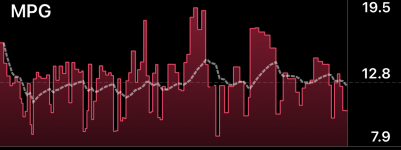
I get 8-11 mpg towing 36ft bumper pull travel trailer. Usually around 18.5k-19k total weight and try to keep it under 70mph.
I get 12-14 tooling around town. Unloaded, highway I’ll get 17-19. Have never had a tank over 20.

This chart is ~3.5 years of fill ups since new

1755729148406.png
 
Update on mine: Changed driving habits a bit, bought edge insight to monitor egt's and dpf percentage, new air filter, archoil 6400 and 6500. Just had what I believe is the first 24 hour Regen at about 1000 miles. Towed a 60 mile run at about 600 miles. Other than that unloaded. I am not sure if it was a single item, combination or just pure luck but I will take it. Once warranty is up weight loss will be scheduled.
 
Update on mine: Changed driving habits a bit, bought edge insight to monitor egt's and dpf percentage, new air filter, archoil 6400 and 6500. Just had what I believe is the first 24 hour Regen at about 1000 miles. Towed a 60 mile run at about 600 miles. Other than that unloaded. I am not sure if it was a single item, combination or just pure luck but I will take it. Once warranty is up weight loss will be scheduled.
Thanks for the update.
A quick update on mine since the fuse incident. After finding the fuses could be seated more, my immediate next regen was at 240 miles (much better than 80 that I was normally getting). Then the next regen was at 165 miles. My last regen was 205 miles. Again, all these are much better than the 80 I was getting for several months prior.
Even with the better regen frequency, I couldn’t take it any longer. Changed my oil, noticed oil dilution again. It’s now been “fixed”, permanently… and I couldn’t be happier. It’s a new truck. I should’ve done this months ago.
 
Update on my saga. Dealer got word from Ram they wanted to replace the EGR and retest before they throw injectors at it. Replaced the EGR and they put 200 miles on it and called it good. I go pick it up and it regens as I drive it off the lot. Call the dealer and the tech states that normal for the miles they drove. He claims 200 miles is normal for a regen and that’s about what they put on it. I call ******** but let them know I’ll track it. After it regens it goes sub 100 miles before it regens again. Let them know and have an appointment on 9/10 to drop it off. It needs to have the hood painted and then injectors are gonna get thrown at it. It’s also doing this neat thing where you from reverse to drive it take a second to engage and makes a slipping noise.

I called Ram cares and they are going to have some call me. I have no idea how they think that throwing the trucks value on parts at it will make it all better.
 
Update on my saga. Dealer got word from Ram they wanted to replace the EGR and retest before they throw injectors at it. Replaced the EGR and they put 200 miles on it and called it good. I go pick it up and it regens as I drive it off the lot. Call the dealer and the tech states that normal for the miles they drove. He claims 200 miles is normal for a regen and that’s about what they put on it. I call ******** but let them know I’ll track it. After it regens it goes sub 100 miles before it regens again. Let them know and have an appointment on 9/10 to drop it off. It needs to have the hood painted and then injectors are gonna get thrown at it. It’s also doing this neat thing where you from reverse to drive it take a second to engage and makes a slipping noise.

I called Ram cares and they are going to have some call me. I have no idea how they think that throwing the trucks value on parts at it will make it all better.
Don’t worry, Ram doesn’t have any idea how to make it better either, that’s why they are just throwing parts at it like a shade tree mechanic.

It’s an absolute joke that they can sell you a 90,000 dollar truck, but not be able to diagnose an emissions system that comes on it 6 years after it’s been released.
 
Update on my saga. Dealer got word from Ram they wanted to replace the EGR and retest before they throw injectors at it. Replaced the EGR and they put 200 miles on it and called it good. I go pick it up and it regens as I drive it off the lot. Call the dealer and the tech states that normal for the miles they drove. He claims 200 miles is normal for a regen and that’s about what they put on it. I call ******** but let them know I’ll track it. After it regens it goes sub 100 miles before it regens again. Let them know and have an appointment on 9/10 to drop it off. It needs to have the hood painted and then injectors are gonna get thrown at it. It’s also doing this neat thing where you from reverse to drive it take a second to engage and makes a slipping noise.

I called Ram cares and they are going to have some call me. I have no idea how they think that throwing the trucks value on parts at it will make it all better.
I have only had one service manager tell me how many miles between regens is classified as normal, he said with mixed city hwy driving you should get 400-450 miles between regens, I get 7-750 miles between regen with mixed city hwy /driving, the longest i have gotten was 1149 miles that was from 99% hwy driveling at speeds between 70-80 MPH this summer...
 
I have only had one service manager tell me how many miles between regens is classified as normal, he said with mixed city hwy driving you should get 400-450 miles between regens, I get 7-750 miles between regen with mixed city hwy /driving, the longest i have gotten was 1149 miles that was from 99% hwy driveling at speeds between 70-80 MPH this summer...

Regens aren’t based on miles. They are based on hours or soot, so that’s a more direct way to look at frequency.
 
“Drive it harder” is never the fix for this issue, and in many ways can actually increase the problem. “Flooring it from every stop light” is definitely not helping, but might actually be contributing to increased soot-loading. These trucks need to see moderate to heavy loading for long durations in order for passive regeneration to take place. When active regeneration is occurring, the fuel being pumped into the exhaust system is used to increase the temp in the DPF to clean the soot out. In either case, constant sustained reasonable RPMs is what is best. Regeneration, wether active or passive, is all about temperature, time, and engine efficiency. Wildly varying engine rpm, demanding excessive fuel for “flooring it” and other attempts to “drive it hard” really don’t contribute to helping your situation. That’s lousy advice from a dealership and a classic example of how misinformed / uninformed some of these dealerships are.

There’s a method for diagnosing this problem and they’re clearly not following it. I’m sure they scanned the truck for DTCs. What codes were present? Only P2459? Is the truck currently updated with the latest software flashes / program payloads / TSB’s etc?

Air filter is step one. If you’re running a stock intake, you need the correct air filter in the box. Mopar 53034051AB or Fleetguard AF27684. If you have that, move on. If not, change that first.

Charge air leaks and exhaust leaks. Any sign of a boost leak on the engine? Clamps, hoses, tubes, gasketed surfaces, and the intercooler itself need to be checked. Exhaust system leaks can also cause this issue.

Fuel system issues can cause this problem also. Are you running good quality fuel filters and changing them regularly as needed / recommended? Any codes in the pcm about fuel delivery issues? Any sign of fuel in the engine oil? Leaky injectors can cause issues with the emissions system.

Turbocharger issues. Any sign of a low boost scenerio? Any codes about turbocharger not functioning as intended?

Did they scan the truck to see what the estimated soot load is in the DPF when you brought it in? Did they perform a stationary regeneration to see if it would clean itself out? What was the estimated soot load after a successful parked regeneration? Are you getting errant readings from the DPF differential pressure sensor? Are the sensors clean? Any sign of a visible obstruction in the DOC / DPF?

Seems like some dealers see P2459 and either like to blame it on the customer, or make up excuses and run away from the work. It is not an easy one to diagnose due to the complexity of the entire system and all the different variables that can cause or be contributing factors to the regeneration frequency issue. In any event, the dealer you’re currently using doesn’t seem to either want to handle the problem for you, or they have a serious lack of understanding of how these systems function and must be diagnosed.

“Drive it harder” is almost never the answer.

The emissions intervention strategies on these trucks are designed in such a way as to make sure the DPF gets cleaned out, no matter how the truck is used….provided everything is functioning as intended. That’s not to say it’s perfect, as there are many things a user can do to aggravate emissions issues (excessive idling, short-tripping, etc.) but generally speaking if you’re even moderately “using” the truck, you shouldn’t have any issues. I’ve owned several stock emissions Cummins trucks as daily drivers and have logged well over 100k in mileage with zero emissions related issues. (One faulty def injector on my current 2022 that failed within the first few thousand miles).

This problem is extremely common on 2022’s and now 2023’s it seems.

This is good information. Stupid question, but anyone have suggestions on best way to check for exhaust system leaks? Is this just using soapy water all along the exhaust system?

I have frequent regents, but am getting the P244A code (diesel particulate filter differential pressure too low). I can see the differential number is going negative when I get the “Exhaust System requires service” EVIC message. After replacing the DPF pressure differential sensor and cleaning out the tubes and hoses, it goes away. The P244A code comes back after most regens and then, so far, has gone away after the DPF has filled up a bit more. It makes me suspect a leak upstream of the DPF. This time, however, the negative differential readings look to be much larger than before (-0.9 vs -0.4 or less), so maybe whatever is the cause is degrading. Other than occurring only after a regen, there seems to be a correlation with wet/rainy weather too.

Also, any suggestions on how to check for an obstruction in the DOC / DPF?
 
This is good information. Stupid question, but anyone have suggestions on best way to check for exhaust system leaks? Is this just using soapy water all along the exhaust system?

I have frequent regents, but am getting the P244A code (diesel particulate filter differential pressure too low). I can see the differential number is going negative when I get the “Exhaust System requires service” EVIC message. After replacing the DPF pressure differential sensor and cleaning out the tubes and hoses, it goes away. The P244A code comes back after most regens and then, so far, has gone away after the DPF has filled up a bit more. It makes me suspect a leak upstream of the DPF. This time, however, the negative differential readings look to be much larger than before (-0.9 vs -0.4 or less), so maybe whatever is the cause is degrading. Other than occurring only after a regen, there seems to be a correlation with wet/rainy weather too.

Also, any suggestions on how to check for an obstruction in the DOC / DPF?
Leaks upstream of the DPF are going to be nice & black from all the soot. Should be pretty easy to find visually.
 
This is good information. Stupid question, but anyone have suggestions on best way to check for exhaust system leaks? Is this just using soapy water all along the exhaust system?

I have frequent regents, but am getting the P244A code (diesel particulate filter differential pressure too low). I can see the differential number is going negative when I get the “Exhaust System requires service” EVIC message. After replacing the DPF pressure differential sensor and cleaning out the tubes and hoses, it goes away. The P244A code comes back after most regens and then, so far, has gone away after the DPF has filled up a bit more. It makes me suspect a leak upstream of the DPF. This time, however, the negative differential readings look to be much larger than before (-0.9 vs -0.4 or less), so maybe whatever is the cause is degrading. Other than occurring only after a regen, there seems to be a correlation with wet/rainy weather too.

Also, any suggestions on how to check for an obstruction in the DOC / DPF?
Might be time to remove an upstream EGT sensor and fish a small borescope in there. You need to eyeball both the inlet and outlet faces of both the DOC and DPF. Usually if there’s media damage to either, it’s pretty evident when you’re actually looking at it. If you don’t have a borescope small enough to enter through the sensor ports, might have to physically remove the system and put eyes on it. Often when there’s DPF internal damage, you’ll also get a P2002 code and also see visible soot at the tailpipe. Theoretically the PM sensor aft of the SCR should be detecting elevated levels of soot flowing through the system……theoretically.
 
Might be time to remove an upstream EGT sensor and fish a small borescope in there. You need to eyeball both the inlet and outlet faces of both the DOC and DPF. Usually if there’s media damage to either, it’s pretty evident when you’re actually looking at it. If you don’t have a borescope small enough to enter through the sensor ports, might have to physically remove the system and put eyes on it. Often when there’s DPF internal damage, you’ll also get a P2002 code and also see visible soot at the tailpipe. Theoretically the PM sensor aft of the SCR should be detecting elevated levels of soot flowing through the system……theoretically.
Thanks a lot mbarber84. Very helpful. I have located the EGT sensor just upstream of the DPF (and after the DOC. It is so tight up there I’m not even sure I can get a wrench in there to remove it. There is a largish cross member (or maybe it’s part of the skid plates) that really makes the angles and space tight. Have you inspected with a borescope without having to remove the exhaust?
 
Back
Top