What's new
Ram Heavy Duty Forum

Register a free account today to become a member! Once signed in, you'll be able to participate on this site by adding your own topics and posts, as well as connect with other members through your own private inbox!

Automatic Regen too often

Units, I have the exact same experience you have. If my truck has been running for a while (usually 30-45min, but can be less) if I step on the gas and really get it going the DPF% will drop dramatically...it can drop 5% per pedal stomp. Sometimes I use this just to clear 5-10% before I get to my house from the highway. I find this behavior of the truck very off though.
It doesn’t sound or seem logical that 10% of the soot load in the DPF would passively regenerate out that quickly. Not denying what you’re experiencing, but it makes me wonder if that’s just another indicator that something isn’t reading correctly. To put it into a comparative example, with a heavy trailer on the back and an increase in engine loading, I don’t typically see that much of a decrease in soot load that quickly. Obviously it will passive regenerate better with a load on it, but it still isn’t a rapid process. (Or at least it’s not with my truck) maybe it’s supposed to be? I have always operated under the understanding that passive regeneration takes more time as you’re typically talking about EGT’s in the 600-800°F range rather than the 900-1200°F that’s common under active regeneration. In an unloaded, non-towing condition, with a soot load triggered active regeneration, it typically takes my truck 20 minutes of highway driving at 70-75mph in order to return the soot level to “0%”. EGT’s usually run around 1100°F for about 2/3 of that time. If it takes 20 minutes @ 1000°F to wipe out the soot, I find it hard to believe that 10% would be converted out in a short acceleration period where temperatures are probably around 600-700°F.

The inconsistency of how these trucks operate is baffling to me.
 
8.9 is pulling my trailer without the trailer we are getting 12.6 and yes on the code 5 times and they are unable to diagnose the issue just keep clearing it and why I have opted to go to another dealer
Keep us in the loop on what the other dealer tries or discovers. 12.6mpg unloaded is pretty abysmal mileage. Is this a 3500 HO?

My 3500 HO typically averages around 15mpg where the majority of the operation is unloaded on the highway at 70mph+
 
There doesn’t seem to be a one fix fixes all. It could be anything from the air filter to the DPF and anywhere in between. The only commonality any have had is staying away from biodiesel as much as possible and using the Archoil fuel additive. Your truck sounds like it could be a charge air leak or EGR malfunctioning. The only way to know for sure is check everything between the air filter and the outlet to the DPF. All sensors and connections and the turbo for oil leaking into the exhaust. And the CCV filter.
Too many systems converge together to make regeneration happen (or not happen). That’s the problem with these frequent regen issues. A one size fits all solution is an impossibility. There might be whole groups of trucks experiencing the same systems, but the cause could be very different. It’s really no wonder that the vast majority of those who experience issues like these end up taking the more….. permanent…..approach to fixing the problem. I find myself leaning that way more and more every day. I miss the golden years of diesel pickup ownership.
 
I
It doesn’t sound or seem logical that 10% of the soot load in the DPF would passively regenerate out that quickly. Not denying what you’re experiencing, but it makes me wonder if that’s just another indicator that something isn’t reading correctly. To put it into a comparative example, with a heavy trailer on the back and an increase in engine loading, I don’t typically see that much of a decrease in soot load that quickly. Obviously it will passive regenerate better with a load on it, but it still isn’t a rapid process. (Or at least it’s not with my truck) maybe it’s supposed to be? I have always operated under the understanding that passive regeneration takes more time as you’re typically talking about EGT’s in the 600-800°F range rather than the 900-1200°F that’s common under active regeneration. In an unloaded, non-towing condition, with a soot load triggered active regeneration, it typically takes my truck 20 minutes of highway driving at 70-75mph in order to return the soot level to “0%”. EGT’s usually run around 1100°F for about 2/3 of that time. If it takes 20 minutes @ 1000°F to wipe out the soot, I find it hard to believe that 10% would be converted out in a short acceleration period where temperatures are probably around 600-700°F.

The inconsistency of how these trucks operate is baffling to me.
Its almost impossible for mine to have any passive regeneration running empty or unloaded. I have to run speeds in excess of 75 mph consistently for over an hour for it to drop any at all. But I can hook to the Travel Trailer and it is empty within 20 miles running below 65 mph.
 
I

It’s almost impossible for mine to have any passive regeneration running empty or unloaded. I have to run speeds in excess of 75 mph consistently for over an hour for it to drop any at all. But I can hook to the Travel Trailer and it is empty within 20 miles running below 65 mph.
Meanwhile mine can run unloaded 12 miles to work and 12 miles back home Monday through Friday, all highway at 70-75mph, from November to March and never register a single tick on the DPF gauge and regen every 24 engine hours.

But come April through October it can’t.

It makes zero sense.
 
im bored enough at work that if i could get a diagram of every single nut and bolt and sensor and what not on these trucks I'd love to sit down and compare them between a 18-21 ram and a 22-23 ram. there has to be something different.
 
im bored enough at work that if i could get a diagram of every single nut and bolt and sensor and what not on these trucks I'd love to sit down and compare them between a 18-21 ram and a 22-23 ram. there has to be something different.
Supposedly the fuel injectors are different for 2022+ but I’ve never seen proof of that. Not sure what else was changed.
 
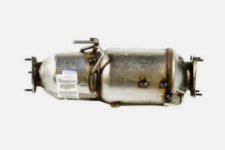
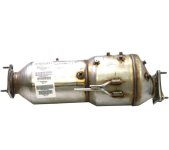
Just realized something else that’s very interesting. I was reviewing all of the trucks on my regen frequency sheet and thought it was odd that I have almost no cab & chassis trucks on the list. Initially I thought it might be due to the tuning differences and the fact those trucks are typically loaded out or towing heavy. But the more I thought about it, the pickups do as much heavy towing. Wondered what else might be different and sure enough I find this.

This is the DOC / DPF assembly from a 2019+ pickup:IMG_7961.jpeg

This is the DOC/DPF assembly from a 2019+ cab & chassis 4500/5500:
IMG_7962.jpeg
 
Interesting, there is definitely a difference in air flow between the 2. Few more bends than in the c&c. Would like to see the difference in airflow from one end to the other between the two. You would think more turbulence would be less efficient vs a straight flow.
 
Just realized something else that’s very interesting. I was reviewing all of the trucks on my regen frequency sheet and thought it was odd that I have almost no cab & chassis trucks on the list. Initially I thought it might be due to the tuning differences and the fact those trucks are typically loaded out or towing heavy. But the more I thought about it, the pickups do as much heavy towing. Wondered what else might be different and sure enough I find this.

This is the DOC / DPF assembly from a 2019+ pickup:View attachment 76106

This is the DOC/DPF assembly from a 2019+ cab & chassis 4500/5500:
View attachment 76107

There is a difference of sorts since C&C's are detuned to 800lbs of tq, 360hp
 
There is a difference of sorts since C&C's are detuned to 800lbs of tq, 360hp
Yeah I know the horsepower and torque are different, that’s why I said the tuning was different. They also have slightly different emissions programming. Regeneration kicks in at a different soot load value than it does on the pickups.
 
Although I follow these threads pretty closely, I haven't chimed in lately. My '22 3500 HO was having as bad a regen problem as anyone (except for @Dinky503 ), and was constantly having to drain and change my diluted engine oil. I was very fortunate to have a good dealership mechanic who is also a friend to diagnose and work on my truck. We ran the gamut with air filters, boost tube, MAFS, and fuel system tests. He even removed and inspected the fuel pump, which was fine. Most of this work was done under open STAR cases. The last attempted fix was replacing the DPF. That happened back in March and my truck is now operating more or less as intended.

I keep a close eye on the DPF screen and when it starts to creep up I take in on a long steep drive to make it passively regen. The drive is about 30 miles round trip and includes about 2,000' elevation change (from 4,000' to 6,000' and back). It will usually clear with one trip up the steep part (10 - 12 minutes), but occasionally I'll have to take it up one more time. I might do this once a week or so and it works for me. Using this method, and except for one instance, I only have timed regens now. I started using the Archoil additives last month and it does seem to slightly improve the regen issue, as well as maybe a mile or 2 per gallon in fuel efficiency. These are purely anecdotal observations, but I'll take what I can get and will continue with the Archoil treatments.

As stated above, there doesn't seem to be one fix to fix all, but I wanted to update my experience on this thread for anyone interested.
 
Last edited:
It doesn’t sound or seem logical that 10% of the soot load in the DPF would passively regenerate out that quickly. Not denying what you’re experiencing, but it makes me wonder if that’s just another indicator that something isn’t reading correctly. To put it into a comparative example, with a heavy trailer on the back and an increase in engine loading, I don’t typically see that much of a decrease in soot load that quickly. Obviously it will passive regenerate better with a load on it, but it still isn’t a rapid process. (Or at least it’s not with my truck) maybe it’s supposed to be? I have always operated under the understanding that passive regeneration takes more time as you’re typically talking about EGT’s in the 600-800°F range rather than the 900-1200°F that’s common under active regeneration. In an unloaded, non-towing condition, with a soot load triggered active regeneration, it typically takes my truck 20 minutes of highway driving at 70-75mph in order to return the soot level to “0%”. EGT’s usually run around 1100°F for about 2/3 of that time. If it takes 20 minutes @ 1000°F to wipe out the soot, I find it hard to believe that 10% would be converted out in a short acceleration period where temperatures are probably around 600-700°F.

The inconsistency of how these trucks operate is baffling to me.
I agree, it makes very little sense, but that is what is happening. I also feel like this points to a sensor issue, tune/calculation issue, or air issue. I’m at a loss though. I wouldn’t be surprised if you experienced the same thing. Get it nice and hot and the wide open throttle it on surface streets and you will see it knock off a few %s on the dpf calc in your scan tool.
 
GSBrockman from the Cummins Diesel Forum has a 22’ C&C 4500 and I don’t think he has any regen issues but he pretty much keeps his truck loaded or towing probably at least 99% of the time. His truck is not as picky about air filters as ours either. He runs whatever he has available. Or atleast according to his post.
 
Just realized something else that’s very interesting. I was reviewing all of the trucks on my regen frequency sheet and thought it was odd that I have almost no cab & chassis trucks on the list. Initially I thought it might be due to the tuning differences and the fact those trucks are typically loaded out or towing heavy. But the more I thought about it, the pickups do as much heavy towing. Wondered what else might be different and sure enough I find this.

This is the DOC / DPF assembly from a 2019+ pickup:View attachment 76106

This is the DOC/DPF assembly from a 2019+ cab & chassis 4500/5500:
View attachment 76107
Cab and chassis doesn’t have an egr bypass like pickups do
 
Just a quick update on the DPF differential pressure sensor ground wire relocation:

Talked to the owner today. He has been hauling a 16,000lb. excavator around with it. Truck has regenerated 4 times in less than 100 miles.

So you can be assured the ground wire didn’t fix the issue. He called the dealer back and complained…

Dealers response: “Call us back when the check engine light comes on”


:mad:
 
Likely nobody cares but I asked a professor at our local college that was a research chemist for 3M, Dr. Gratton, about these additives.

I don't remember the exact names but he said almost all of them use some ratio of a type of alkyl(ine?) nitrate, an aromatic hydrocarbon with benzene, something called if I remember correctly ethyl hexane or hexane ethyl and petroleum distillates. He said some might have methanol for water.

At the ratio of 1:1280 there's zero chance of any mileage gains and any DPF cleaning would be extremely unlikely. He mentioned there could be a slight cetane boost but no chance of the 8 points claimed at that ratio. He did mention the hexane stuff is a solvent and would have minor cleaning properties which might help dirty injectors.

He also mentioned engine oil can make a difference. I didn't know this but some have relatively high metal which ultimately contaminates the DPF and will not burn off. Short term some oil is high ash which would contribute to more frequent regens if the truck is using some oil.

Maybe one of our chemist members could expound on this, I've never heard of some of those chemicals or what they do.

Oh, he said don't get it on you.
 
The engine oils that should be used in these engines should be those meeting API CK-4 standard, which is the low ash formulation. Started back in ‘06 with CJ-4 and then was further improved when the CK-4 was adopted. Pretty sure it’s a 1% ash requirement. Anyone running anything pre-CJ-4 or CK-4 would increase the risk of some higher ash content in the DPF. Ash content in the DPF should be lower using the correct oil, however that obviously will fluctuate truck to truck and oil to oil. These trucks shouldn’t be consuming a lot of oil. There’s been some discussion about certain oils being more volatile and that can increase consumption. I have heard some rumblings about a potential TSB coming out that may direct dealerships to reduce the total sump capacity to 11 quarts in an attempt to reduce the potential for oil aeration and excessive oil being passed through the CCV system and ultimately into the combustion chamber, thereby increasing ash downstream. It would also reduce the potential for dead hydraulic lifters…
 
Back
Top