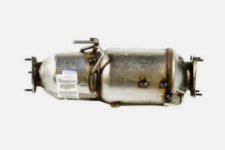

It doesn’t sound or seem logical that 10% of the soot load in the DPF would passively regenerate out that quickly. Not denying what you’re experiencing, but it makes me wonder if that’s just another indicator that something isn’t reading correctly. To put it into a comparative example, with a heavy trailer on the back and an increase in engine loading, I don’t typically see that much of a decrease in soot load that quickly. Obviously it will passive regenerate better with a load on it, but it still isn’t a rapid process. (Or at least it’s not with my truck) maybe it’s supposed to be? I have always operated under the understanding that passive regeneration takes more time as you’re typically talking about EGT’s in the 600-800°F range rather than the 900-1200°F that’s common under active regeneration. In an unloaded, non-towing condition, with a soot load triggered active regeneration, it typically takes my truck 20 minutes of highway driving at 70-75mph in order to return the soot level to “0%”. EGT’s usually run around 1100°F for about 2/3 of that time. If it takes 20 minutes @ 1000°F to wipe out the soot, I find it hard to believe that 10% would be converted out in a short acceleration period where temperatures are probably around 600-700°F.Units, I have the exact same experience you have. If my truck has been running for a while (usually 30-45min, but can be less) if I step on the gas and really get it going the DPF% will drop dramatically...it can drop 5% per pedal stomp. Sometimes I use this just to clear 5-10% before I get to my house from the highway. I find this behavior of the truck very off though.
The inconsistency of how these trucks operate is baffling to me.