What's new
Ram Heavy Duty Forum

Register a free account today to become a member! Once signed in, you'll be able to participate on this site by adding your own topics and posts, as well as connect with other members through your own private inbox!

Automatic Regen too often

My theory remains true, a software issue can present itself with 15k trouble free miles on itself. If the software senses low to no backpressure because the dpf is brand new it won’t regen. As the dpf begins to age (even at a low 15k miles) if the software begins to detect what can’t be burnt off by regen is it sensing a restriction, thinking it needs to regen? Then the viscous cycle begins. Is the program making the engine run rich loading up the dpf prematurely? This is all just spitballing as we sit here and wait for ram to get their head out of their ass in this one. Loser buys the first beer?
At 15k miles there shouldn’t be any (or nearly any) buildup in the DPF if the design of the DPF is such that regeneration can effectively remove trapped soot. The system still initiates a regen every 24 engine hours regardless of the backpressure readings. The only thing in there that regeneration doesn’t remove is ash, and there shouldn’t be any ash (or barely any) accumulation in such low miles. Unless the truck is consuming oil excessively or the operator is using an engine oil that does not meet current specs for low ash formulation. I agree with you that software has to play a part in this. But I’m leaning towards the engine side of the system. Either the overall tune itself, or the mapping by which the truck adjusts parameters. I also think there could be some changes / issues to the manufacturing of the DOC / DPF itself. Material quality changes, lower quality assembly, etc etc. We don’t know where those DPF’s are sourced from, but it’s been noted multiple times by various people that the internal structural components have failed. Covid may have forced them to temporarily switch suppliers and that other supplier may have used inferior components. We’re already seeing a similar story with the lifters. I’ve never cared for the design of this DPF to begin with. The bottleneck between the DOC and DPF seems like a point of restriction and the overall design makes it incredibly hard to service off the truck. I’m looking forward to getting my idash installed this week / weekend so that I can start data logging everything. I think I’ll have a clearer picture once I have multiple parameters mapped at the same time.
 
Based on what I’ve seen on my truck I believe it’s largely a DPF software issue.

Two days ago I left the house with the dash gauge at ~12.5%. My CTS3 showed ~70% ( I just moved it off the main page testing a software update and missed exactly what it was). Within 7 miles of easy 55 mph driving with EGT3 above 650° my dash gauge was above ~33%, and once I got up to 70 on the interstate it was in active regen.

It took over 20 miles/30 minutes for the soot based regen to complete, which is much longer than the average time based regen. I drove until it completed because I have a theory on shorting a soot based regen. Anyhow, it completed after I drove past my destination so I turned around and went downhill for 2-3 miles and got a good cooldown as I pulled into trail parking for a MTB ride. The next startup the CTS3 showed 2.0%, meaning the DPF was CLEAN. I’ll be curious to see how long the dash gauge stays at 0% since I don’t have much towing in the forecast.

The previous drive was all highway with two pass climbs with EGT3 above 850°, but no reduction of the dash gauge for passive regen. My DPF delta pressure at idle after that drive was less than 0.05 psi, DPF was clean. The way the dash gauge reacts tells me it’s a software issue, as I don’t think the engine is creating as much particulate matter in the light driving that the gauge indicates. I don’t think there is too much ignition timing creating soot, based on what the CTS3 shows for timing and rail pressure but with a DPF inline I can’t monitor the tailpipe like I did when tuning my 05.

Truck has just under 22K miles. My last soot based regen was 3 regens ago at 19K miles after a lot of back road driving at 40-55 but it did make it 21 hours. Before that the last soot based regen was at 13K miles after 3 days of 25-45 in Yellowstone. These trucks sure can tell when you have a light load, and I think it’s the low airflow that the software has an issue with determining soot loading.
 
At 15k miles there shouldn’t be any (or nearly any) buildup in the DPF if the design of the DPF is such that regeneration can effectively remove trapped soot. The system still initiates a regen every 24 engine hours regardless of the backpressure readings. The only thing in there that regeneration doesn’t remove is ash, and there shouldn’t be any ash (or barely any) accumulation in such low miles. Unless the truck is consuming oil excessively or the operator is using an engine oil that does not meet current specs for low ash formulation. I agree with you that software has to play a part in this. But I’m leaning towards the engine side of the system. Either the overall tune itself, or the mapping by which the truck adjusts parameters. I also think there could be some changes / issues to the manufacturing of the DOC / DPF itself. Material quality changes, lower quality assembly, etc etc. We don’t know where those DPF’s are sourced from, but it’s been noted multiple times by various people that the internal structural components have failed. Covid may have forced them to temporarily switch suppliers and that other supplier may have used inferior components. We’re already seeing a similar story with the lifters. I’ve never cared for the design of this DPF to begin with. The bottleneck between the DOC and DPF seems like a point of restriction and the overall design makes it incredibly hard to service off the truck. I’m looking forward to getting my idash installed this week / weekend so that I can start data logging everything. I think I’ll have a clearer picture once I have multiple parameters mapped at the same time.
It may well be faulty DPFs. Mine was not clearing after a regen which only got worse. Before I took it in 100+ miles in regen towing a 15k trailer was becoming the norm with it quickly going back into regen.
 
Based on what I’ve seen on my truck I believe it’s largely a DPF software issue.

Two days ago I left the house with the dash gauge at ~12.5%. My CTS3 showed ~70% ( I just moved it off the main page testing a software update and missed exactly what it was). Within 7 miles of easy 55 mph driving with EGT3 above 650° my dash gauge was above ~33%, and once I got up to 70 on the interstate it was in active regen.

It took over 20 miles/30 minutes for the soot based regen to complete, which is much longer than the average time based regen. I drove until it completed because I have a theory on shorting a soot based regen. Anyhow, it completed after I drove past my destination so I turned around and went downhill for 2-3 miles and got a good cooldown as I pulled into trail parking for a MTB ride. The next startup the CTS3 showed 2.0%, meaning the DPF was CLEAN. I’ll be curious to see how long the dash gauge stays at 0% since I don’t have much towing in the forecast.

The previous drive was all highway with two pass climbs with EGT3 above 850°, but no reduction of the dash gauge for passive regen. My DPF delta pressure at idle after that drive was less than 0.05 psi, DPF was clean. The way the dash gauge reacts tells me it’s a software issue, as I don’t think the engine is creating as much particulate matter in the light driving that the gauge indicates. I don’t think there is too much ignition timing creating soot, based on what the CTS3 shows for timing and rail pressure but with a DPF inline I can’t monitor the tailpipe like I did when tuning my 05.

Truck has just under 22K miles. My last soot based regen was 3 regens ago at 19K miles after a lot of back road driving at 40-55 but it did make it 21 hours. Before that the last soot based regen was at 13K miles after 3 days of 25-45 in Yellowstone. These trucks sure can tell when you have a light load, and I think it’s the low airflow that the software has an issue with determining soot loading.
I’ve noted several times where my in-dash DPF gauge didn’t seem to correlate with current operating characteristics. It seemed to lag behind, or demonstrate soot loading faster than what would even seem plausible.
 
Based on what I’ve seen on my truck I believe it’s largely a DPF software issue.

Two days ago I left the house with the dash gauge at ~12.5%. My CTS3 showed ~70% ( I just moved it off the main page testing a software update and missed exactly what it was). Within 7 miles of easy 55 mph driving with EGT3 above 650° my dash gauge was above ~33%, and once I got up to 70 on the interstate it was in active regen.

It took over 20 miles/30 minutes for the soot based regen to complete, which is much longer than the average time based regen. I drove until it completed because I have a theory on shorting a soot based regen. Anyhow, it completed after I drove past my destination so I turned around and went downhill for 2-3 miles and got a good cooldown as I pulled into trail parking for a MTB ride. The next startup the CTS3 showed 2.0%, meaning the DPF was CLEAN. I’ll be curious to see how long the dash gauge stays at 0% since I don’t have much towing in the forecast.

The previous drive was all highway with two pass climbs with EGT3 above 850°, but no reduction of the dash gauge for passive regen. My DPF delta pressure at idle after that drive was less than 0.05 psi, DPF was clean. The way the dash gauge reacts tells me it’s a software issue, as I don’t think the engine is creating as much particulate matter in the light driving that the gauge indicates. I don’t think there is too much ignition timing creating soot, based on what the CTS3 shows for timing and rail pressure but with a DPF inline I can’t monitor the tailpipe like I did when tuning my 05.

Truck has just under 22K miles. My last soot based regen was 3 regens ago at 19K miles after a lot of back road driving at 40-55 but it did make it 21 hours. Before that the last soot based regen was at 13K miles after 3 days of 25-45 in Yellowstone. These trucks sure can tell when you have a light load, and I think it’s the low airflow that the software has an issue with determining soot loading.
that is interesting that your CST3 gage showed '2' after a regen (I assume you are monitoring DPF Regen Trigger % PID) - I have idash gages and monitor that PID all the time - after an active regen and shutting off the truck, I have seen no better than 15 or so on next restart (usually its around 22). Even after 300 miles of towing my 15K 5th wheel, I have seen no lower than 9 on that reading after first engine restart. And when towing and getting good passive regen, that number will climb to the low 40s and sit there steady. With no towing, I can't get any better than 225 miles between active regens (winter) or 150ish miles (summer).
 
So I’ve read this entire thread and I’ll keep it short to what is getting me though these issues.

1. strictly use it for towing now or I get the check engine light on the third regeneration that doesn’t complete

2. I stopped spending money on hotshot because it was not working after 1500 miles of trying it.

3. I’ve learned if I drive without towing it regens a lot more.

4. I’m going to Canada this summer to have a shop put it on a diet. I’ve excepted the fact it will not be repaired. I went and bought a Ford F150 just to use for personal use. I will not be buying a Ram anymore.
 
Through Mopar, a set of six injectors for our trucks is roughly $13,000 plus the $972 worth of crossover tubes. They want $2,150 per injector and $163 per crossover tube.
I'm still waiting on something to arrive at the dealership for the install to commence. This will be my third set of new injectors to fix the regeneration problem and fuel in my oil.

I asked what would cause said items to fail so quickly and the response back was " what is your oil change frequency?". I change it every 5k and this seems to be getting a little absurd. If the truck is failing, why blame the customer?
 
So I’ve read this entire thread and I’ll keep it short to what is getting me though these issues.

1. strictly use it for towing now or I get the check engine light on the third regeneration that doesn’t complete

2. I stopped spending money on hotshot because it was not working after 1500 miles of trying it.

3. I’ve learned if I drive without towing it regens a lot more.

4. I’m going to Canada this summer to have a shop put it on a diet. I’ve excepted the fact it will not be repaired. I went and bought a Ford F150 just to use for personal use. I will not be buying a Ram anymore.
I have to ask, why won't you be buying a Ram anymore? Why are you spending the $$ on giving it a diet then? I have a 2019 Chassy cab with 30k miles and a 3500 mega cab with 70K miles in which neither has any issues with regen or for that matter any other issue.
 
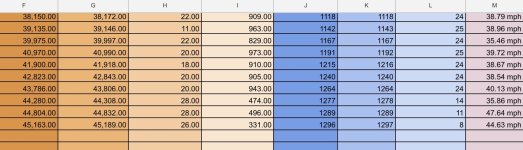
Another regen tonight on the way home from the dealership. Took them three days to replace a leaking block heater and to tell me they couldn’t find anything wrong with the DPF / regeneration. It’s “working as designed”…even though it’s taken a 66% dive in performance in the last 21 days.
Only made it 331 miles and 8 hours before it went back into regen this time. Worst stats my truck has displayed since before October 2023. IMG_6708.jpegIMG_6713.jpeg
 
I asked what would cause said items to fail so quickly and the response back was " what is your oil change frequency?". I change it every 5k and this seems to be getting a little absurd. If the truck is failing, why blame the customer?
I'd be rather curious to hear their explanation of how the oil affects the injectors? It would seem to me bad oil would have trashed the engine itself.
 
Another regen tonight on the way home from the dealership. Took them three days to replace a leaking block heater and to tell me they couldn’t find anything wrong with the DPF / regeneration. It’s “working as designed”…even though it’s taken a 66% dive in performance in the last 21 days.
Only made it 331 miles and 8 hours before it went back into regen this time. Worst stats my truck has displayed since before October 2023. View attachment 73393View attachment 73392
In my experience with my truck, it’s pretty consistent-ish. Before I made it to around 10k, I was hitting around 600 miles without towing whatsoever just driving my work commute between regens. Now at 15k and my DPF has seen some use, I can only get anywhere between 300 - 400 miles just driving my daily commute, no towing. And if I grab my trailer between regens and pull it till the gauge reaches zero I can sometimes but not always double that mileage between regens. I’ve been to the dealer about my concerns and I’ve gotten the same response - there are no set regeneration parameters, it’s going to regenerate when it determines it needs to, it is operating as designed, no check engine light keep driving. The tech did say however they believe it’s programming. Whadda ya do?
**shoulder shrug
 
In my experience with my truck, it’s pretty consistent-ish. Before I made it to around 10k, I was hitting around 600 miles without towing whatsoever just driving my work commute between regens. Now at 15k and my DPF has seen some use, I can only get anywhere between 300 - 400 miles just driving my daily commute, no towing. And if I grab my trailer between regens and pull it till the gauge reaches zero I can sometimes but not always double that mileage between regens. I’ve been to the dealer about my concerns and I’ve gotten the same response - there are no set regeneration parameters, it’s going to regenerate when it determines it needs to, it is operating as designed, no check engine light keep driving. The tech did say however they believe it’s programming. Whadda ya do?
**shoulder shrug
I just find it interesting and perplexing that the truck will go 24 hours between regeneration as long as the weather is cooler. Mine has repeated this pattern of “good in the winter, not good in the summer” for two years now. To me, it’s a software problem, or a hardware problem, or a combination of both. My drive cycles remain extremely consistent. If Ram doesn’t come up with a solution relatively soon, I know how I’m going to fix this problem. It is far from my ideal choice, but they’re really not leaving me any viable alternative. I know exactly how many active regeneration cycles are on my current engine oil, so I’ll be able to make a rough estimate of how much fuel goes into the engine from each regen cycle. Fuel in the oil is not good, and excessive fuel in the oil is unacceptable. If I want the truck to last, forcing it to run on fuel-laden oil is not conducive to engine longevity. I think I’m going to change oil at 10k this time, and see where the numbers are.
 
I'd be rather curious to hear their explanation of how the oil affects the injectors? It would seem to me bad oil would have trashed the engine itself.
I agree with this. It seems to be the fallback dealership/stellantis question. I know it isn't the old as I replace it far more often than requested and always to the recommended spec. Now diesel dilution in the oil (such as i discovered) would be another issue, but one would think that would be an issue they could diagnose and solve. Relying on more frequent oil changes to combat the effects of dilution seems like a cop out.

At this point I'm convinced they know there is an issue and are throwing parts at it to make it go away. I recorded oil level changes due to dilution everytime I drove it....showed them the pictures and was told they didn't need them and would perform their own diagnostics. Replacing the injectors again, while it may resolve the issue of oil dilution and frequency of regens for awhile, is clearly not resolving the cause or the injector failures, which lead to down the road problems.

The biggest takeaway I have from this whole experience is simple. If you do your own maintenance (oil, filters, etc.), there is a tendency to blame the client for any issues that arrise. Time and time again, they diagnose, repair and the truck is back in the shop with an emmisons related code in a short period of time. Since they "can't" figure it out, it must be something I am doing.

I would sell the truck, but honestly I couldn't pass on this problem to anyone else with good conscious. They sold a problematic vehicle and on principle it needs to be rectified.
 
Just wanted to relay some odd DPF gauge behavior since I haven't seen anything like this before. My truck has been sitting for about a week now and when I parked it (and started it today) the DPF gauge had two segments illuminated (~25% full). The truck has seen a bunch of towing over the last 1000 miles or so and I just disconnected the trailer two weeks ago. As a result, it's been almost 900 miles / 16 hours since the last active regen because of all the towing. Anyway, I needed to pick up my boat today, so I drove the truck the ~7 miles (no highways) to my storage facility. About 3 miles into the trip with the truck completely unloaded and while driving about 50 mph the DPF gauge dropped one segment. Weird, but I'll take it. I got to my boat storage facility and let the truck idle for about 10-15 minutes while I hooked up my truck. Once I finally pulled away (now hauling the boat - it's only about 3500 lbs) I got about a mile up the road and while going up a very shallow incline at around 40-45 mph the DPF gauge dropped all the way to zero. Cool.

I'm happy my gauge is back at zero, but there's no way there was enough passive regeneration over the course of my ~15 mile trip to decrease the actual soot load as much as the gauge indicated. Something is seriously fuct up with the programming of these DPF systems because today's behavior was completely out of the norm for my truck: quick soot loading when the truck is empty, relatively quick passive regeneration when towing 3000-4000 lb loads, and very slow passive regeneration when driving >75mph on the highway.

What's even more baffling is that some people clearly have a contributing issue that could also be leading to quick soot loading. This is evident because there are several folks who've reported very rapid oil level increases despite relatively normal active regen frequencies. And then there are others where the frequent regeneration issue seems to be the primary disease - these people's oil levels only increase significantly if they're unable to keep their regeneration frequency under control.

If you stuck to the regular oil change interval you'd likely experience 15 active regenerations (one every 1000 miles) during that time frame. Because of this, I would not expect 15 active regenerations (or really, even 30) to significantly affect the crankcase oil level because I would assume that Ram/Cummins designed the system to operate properly at that rate of active regeneration. But it sure seems that some people are also experiencing significant oil dilution before they go through nearly that many active regens.

So I think there's an underlying programming issue, but there are other issues floating around such that some folks' DPF soot load increases far more quickly than others.

I want to keep the truck, I really do, but I can't deal with this DPF situation and all its related side effects once my truck goes out of warranty. So far I've kept the active regenerations under control, and my oil level seems okay, but I can't keep driving up and down the interstate 100+ miles at a time to keep the DPF relatively clean (at least per the gauge). I have a while before my emissions and powertrain warranties are up, so I'll stick it out and hope for a fix before then.

This situation sucks.
 
Last edited:
Just wanted to relay some odd DPF gauge behavior since I haven't seen anything like this before. My truck has been sitting for about a week now and when I parked it (and started it today) the DPF gauge had two segments illuminated (~25% full). The truck has seen a bunch of towing over the last 1000 miles or so and I just disconnected the trailer two weeks ago. As a result, it's been almost 900 miles / 16 hours since the last active regen because of all the towing. Anyway, I needed to pick up my boat today, so I drove the truck the ~7 miles (no highways) to my storage facility. About 3 miles into the trip with the truck completely unloaded and while driving about 50 mph the gauge dropped one segment. Weird, but I'll take it. I got to my boat storage facility and let the truck idle for about 10-15 minutes while I hooked up my truck. Once I finally pulled away (now hauling the boat - it's only about 3500 lbs) I got about a mile up the road and while going up a very benign incline at around 40-45 mph the DPF gauge dropped all the way to zero. Cool.

There's no way there was enough passive regeneration over the course of my ~15 mile trip to decrease the actual soot load as much as the gauge indicated. Something is seriously fuct up with the programming of these DPF systems because today's behavior was completely out of the norm for my truck: quick soot loading when the truck is empty, relatively quick passive regeneration when towing 3000-4000 lb loads, and very slow passive regeneration when driving >75mph on the highway.

I want to keep the truck, I really do, but I can't deal with this DPF situation and all its related side effects once my truck goes out of warranty. So far I've kept the active regenerations under control, and my oil level seems okay, but I can't keep driving up and down the interstate 100+ miles at a time to keep the DPF relatively clean (at least per the gauge). I have a while before my emissions and powertrain warranties are up, so I'll stick it out and hope for a fix before then.
Lately my truck has been in the 300 mile range plus or minus just on my daily work commute of 30 miles one way. I’ve been monitoring my oil levels and have not gained a drop. So I’m just gonna keep on rolling and let it do its thing. If I get an odd uoa I may do something different. But for now, as soon as the emissions warranty is up my truck will get an undercarriage make over.
 
I agree with this. It seems to be the fallback dealership/stellantis question. I know it isn't the old as I replace it far more often than requested and always to the recommended spec. Now diesel dilution in the oil (such as i discovered) would be another issue, but one would think that would be an issue they could diagnose and solve. Relying on more frequent oil changes to combat the effects of dilution seems like a cop out.

At this point I'm convinced they know there is an issue and are throwing parts at it to make it go away. I recorded oil level changes due to dilution everytime I drove it....showed them the pictures and was told they didn't need them and would perform their own diagnostics. Replacing the injectors again, while it may resolve the issue of oil dilution and frequency of regens for awhile, is clearly not resolving the cause or the injector failures, which lead to down the road problems.

The biggest takeaway I have from this whole experience is simple. If you do your own maintenance (oil, filters, etc.), there is a tendency to blame the client for any issues that arrise. Time and time again, they diagnose, repair and the truck is back in the shop with an emmisons related code in a short period of time. Since they "can't" figure it out, it must be something I am doing.

I would sell the truck, but honestly I couldn't pass on this problem to anyone else with good conscious. They sold a problematic vehicle and on principle it needs to be rectified.
This.

I can’t sell this truck in good conscience to someone unless I know it’s running correctly. I would never want to be on the receiving end of such a transaction. Ram created this mess. I bought the truck in good faith, and have been operating it and maintaining it to the highest degree of correctness. It’s time they stand up, admit to the issue, and create an effective solution.
 
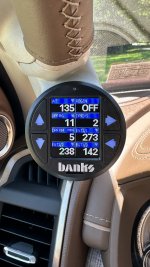
Install was very simple and quick. Less than an hour total. Added one extra day to the process because I opted to paint the stealth pod to match my interior. Now it’s time to start logging data. I only wish I had this the past seven months when everything was running beautifully. IMG_6724.jpeg
 
Install was very simple and quick. Less than an hour total. Added one extra day to the process because I opted to paint the stealth pod to match my interior. Now it’s time to start logging data. I only wish I had this the past seven months when everything was running beautifully. View attachment 73412
I have been eye balling those, that looks great. Different thread but, how do you like the functionality of it?
 
I have been eye balling those, that looks great. Different thread but, how do you like the functionality of it?
Seems incredibly good so far but I haven’t had the time to road test yet. I will make a dedicated post in here later with my review and input, once I have some seat time. The data logging feature is going to be very insightful for trying to figure out this regeneration issue.
 
I just find it interesting and perplexing that the truck will go 24 hours between regeneration as long as the weather is cooler. Mine has repeated this pattern of “good in the winter, not good in the summer” for two years now. To me, it’s a software problem, or a hardware problem, or a combination of both. My drive cycles remain extremely consistent. If Ram doesn’t come up with a solution relatively soon, I know how I’m going to fix this problem. It is far from my ideal choice, but they’re really not leaving me any viable alternative. I know exactly how many active regeneration cycles are on my current engine oil, so I’ll be able to make a rough estimate of how much fuel goes into the engine from each regen cycle. Fuel in the oil is not good, and excessive fuel in the oil is unacceptable. If I want the truck to last, forcing it to run on fuel-laden oil is not conducive to engine longevity. I think I’m going to change oil at 10k this time, and see where the numbers are.
This is exactly what my truck is doing and I only see 2 potential solutions.
1 - put the truck on a diet
2 - trade it in, I dont want to go this route, but considering a new ford, my FIL just bought one and its sweet.

Im very interested to see what you get from the data logging since our trucks seem to be behaving very similarly and I think have similar build dates IIRC. Keep us posted.
 
Back
Top