

DougB
Well-Known Member
Is the 8k the GVWR of the trailer or the empty weight?Thanks for all of the replies. I love learning new stuff ... and sorry for the 8,000K. 8K is much more realistic. ahahahah
Is the 8k the GVWR of the trailer or the empty weight?Thanks for all of the replies. I love learning new stuff ... and sorry for the 8,000K. 8K is much more realistic. ahahahah

Not sure how math gets construed as my opinion. GVWR minus payload equals curb weight. There are plenty of examples of F250 CCSB 6.7s out there with door stickers showing they weigh around 8000 lbs just like a 2500 CCSB 6.7. Fords cabs are bigger and beds are longer. They had to use aluminum to keep it from being even heavier.
It is my opinion that the 2500 can handle an extra 800lbs of payload even with the coil springs. It’s an arbitrary short coming of Ram. Leaf spring or coil spring. It’s a spring.
Ram’s 2500 GAWR add up to more than Ford’s F-250 yet the GVWR is much less, this, the payload suffers and people think you need a 3500 to haul 2000 lbs. I’ve seen 2500 CCSB 6.7s with 6000 front and 6500 rear GAWR. Newer 2500s they’ve dropped those down yet supposedly the axles and suspension are the same.
I wonder if Ram is concerned of cannibalizing 3500 sales if they made a higher GVWR option on the 2500.
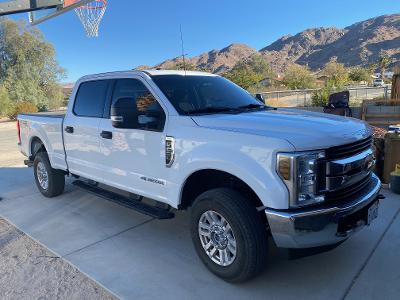
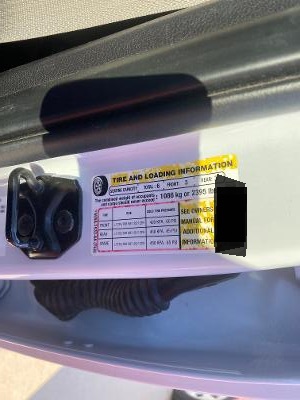
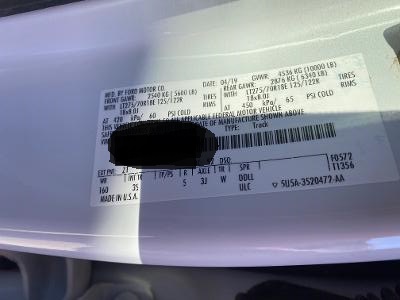
Im fully aware of how to get to payload. I'll agree youre right that there will be "plenty" (purely anecdotal BTW) of examples of F250s and Rams weighing similarly. HOWEVER... that is absolutely the exception and not the rule. The rule is, the F250 is the lighter truck. You are arguing the exception which is a straw man argument.
Here is a 2019 F250 XLT Powerstroke diesel owned by my neighbor. This truck has the same GVWR as a Ram 2500. It has power seats, power windows, power mirrors (power everything basically), telescoping wheel, center console with bucket cloth seats and upholstered door panels. Basically it is Ram's version of a nicely optioned diesel Big Horn 2500.
This truck is 4-500 lbs lighter than a similarly equipped Ram 2500 (I owned one). Period end of story.
"Leaf spring or coil spring, it's a spring"?? You do realize Ram went to the coil spring in the 2500 rear end solely for ride comfort improvement, correct?
The Ram axles are plenty strong. Very strong indeed. It's the coil springs. Actually, the coil springs are the reason Power Wagons have a lower payload and capability than a non PW truck--Their coils are even softer further illustrating my point on the 2500 diesel Rams.

GVWR ... knowing RVs are like boats and people like to go bigger I like to plan for some of that.Is the 8k the GVWR of the trailer or the empty weight?
4-500 or 700-1000 lighter? Which is it? I'd agree with the former argument but not the latter in an apples to apples comparison. The Big Horns I've looked at have payloads 2050-2250.Im fully aware of how to get to payload. I'll agree youre right that there will be "plenty" (purely anecdotal BTW) of examples of F250s and Rams weighing similarly. HOWEVER... that is absolutely the exception and not the rule. The rule is, the F250 is the lighter truck. You are arguing the exception which is a straw man argument.
Here is a 2019 F250 XLT Powerstroke diesel owned by my neighbor. This truck has the same GVWR as a Ram 2500. It has power seats, power windows, power mirrors (power everything basically), telescoping wheel, center console with bucket cloth seats and upholstered door panels. Basically it is Ram's version of a nicely optioned diesel Big Horn 2500.
This truck is 4-500 lbs lighter than a similarly equipped Ram 2500 (I owned one). Period end of story.
"Leaf spring or coil spring, it's a spring"?? You do realize Ram went to the coil spring in the 2500 rear end solely for ride comfort improvement, correct?
The Ram axles are plenty strong. Very strong indeed. It's the coil springs. Actually, the coil springs are the reason Power Wagons have a lower payload and capability than a non PW truck--Their coils are even softer further illustrating my point on the 2500 diesel Rams.
Yeah, I get that. Here are my opinions after doing a lot of research into this subject over the last 1-1.5 years before I ordered my truck.GVWR ... knowing RVs are like boats and people like to go bigger I like to plan for some of that.

Your argument about coils is laughable as they use coils on all kinds of things including locomotives and tons of heavy military trucks without issue, the only reason ford has more payload is they dropped the weight going with pop can aluminum which was a terrible idea in my books i know a few people with them 150/250/350 that hate them once winter comes as they cant go anywhere without 4x4 unless the roads are bare and dry as the rear end does not have the weight anymore… i way over do my legal payload and have not squatted my truck yetIm fully aware of how to get to payload. I'll agree youre right that there will be "plenty" (purely anecdotal BTW) of examples of F250s and Rams weighing similarly. HOWEVER... that is absolutely the exception and not the rule. The rule is, the F250 is the lighter truck. You are arguing the exception which is a straw man argument.
Here is a 2019 F250 XLT Powerstroke diesel owned by my neighbor. This truck has the same GVWR as a Ram 2500. It has power seats, power windows, power mirrors (power everything basically), telescoping wheel, center console with bucket cloth seats and upholstered door panels. Basically it is Ram's version of a nicely optioned diesel Big Horn 2500.
This truck is 4-500 lbs lighter than a similarly equipped Ram 2500 (I owned one). Period end of story.
"Leaf spring or coil spring, it's a spring"?? You do realize Ram went to the coil spring in the 2500 rear end solely for ride comfort improvement, correct?
The Ram axles are plenty strong. Very strong indeed. It's the coil springs. Actually, the coil springs are the reason Power Wagons have a lower payload and capability than a non PW truck--Their coils are even softer further illustrating my point on the 2500 diesel Rams.
Yeah, I get that. Here are my opinions after doing a lot of research into this subject over the last 1-1.5 years before I ordered my truck.
If you think you'd go 5th wheel then get a 3500. Many people will say get a dually for a large 5th wheel. I was considering a 3500 SRW when I thought I might go up to a low to mid-size 5er but we decided that we would not go that route. If you don't want to worry about numbers then go 3500 with air. The empty ride is still nice for a 1 ton truck.
If you're going to stay <10k GVWR with a travel trailer, then the 2500 would be fine, IMO. Use a WDH for added safety. If you don't go factory air ride, you can add aftermarket airbags. YES, you might go over the payload number depending on what all you load into the truck so if that's a concern to you, then go 3500. If you load your truck and 10k GVWR smartly, use a WDH, you can stay safely within GVWR and GAWR.
I did consider gas for more payload, less hassle with diesel maintenance, and less concerns about it being more a daily driver than tow vehicle, but towing with the Cummins is so effortless. I didn't want to bother with filling up at gas pumps with a trailer in tow. I also wanted to upgrade to the exhaust brake which my 06 does not have.
Do your research and figure out your personal pros and cons. There are PLENTY of these threads asking the same thing you did. Best of luck sorting out what you want!
I think the main difference will be the seats and type of leather used. The limited had nicer leather and more color options, but can only be had with bucket seats up front. The Laramie can be a bench seat or bucket seats.Thank you for replying.
My main concern now is not so much the ride but trim line differences. If we went Laramie and then added "all the toys" does it basically become a Limited with different styling or are there functional differences? It may not be a deal breaker but it isn't always obvious. Asking a dealer is a crap shoot in my experience. Perhaps I should start a thread just for that question.
I think the major differences between a limited and a trimmed-out Laramie are the LED Projector/adaptive headlights (limited) vs LED reflector (Laramie), different instrument cluster, different steering wheel (half “wood”), different belt line trim , and maybe more soft surfaces (not sure if that comes on a top-trim Laramie or not)I think the main difference will be the seats and type of leather used. The limited had nicer leather and more color options, but can only be had with bucket seats up front. The Laramie can be a bench seat or bucket seats.
As others have pointed out you can option out a Laramie almost to a Limited minus the better leather and headlights. Aside from that I think the differences are interior cosmetics.Thank you for replying.
My main concern now is not so much the ride but trim line differences. If we went Laramie and then added "all the toys" does it basically become a Limited with different styling or are there functional differences? It may not be a deal breaker but it isn't always obvious. Asking a dealer is a crap shoot in my experience. Perhaps I should start a thread just for that question.
4-500 or 700-1000 lighter? Which is it? I'd agree with the former argument but not the latter in an apples to apples comparison. The Big Horns I've looked at have payloads 2050-2250.
You've got your examples, I've got my examples. You're looking at Big Horn/XLT, I was looking at Lariat/Laramie. There are plenty of examples for both arguments. Either way, IMO, Ram is screwing its owners by staying at 10k GVWR regardless if they could do it with the current coil springs or if they needed to increase the spring rate. Ford and Chevy are giving their buyers options.
My point of a spring is a spring is F=kx, regardless of the type. If Ford really is increasing the spring rate to go to 10,800 when adding the HCTP then so be it, they do it and make a 3/4 ton with a worthy payload. Ram could do the same and I doubt many would consider the ride quality suffers.
I'm sure you know this, Power Wagons are softer for articulation off-road so you have to sacrifice something.
Your argument about coils is laughable as they use coils on all kinds of things including locomotives and tons of heavy military trucks without issue, the only reason ford has more payload is they dropped the weight going with pop can aluminum which was a terrible idea in my books i know a few people with them 150/250/350 that hate them once winter comes as they cant go anywhere without 4x4 unless the roads are bare and dry as the rear end does not have the weight anymore… i way over do my legal payload and have not squatted my truck yet
How much lighter depends on the truck, but overall the Ford is lighter. (Rule vs exception).
I guess the only disagreement is whether or not Ram is "screwing" its owners by artificially under rating the 2500 trucks. I dont think they are, but who knows i suppose.
Yeah, no. Another straw-man argument.
Obviously there are coil springs for massively heavy duty applications. This is not an argument about the coil spring or its capabilities in theory.
This is an argument about the particular coil spring used in the Ram 2500. IMO it is too soft for more GVWR and if Ram went with a stiffer, heavier duty coil, it would negate the benefit of the unloaded ride quality that the current coil provides---AT THAT POINT THEY MIGHT AS WELL GO BACK TO LEAFS.
The Ford has better GVWR for multiple reasons. 1 being they are lighter--like ive said. 2 being they can be optioned with an HD/max tow package that allows 10,800 GVWR which the Ram does not offer. It is my belief Ford can offer 10,800 because of the leaf spring rear end on the F250.
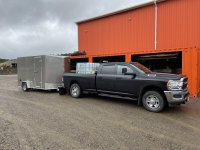
2150lbs of water plus all my hunting gear, tools, 4 jerry cans of fuel and a loaded trailer with 1600lbs sxs in it…. The 2k my payload sticker says is way under rated for what coils can do. There is still 3.5” until its at the bump stops on the rear….

Just proves my point…. Yes a 3500 does better but a 2500 can hold its own better than you make it sound…. Regaurdless of what ford rates their trucks they squat much easier than rams

 www.dieselpowerproducts.com
Other than than the rear springs, the 2014-later 2500 and 3500 SRW trucks are identical down to the last bolt. Same frame, 50KSI steel, same axles, axle ratings, same tires, no physical difference. The ONLY difference is the US Govt DOT GVWR ratings, which are mostly arbitrary depending on how the OEM markets the truck.
The coil springs in a RAM 2500 have a similar spring load to a leaf spring SRW RAM 3500. Sag with trailer loads are similar if not favoring the 2500. However, the spring rate on a 2500 is softer, hence the better ride and lower GVWR rating to fit under the arbitrary DOT 10,000lb GVWR limit.
Towing with a Rear Coil Sprung Ram 2500
Leaf springs have been part of vehicles suspension since the beginning, and on horse drawn buggies even before the motor car existed. Most passenger cars used leaf springs on all four corners until the 1940s, and on the rear until the late 1970s. Due to their industrial application, most 4wd...