
ramblinChet
Drinks Alone
- Messages
- 653
- Reaction score
- 3,137
- Points
- 93
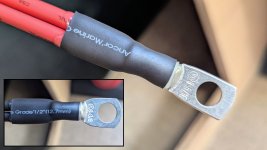
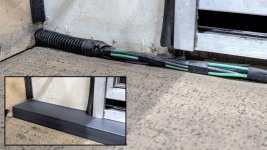
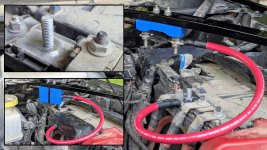
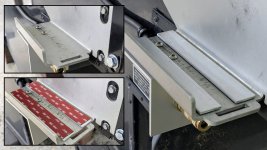
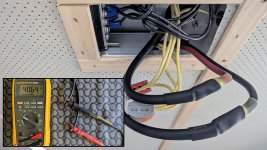
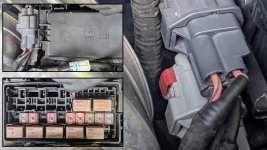
I began planning this electronics upgrade long ago, aiming to optimize the power supply to my National Luna 80L Legacy refrigerator. This critical equipment runs continuously, so selecting the appropriate wire size is essential to minimize voltage drop and heat buildup for efficient power delivery. Previously, I used the factory-provided 11 AWG wire spliced into Cerrowire 10 AWG, which performed adequately. To improve efficiency, I shortened the 11 AWG section to a few feet and completed the run with Ancor 8 AWG wire. I used an Ancor Heat Shrink Step-Down connector (#320303) to create a secure mechanical crimp between one 12-10 AWG and one 8 AWG wire. The lower inset image highlights the optional National Luna Base Mounting Plate, which I consider indispensable for a robust installation.
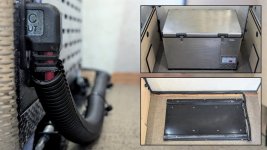
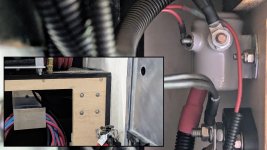
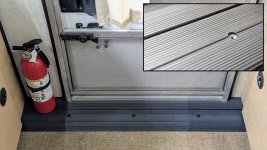
The primary image, taken from above the rear of the refrigerator, shows three of my five Rotopax Two-Gallon Water GEN2 containers stored strategically. A key goal of this build was to center weight both laterally and longitudinally while keeping it low. A low, centered center-of-gravity enhances vehicle stability and control on challenging trails, improving handling, traction, and balance. This reduces stress on the suspension and chassis, increasing safety and performance in rugged conditions. The left inset image shows spare bumpers in use, while the right inset illustrates a 3/4" square scrap wood spacer placed alongside the 8 AWG wire to prevent the Rotopax containers from resting on and damaging it. Attention to these small details is critical.
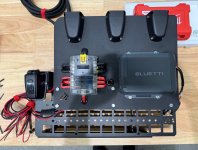
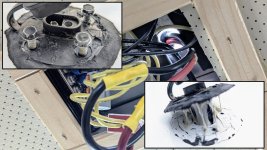
The next image depicts the rear of the INKBIRD ITC-1000F Temperature Controller and its final wire connections. On the ground side, I spliced Ancor 16 AWG primary wire to Noctua 28 AWG wire to control two cooling fans. As I was unfamiliar with integrating INKBIRD and Noctua components, I used Wago 222-413 splicing connectors, which proved effective for this application. After completing each sub-project, I conduct a thorough visual inspection, followed by electrical checks, functional testing, and commissioning. My initial settings for the controller are: TS (Temperature Set) 104°F, DS (Difference Set) 4°F, CF (Celsius/Fahrenheit) set to Fahrenheit, and HC (Heating/Cooling) set to Cooling.

The Wallas Nordic DT diesel cooktop/heater, now installed, occupies significant space at the top of the setup. I’m pleased with my decision to shift it 100mm from its original position, creating a comfortable armrest area atop the MES-K470 system. This adjustment complicated the internal layout but was worthwhile. In a compact space, a well-designed armrest enhances comfort, supports ergonomics, and reduces strain on shoulders and arms, improving functionality and relaxation.

Another image shows the underside of the Wallas unit when the K470 top is lifted. As noted in earlier posts, I positioned the K470 away from the wall to promote cooling and enhance aesthetics, making the compact area appear larger. I calculated that, with the vehicle within one degree of level along the roll axis, the top would remain open without needing to be held, confirmed through sketches, center-of-gravity calculations, and a physical test. The image also shows two 20 x 20 x 400mm T-slotted aluminum extruded bars, which provide a clamping surface and additional support for the 26-pound Wallas unit.

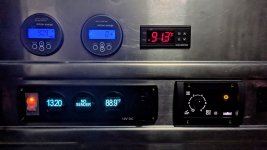
With warm weather approaching, I decided to stress-test the system in high heat. I set the TS to 104°F because this is the temperature at which my Victron Energy components begin derating output current to prevent overheating. The INKBIRD ITC-1000F in the upper right displays the MES-K470 system’s internal temperature, while the Blue Sea Systems accessory panel below shows the camper’s internal temperature.

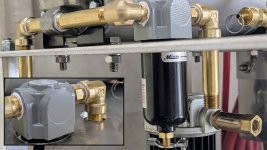
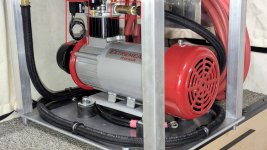
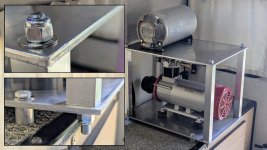
Switching focus, I’ve started building a permanent mount for my air system, using aluminum for its high strength-to-weight ratio, natural corrosion resistance, and ease of fabrication. Aluminum ensures structural integrity in extreme conditions and enhances durability in harsh environments. Maintaining a vehicle below its Gross Vehicle Weight Rating (GVWR) is critical for safety, performance, and longevity, reducing strain on the chassis, suspension, brakes, and tires while improving handling, fuel efficiency, and traction on uneven terrain.

The air system mount was designed using off-the-shelf materials, requiring only drilling and bolting - no cutting, bending, or welding. Adhering to Occam’s Razor, I prioritized a simple, efficient design that minimizes components, complexity, and potential failure points while meeting performance requirements. The assembly consists of two aluminum sheets, four square corner posts, four lengths of all-thread, four aluminum spacers, and a handful of nuts and washers. With careful planning, accurate layout, and incremental drilling, this design is accessible to others.
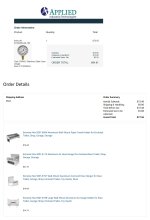
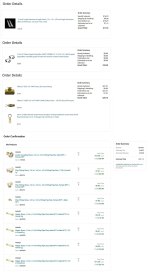
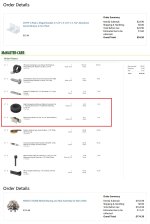
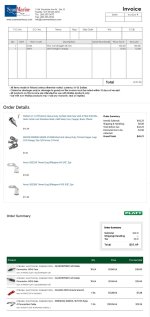
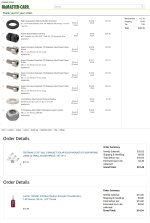
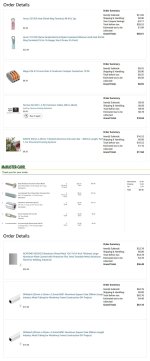
I’m documenting expenses to maintain a digital record. While not the most exciting part of the project, this is necessary for my planning, and I’m working to streamline this information. Thank you for your understanding.
After dinner, I enjoy walking at Yorktown Beach to stretch and exercise. Spending hours in a hot camper, working and dreaming of returning to the trail, requires significant self-discipline. Often, I reflect on the freedom of roaming the west, sleeping in deserts, forests, and mountains. Freedom is just another word for nothin' left to lose...

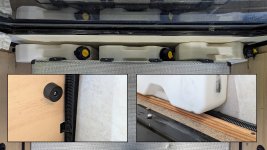
The primary image, taken from above the rear of the refrigerator, shows three of my five Rotopax Two-Gallon Water GEN2 containers stored strategically. A key goal of this build was to center weight both laterally and longitudinally while keeping it low. A low, centered center-of-gravity enhances vehicle stability and control on challenging trails, improving handling, traction, and balance. This reduces stress on the suspension and chassis, increasing safety and performance in rugged conditions. The left inset image shows spare bumpers in use, while the right inset illustrates a 3/4" square scrap wood spacer placed alongside the 8 AWG wire to prevent the Rotopax containers from resting on and damaging it. Attention to these small details is critical.
The next image depicts the rear of the INKBIRD ITC-1000F Temperature Controller and its final wire connections. On the ground side, I spliced Ancor 16 AWG primary wire to Noctua 28 AWG wire to control two cooling fans. As I was unfamiliar with integrating INKBIRD and Noctua components, I used Wago 222-413 splicing connectors, which proved effective for this application. After completing each sub-project, I conduct a thorough visual inspection, followed by electrical checks, functional testing, and commissioning. My initial settings for the controller are: TS (Temperature Set) 104°F, DS (Difference Set) 4°F, CF (Celsius/Fahrenheit) set to Fahrenheit, and HC (Heating/Cooling) set to Cooling.
The Wallas Nordic DT diesel cooktop/heater, now installed, occupies significant space at the top of the setup. I’m pleased with my decision to shift it 100mm from its original position, creating a comfortable armrest area atop the MES-K470 system. This adjustment complicated the internal layout but was worthwhile. In a compact space, a well-designed armrest enhances comfort, supports ergonomics, and reduces strain on shoulders and arms, improving functionality and relaxation.
Another image shows the underside of the Wallas unit when the K470 top is lifted. As noted in earlier posts, I positioned the K470 away from the wall to promote cooling and enhance aesthetics, making the compact area appear larger. I calculated that, with the vehicle within one degree of level along the roll axis, the top would remain open without needing to be held, confirmed through sketches, center-of-gravity calculations, and a physical test. The image also shows two 20 x 20 x 400mm T-slotted aluminum extruded bars, which provide a clamping surface and additional support for the 26-pound Wallas unit.
With warm weather approaching, I decided to stress-test the system in high heat. I set the TS to 104°F because this is the temperature at which my Victron Energy components begin derating output current to prevent overheating. The INKBIRD ITC-1000F in the upper right displays the MES-K470 system’s internal temperature, while the Blue Sea Systems accessory panel below shows the camper’s internal temperature.
Switching focus, I’ve started building a permanent mount for my air system, using aluminum for its high strength-to-weight ratio, natural corrosion resistance, and ease of fabrication. Aluminum ensures structural integrity in extreme conditions and enhances durability in harsh environments. Maintaining a vehicle below its Gross Vehicle Weight Rating (GVWR) is critical for safety, performance, and longevity, reducing strain on the chassis, suspension, brakes, and tires while improving handling, fuel efficiency, and traction on uneven terrain.
The air system mount was designed using off-the-shelf materials, requiring only drilling and bolting - no cutting, bending, or welding. Adhering to Occam’s Razor, I prioritized a simple, efficient design that minimizes components, complexity, and potential failure points while meeting performance requirements. The assembly consists of two aluminum sheets, four square corner posts, four lengths of all-thread, four aluminum spacers, and a handful of nuts and washers. With careful planning, accurate layout, and incremental drilling, this design is accessible to others.
I’m documenting expenses to maintain a digital record. While not the most exciting part of the project, this is necessary for my planning, and I’m working to streamline this information. Thank you for your understanding.
After dinner, I enjoy walking at Yorktown Beach to stretch and exercise. Spending hours in a hot camper, working and dreaming of returning to the trail, requires significant self-discipline. Often, I reflect on the freedom of roaming the west, sleeping in deserts, forests, and mountains. Freedom is just another word for nothin' left to lose...
Last edited: