What's new
Ram Heavy Duty Forum

Register a free account today to become a member! Once signed in, you'll be able to participate on this site by adding your own topics and posts, as well as connect with other members through your own private inbox!

2021 RAM 3500 Tradesman | AEV Prospector | FWC Grandby

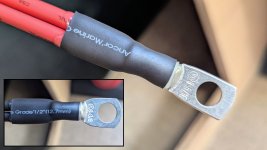
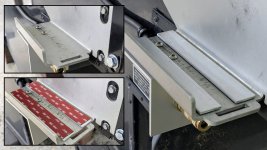
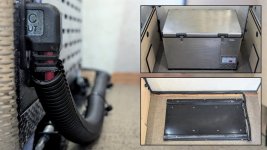
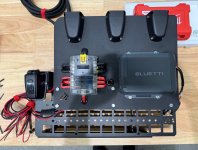
I began planning this electronics upgrade long ago, aiming to optimize the power supply to my National Luna 80L Legacy refrigerator. This critical equipment runs continuously, so selecting the appropriate wire size is essential to minimize voltage drop and heat buildup for efficient power delivery. Previously, I used the factory-provided 11 AWG wire spliced into Cerrowire 10 AWG, which performed adequately. To improve efficiency, I shortened the 11 AWG section to a few feet and completed the run with Ancor 8 AWG wire. I used an Ancor Heat Shrink Step-Down connector (#320303) to create a secure mechanical crimp between one 12-10 AWG and one 8 AWG wire. The lower inset image highlights the optional National Luna Base Mounting Plate, which I consider indispensable for a robust installation.
RC 25-255.jpg

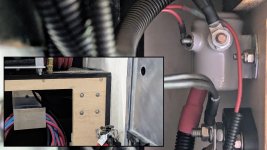
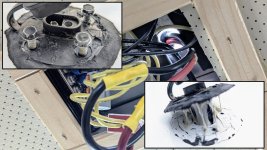
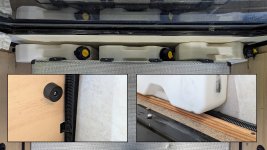
The primary image, taken from above the rear of the refrigerator, shows three of my five Rotopax Two-Gallon Water GEN2 containers stored strategically. A key goal of this build was to center weight both laterally and longitudinally while keeping it low. A low, centered center-of-gravity enhances vehicle stability and control on challenging trails, improving handling, traction, and balance. This reduces stress on the suspension and chassis, increasing safety and performance in rugged conditions. The left inset image shows spare bumpers in use, while the right inset illustrates a 3/4" square scrap wood spacer placed alongside the 8 AWG wire to prevent the Rotopax containers from resting on and damaging it. Attention to these small details is critical.
RC 25-256.jpg

The next image depicts the rear of the INKBIRD ITC-1000F Temperature Controller and its final wire connections. On the ground side, I spliced Ancor 16 AWG primary wire to Noctua 28 AWG wire to control two cooling fans. As I was unfamiliar with integrating INKBIRD and Noctua components, I used Wago 222-413 splicing connectors, which proved effective for this application. After completing each sub-project, I conduct a thorough visual inspection, followed by electrical checks, functional testing, and commissioning. My initial settings for the controller are: TS (Temperature Set) 104°F, DS (Difference Set) 4°F, CF (Celsius/Fahrenheit) set to Fahrenheit, and HC (Heating/Cooling) set to Cooling.
RC 25-257.jpg

The Wallas Nordic DT diesel cooktop/heater, now installed, occupies significant space at the top of the setup. I’m pleased with my decision to shift it 100mm from its original position, creating a comfortable armrest area atop the MES-K470 system. This adjustment complicated the internal layout but was worthwhile. In a compact space, a well-designed armrest enhances comfort, supports ergonomics, and reduces strain on shoulders and arms, improving functionality and relaxation.
RC 25-258.jpg

Another image shows the underside of the Wallas unit when the K470 top is lifted. As noted in earlier posts, I positioned the K470 away from the wall to promote cooling and enhance aesthetics, making the compact area appear larger. I calculated that, with the vehicle within one degree of level along the roll axis, the top would remain open without needing to be held, confirmed through sketches, center-of-gravity calculations, and a physical test. The image also shows two 20 x 20 x 400mm T-slotted aluminum extruded bars, which provide a clamping surface and additional support for the 26-pound Wallas unit.
RC 25-259.jpg

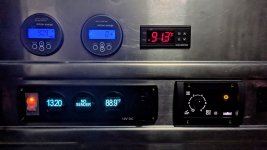
With warm weather approaching, I decided to stress-test the system in high heat. I set the TS to 104°F because this is the temperature at which my Victron Energy components begin derating output current to prevent overheating. The INKBIRD ITC-1000F in the upper right displays the MES-K470 system’s internal temperature, while the Blue Sea Systems accessory panel below shows the camper’s internal temperature.
RC 25-260.jpg

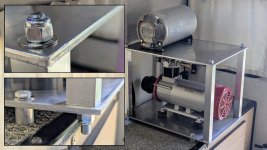
Switching focus, I’ve started building a permanent mount for my air system, using aluminum for its high strength-to-weight ratio, natural corrosion resistance, and ease of fabrication. Aluminum ensures structural integrity in extreme conditions and enhances durability in harsh environments. Maintaining a vehicle below its Gross Vehicle Weight Rating (GVWR) is critical for safety, performance, and longevity, reducing strain on the chassis, suspension, brakes, and tires while improving handling, fuel efficiency, and traction on uneven terrain.
RC 25-261.jpg

The air system mount was designed using off-the-shelf materials, requiring only drilling and bolting - no cutting, bending, or welding. Adhering to Occam’s Razor, I prioritized a simple, efficient design that minimizes components, complexity, and potential failure points while meeting performance requirements. The assembly consists of two aluminum sheets, four square corner posts, four lengths of all-thread, four aluminum spacers, and a handful of nuts and washers. With careful planning, accurate layout, and incremental drilling, this design is accessible to others.
RC 25-262.jpg

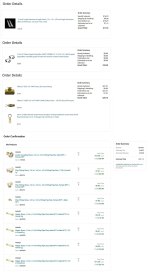
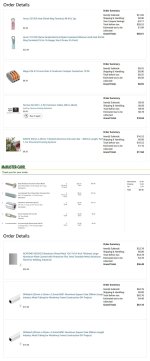
I’m documenting expenses to maintain a digital record. While not the most exciting part of the project, this is necessary for my planning, and I’m working to streamline this information. Thank you for your understanding.
RC 25-263.jpg

After dinner, I enjoy walking at Yorktown Beach to stretch and exercise. Spending hours in a hot camper, working and dreaming of returning to the trail, requires significant self-discipline. Often, I reflect on the freedom of roaming the west, sleeping in deserts, forests, and mountains. Freedom is just another word for nothin' left to lose...
RC 25-264.jpg
 
Last edited:
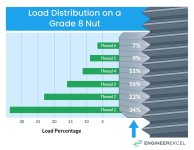
In my previous post, some readers may have noticed that the stud on the neoprene vibration-damping sandwich mount was just short of full engagement with the nylon-insert locknut, a condition I typically avoid. Under load, the bolt stretches while the nut compresses, distributing force across the threads - typically 34% on the first thread, followed by 23%, 16%, 11%, 8%, and 7% for subsequent threads. Thread classes, such as 1A, 2B, and 3C, define fit and application. Class 1A offers a loose fit for non-critical assemblies like general machinery, prioritizing easy installation. Class 2B provides a medium fit, ideal for standard applications like automotive components, balancing strength and ease. Class 3C, with its tight, precise fit, suits high-stress environments like aerospace, where minimal play and vibration resistance are critical. In this case, the stud and nut were Class 2B, suitable for the application’s balance of strength and assembly requirements.
RC 25-265.jpg

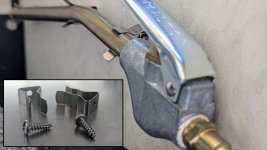
While upgrading my AEV Prospector and Four Wheel Camper, I optimized the layout by grouping related gear and conducting an ABC analysis. Group A includes high-value, frequently used items critical to operations. Group B comprises moderately important items used regularly but not daily, while Group C consists of low-value, rarely used items stored in deep storage. My goal was to relocate the Longacre Racing Magnum 3½" Tire Pressure Gauge from the cab to a spot near the air compressor. I sourced an aluminum gauge holder from Extreme Max and mounted it on the wall adjacent to the compressor. The inset picture confirms the gauge remains accessible even when the camper’s top is closed.
RC 25-266.jpg

I explored Extreme Max’s website to identify additional aluminum components for my setup. Their wall-mounted aluminum paper towel holder caught my attention, as it saves time and frees up space in my Zarges K470 aluminum box. Many companies in the overland and RV industry rely on heavy or space-inefficient materials like wood or fiberglass, which have limited temperature tolerances. Aluminum, in my view, is superior for its durability, lightweight properties, and versatility in such applications.
RC 25-267.jpg

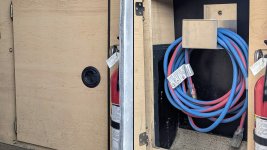
Previously, I stored my two power cords in the battery compartment, now occupied by two LiFePO4 batteries, Ancor 1/0 AWG wiring, and Blue Sea Systems feed-throughs. Despite careful wrapping, the cords often became tangled. To address this, I installed an Extreme Max aluminum cord hanger in an underutilized, oddly shaped storage compartment on the starboard side, just inside the vehicle’s rear door. This setup maximizes accessibility and optimizes space. Initially, I considered mounting the hanger on the door, but the cords’ weight exceeded the door’s hinge capacity. Photos show the setup with the door closed (left) and open (right).
RC 25-268.jpg

Due to high daytime temperatures, much of my work occurs at night. At 0315, after completing the final wiring, I powered up the Wallas Nordic DT cooktop/heater for the first time. The Wallas control panel, visible in the lower right corner of the photo, illuminated, confirming the electrical system’s functionality. This milestone moves my one step closer to ensuring reliable heating and cooking capabilities for my setup.
RC 25-269.jpg

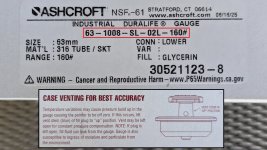
An Ashcroft pressure gauge is integral to my onboard air system. Selecting it required a full day due to the extensive customization options, including dial sizes (2.5", 3.5", 4.5", 6.0"), connection types, pressure ranges (0-160 PSI), and wetted materials like stainless steel or Monel.
RC 25-270.jpg

As a professional who values precision, I chose a 63mm (2.5") dial, model 1008, with a 304 stainless steel case, 316 stainless steel tube and connection, glycerin-filled case, 1/4" NPT male lower connection, and a 0-160 PSI range. For those needing even higher accuracy, Ashcroft-Heise ultra-high-precision mechanical gauges are an excellent alternative.
RC 25-271.jpg

I maintain detailed invoices to track expenses and reference them for future projects. This practice aids in planning upgrades or maintenance for my vehicle and camper setup.
RC 25-272.jpg

In November 2023, while navigating the Organs Loop trail near Las Cruces, NM, at night, I struck a large rock, dislodging the harmonic balancer from my rear driveshaft. I temporarily secured it with zip ties, keeping it clear of the pinion yoke. Today, I removed and discarded the damaged balancer, resolving the issue permanently.
RC 25-273.jpg

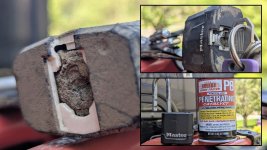
In February 2023, I purchased Masterlock M115XTRILF Laminated Padlocks, expecting reliable performance. However, the weather-resistant keyway covers, designed to protect against snow, rain, dirt, and grime, have been problematic - one broke off, and another fails to stay closed. Despite this, the locks remain functional after cleaning with a pick, toothbrush, vacuum, and penetrating lubricant. Their durability, much like my own resilience, ensures they perform even in harsh conditions. Much like this relentlessly defiant lock, I was never quite tamed...
RC 25-274.jpg
 
Last edited:
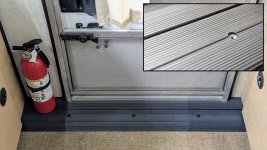
Continuing from my previous post, the aluminum hose hanger is the fourth and final component from Extreme Max installed in my camper. The installation took longer than anticipated because I wanted to trim the back panel to align flush with the front panel’s lip. Additionally, I ordered and cut a piece of 1.5 x 1.5 x 1/8-inch aluminum angle stock for mounting. Using masking tape, an angle grinder with a cut-off wheel, and a hand file, I was pleased with the straightness of the final result.
RC 25-275.jpg

The modified hose hanger is mounted on the side of my air assembly, as shown in the accompanying picture. By co-locating related equipment, I’ve improved workflow efficiency, enhanced safety, reduced operational errors, and optimized space utilization. The hanger includes a small compartment that conveniently stores my two sets of brass tire deflators (15 & 30 PSI).
RC 25-276.jpg

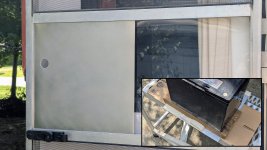
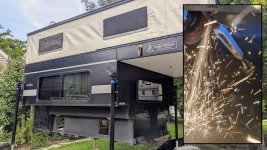
Some time ago, the sliding clear bubble on my camper’s screen door cracked and eventually failed, leaving a large hole that allowed insects to enter on warm nights when the interior lights were on. Recently, while cutting the top of my Zarges K470 aluminum case to install a diesel cooktop/heater, I saved the scrap piece for potential reuse. Using masking tape to mark the cutting areas, I employed an angle grinder, punched a finger-sized hole with a hole saw, and cleaned the edges to create a new screen door slider panel. The inset picture illustrates my creative approach during the cutting process: I placed a recently removed AGM (Absorbent Glass Mat) battery on the thin aluminum scrap to hold it steady. While not a professional method, it was simple and effective for this one-time task.
RC 25-277.jpg

Historically, maintaining a small circle of close friends has been vital for men, providing essential emotional and social support across cultures and eras. From ancient philosophers like Aristotle, who emphasized deep friendships for a virtuous life, to medieval guilds and modern military brotherhoods, these trusted circles have consistently countered isolation, reduced stress, and improved mental health and longevity. Whether through gatherings at taverns, coffee houses, or events like a Warriors’ Feast, these bonds - built on trust and shared experiences - offer a sense of belonging and purpose. They help men navigate life transitions such as retirement or loss, a practice that remains crucial today despite challenges like digital and societal isolation. Consider setting aside an evening, inviting a few friends over, firing up the grill, and enjoying meaningful connection.
RC 25-278.jpg

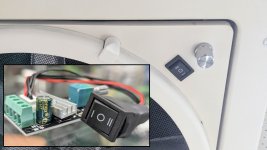
One of the weakest components in my Four Wheel Camper has been the OEM Maxxair Maxxfan, which failed shortly after I began using a 200-watt solar suitcase to charge my house battery. Although the unit was a few months out of warranty, I contacted Maxxair, who explained that their DC fans can only handle a maximum voltage of 13.6 Vdc before the main circuit board fails. I noted that most RVs and campers use solar systems that commonly produce 14.2–14.4 Vdc. Maxxair offered a replacement circuit board for $150 but suggested purchasing a new unit for $350 due to additional issues with their DC motors. A quick search for “Maxxair fan problem” reveals numerous videos and customer complaints. Inspired by one such video, I bypassed the circuit board entirely and installed a DC Pulse Width Modulation (PWM) motor speed controller for just $10. This solution uses a rocker switch to control fan direction (IN/OFF/OUT) and a rotary knob to adjust speed (OFF/0–100%), and I’m satisfied with the result.
RC 25-279.jpg

All expenses related to these modifications are being documented for historical reference, ensuring a clear record of costs and components.
RC 25-280.jpg

With my Modular Energy System (MES-K470) largely complete, I’ve shifted focus to the onboard air system. Over the past month, I’ve refined the system through several iterations, addressing challenges related to air transfer from the compressor to the tank and ultimately to the tires. Additionally, I’ve considered the wiring for main power and control to ensure a durable, organized, and visually clean system. As discussed in a previous post, I selected an Ashcroft pressure gauge, supported by components from Milton and Parker. The top-tier components were assembled and sealed with Loctite 565 before marking and drilling holes to connect the tank to the compressor below.
RC 25-281.jpg

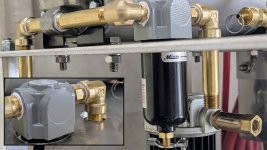
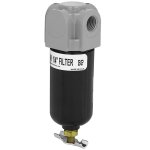
The accompanying picture shows two vertical brass Parker pipes and one Milton 1144M mini micro filter passing through the top tier after drilling. This filter was chosen using Milton’s F-R-L (Filter-Regulator-Lubricator) Application Chart, which accounts for compressor horsepower (HP) and standard cubic feet per minute (SCFM). Removing moisture and contaminants remains important, even though I don’t plan to use the system for powering tools. In the upper right corner, you can see the Milton ASME Safety Valve (150 PSI). The inset picture provides an oblique view of two of the drilled holes.
RC 25-282.jpg

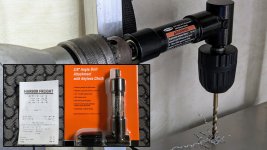
The next step involved preparing the lower tier of the air system to secure the heat-dissipation hose, which connects the compressor to the tank, using vibration-damping loop clamps. Initially, I considered multiple hose routing options and waited until most components were in place to finalize the configuration. With the system largely assembled, limited vertical space prevented the use of a standard drill motor. Rather than disassembling the system to drill four holes, I purchased an inexpensive angle-drill fitting from Harbor Freight Tools. Given my age and the one-time need for this tool, it was a cost-effective choice that performed well.
RC 25-283.jpg

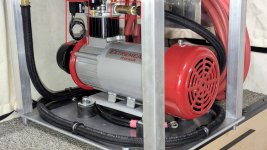
The heat-dissipation hose, shown in the accompanying picture, is installed in a relaxed configuration to optimize three modes of heat transfer: conduction, convection, and radiation. During air compression, molecular friction and compression heat the air, warming the hose. Made of thermally conductive metallic material, the hose conducts this heat to its surface. Ambient air then absorbs the heat through convection, cooling the compressed air before it reaches the tank. Additionally, the hose emits thermal radiation (infrared energy), though this contributes less than conduction and convection. The hose’s surface temperature and emissivity determine the rate of radiative heat transfer.

The highlighted sections in the upper-center of the picture show the electronic blow-off valve (left) and high-temperature check valve (right). The blow-off valve automatically releases cylinder head pressure when the compressor reaches its upper cutoff (145 PSI), reducing inrush amperage, bearing stress, and enabling zero-pressure startups. The check valve prevents tank and line pressure from flowing back into the depressurized head. You can do anything you set your mind to, man...
RC 25-284.jpg
 
Last edited:
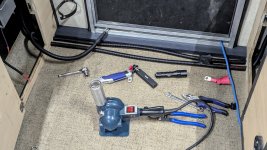
When operating my ExtremeAire Magnum air compressor at 100 PSI, literature states it's 1.5 HP motor draws 82 amps at 12 volts - I plan to operate the system at 145 PSI and expect to see 85-90 amps being drawn. To accommodate the increased demand, I upgraded the lugs on the dual 10 AWG wires from the compressor. Connecting two 10 AWG wires into a single lug was challenging. After research and calculations, I determined that an Ancor 8 AWG lug was sufficient, though a 6 AWG lug provided ample room. As shown below, a single 8 AWG lug worked effectively. Note that the positive lug uses a 5/16" mounting hole, while the negative uses a 3/8" hole, with the reason for this difference illustrated in the next image.
RC 25-285.jpg

In the upper right, the dual positive wires with an 8 AWG 5/16" lug connect to a post on a Pollak solenoid (52-31525). In the lower right, the dual negative wires with an 8 AWG 3/8" lug connect to a Blue Sea Systems Power Post Connector. When selecting solenoids, note that many share an identical external appearance but vary in configuration: 12 or 24 volts, and relay (continuous duty) or starter solenoid (intermittent duty). A quick rule for 12-volt solenoids: a coil measuring 3–5 ohms indicates a starter solenoid, while 15–20 ohms indicates a relay. My solenoid measured 18 ohms, confirming suitability for my application. The inset image shows four bolt heads near the center, which are the mounts for the solenoid and power post. I considered mounting them on the external wall but opted for internal mounting to facilitate removal or repair with the camper in the truck bed, ensuring quick troubleshooting during trail use.
RC 25-286.jpg

Visiting local libraries can be highly beneficial, whether at home or on the road. I periodically stop by a library, reserve a meeting room if available, and work for a few hours, taking advantage of reliable WiFi, air conditioning, and clean restrooms. For full-time travelers, the value of these public resources is immediately apparent, providing a comfortable and productive environment for technical tasks or project planning.
RC 25-287.jpg

Initially, I planned to run 4 AWG wire, as recommended by ExtremeAire, from the driver’s side battery bank, over the rear door, and down to the compressor shelf on the passenger side. This exposed wiring aligned with my function-over-form interior design. However, calculations revealed a voltage loss of nearly 7%, which was unacceptable. Using surplus 1/0 AWG wire, I reduced the voltage loss to under 3%, making it the preferred choice.

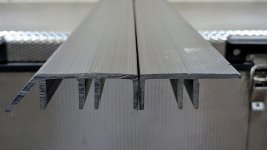
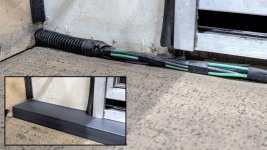
Further analysis led to a shorter wiring path under the door threshold. Running the wire outside and back inside was feasible, but I sought a cleaner solution. I discovered that the Four Wheel Camper (FWC) already used one channel in the threshold for wiring. To accommodate the 1/0 AWG wire, I ordered two new thresholds from FWC, cut the angled nose off one, and installed them side by side, creating four channels: one for existing FWC wiring and two for the compressor power wires.
RC 25-288.jpg

Drilling 21mm holes on each side for the power wires was completed late one night. Using 1/0 AWG wire may seem excessive, but minimizing voltage loss enhances motor performance, increases efficiency, reduces heat, extends motor life, stabilizes operation, and yields long-term cost savings. My problem-solving approach followed these steps: (1) define the problem, (2) gather and analyze data, (3) develop and evaluate solutions, (4) implement the solution, and (5) test and verify.
RC 25-289.jpg

The existing FWC wiring loom was identified during this process. The inset image shows the modified threshold with the angled nose removed during installation. Note the wood discoloration, likely from flooding during a river crossing one or two years ago, indicating a need for a heavy-duty cleaning solution to address potential mold or contamination.
RC 25-290.jpg

The installation process, conducted at 0330 one morning, involved running the 1/0 AWG wires across the threshold. Space constraints are a common challenge in FWC campers, as any owner can attest. The image shows my 10–15-year-old Bosch 1942 heat gun, drawing 14.3 amps and producing 750–1,000°F, depending on the setting - a reliable tool for the task.
RC 25-291.jpg

The result is a clean, OEM-like solution that delivers ample power to the onboard air system. Initially, I considered an exposed wiring setup, similar to military vehicles or aircraft. However, after developing my MES-K470 (Modular Energy System with Zarges K470 case) containing Victron Energy components, I prioritized concealed wiring for a clean, orderly appearance. This approach was more challenging but highly rewarding.
RC 25-292.jpg

All expenses are tracked for historical purposes. When contacting FWC, I spoke with a knowledgeable parts department representative who quickly understood my needs. After a brief email exchange, payment was processed, and the parts were shipped. The ability to order identical components from the original build is a significant advantage.
RC 25-293.jpg

While returning from the Richmond VA Medical Center via backroads, I stopped to relax at Chickahominy Riverfront Park. There, I took a moment to unwind, reflecting deeply on my life, past decisions, and current circumstances. Despite the hot, muggy weather and intense sunlight, I found myself smiling broadly, dreaming of hitting the road again soon. I urge other men to prioritize health by scheduling a doctor’s visit. For the past one or two decades, I often claimed to be “too busy” or promised to “schedule an appointment soon.” I've long since retired and my sons moved away, I recognize the importance of proactive health management.
RC 25-294.jpg
 
Last edited:
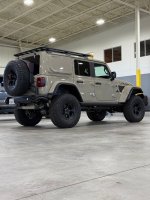
Really appreciate your posts. Learned a lot and helped me build a terminal bus that provides power to my fridge, cargo area lights, and any other DC needs with Anderson SB50 connectors. Based on yours and others, went with Ancor for everything, and did a lot of calculations based on wiring length, voltage drop etc to determine correct fusing/wire gauge. This is for my Jeep 392 AEV JL370 in the pic below.IMG_0194.jpeg

IMG_2059.jpeg
 
My goal with the next few posts is twofold: to archive valuable information produced by AEV fifteen years ago and to share fundamental suspension knowledge. This will help others better understand what distinguishes AEV’s suspension systems from others in the industry.

12 THINGS TO KNOW ABOUT “LIFTED” SUSPENSION ENGINEERING

1 - Roll-Center Geometry

Roll-center is the imaginary point around which the body leans in a turn and also around which it moves when the suspension flexes on a trail. There is one roll-center each for the front and rear suspensions. The location of each roll-center for most solid-axle suspensions is defined by the geometry of the track-bars (aka panhard bars). On late-model solid-axle Jeeps, the front track-bar runs in front of the axle from the frame on the driver’s side to the axle on the passenger’s side. The rear bar is behind the axle and the attachments are reversed. The actual roll-center is found by drawing an imaginary vertical line down the middle of the vehicle and another straight line between the bolts at the ends of the track bar (ignore the bends in the bar). The intersection of these two lines is the roll-center.

Roll-center is important to suspension engineers because its correct placement relative to the center of gravity is central to managing both body lean and weight transfer in turns. The farther apart the roll-center from the center of gravity, the more lean you have and the more handling degrades. If the roll center location is not ideal for the vehicle, it forces the engineer to try to ‘correct’ the problem with spring and/or shock tuning – which always results in a loss of performance somewhere else. This is one of the critical geometry parameters that must be right before you tune, or lift, the vehicle. When properly located relative to the center of gravity the roll-centers (defined by track bar placement) will allow the engineer to further optimize overall suspension performance via springs and shocks, etc. – without the burden of having to attempt to compensate for poor geometry. If one looks at the track-arm locations on AEV JK suspension systems, one will see that both the front and rear track-arms have been significantly repositioned to place the roll-centers in the optimal locations for either 3.5 or 4.5-inch lift heights.

2 - Control-Arm Geometry

Control-arms are the links in the suspension that connect the axles to the frame and locate them fore and aft. On most solid-axle suspensions there are two arms – one above the other – at each corner of the vehicle. In stock, un-lifted form, they are usually running roughly parallel to the ground. The reason for having an upper and lower control arm is to keep the axles from ‘flipping over’ due to braking or acceleration forces. But their length and angle of operation relative to the axles also define some important imaginary geometry points called ‘instant centers’. Like roll-centers, instant-centers and their relation to the center of gravity determine most of the ‘automatic’ handling behaviors that happen during bumps, turns, acceleration, braking, and combinations of these. Some of these behaviors have names that may be familiar such as anti-squat, which is geometric resistance to the rear end dipping during acceleration. But there are more behavioral parameters such as anti-dive (similar to squat but for the front end during braking), and roll-steer that are just as important to overall vehicle setup. Roll-steer occurs when the lean of the vehicle in a turn causes the control arm geometry to actually skew the axles like a skateboard – actually producing its own vehicle direction change without the driver’s input.

Depending on how the geometry is set up, this effect can be a good, stabilizing one such as under-steer or a bad, destabilizing one such as over-steer. Sometimes packaging and ground clearance considerations can make it difficult or impossible to achieve good geometry on a lifted 4×4. But if geometry is ignored, bad qualities like over-steer can render the vehicle twitchy and hard to handle on mountain roads. In simplified terms, ‘bad’ roll-steer is caused by any lift kit that increases the control-arm angles too much, adding dangerous amounts of roll over-steer. This effect is most dramatic in rear suspensions because they have no driver controlling or compensating for direction of travel via steering. Roll-steer is caused by the fact that non-horizontal arms also move the axle fore and aft as they move up and down due to body lean – and the steeper the arms, the larger the fore-aft movement.

To some extent, longer-than-stock arms (i.e. ‘long-arms’) can improve all parameters by reducing control-arm steepness and re-locating the instant centers. But this is only true if the left and right long-arms are properly angled toward one another at the chassis end to a degree that’s appropriate for their side-view angle to the ground. If both angles are not correct, the ‘long’ benefit is wasted. Thus for both ‘simple’ (short-arm) and more complex long-arm systems, a suspension engineer must know how to locate control arms for the best possible combination of all the effects, which requires them to consider everything from handling priorities, driver preference, and other suspension factors including ride frequencies and shock valving. Done properly, correct geometry is the basis for a safe, enjoyable and highly versatile suspension. An example of how AEV optimizes the angle of the control-arms in its JK suspension systems can be seen in its front Geometry Correction Brackets. These brackets not only improve the approach angle of the front control-arms, they change the location of the instant-center and create a significant anti-dive quality under hard braking.

3 - Freguency-Based, Progressive Rate Springs

Frequencies are the speed at which a spring-mass system moves when disturbed. In the case of a Jeep, the body and chassis are the mass, while bumps (and also handling maneuvers) are the disturbances. Since there are front and rear springs, the forward and rearward halves of the Jeep actually represent two spring-mass systems that must interact with each other. To understand the concept of frequency-based spring rates, think of a shock-less vehicle driving over a single speed-bump. When the front end hits the bump it starts to oscillate up and down at a certain speed. This is the front’s ride frequency. The rear encounters the same bump at a time delay determined by wheelbase and vehicle speed. The key is that the rear needs to react faster than the front so that the oscillations of the rear can catch up to the front in about one cycle (from ride height to some amount of ‘up’, then ‘down’, and back up to ride height). This is important because if the vehicle doesn’t naturally tend to level out quickly after a bump, the shocks will be overtaxed with trying to control body position/motion instead of their real purpose of simply getting rid of the oscillations.

So to ensure the best possible combination of ride and handling, the front and rear spring rates must be derived to create the proper front and rear frequencies relative to one another. Proper suspension engineering will consider the sprung weights of the vehicle, wheelbase, load-carrying requirements and the relevant speeds the vehicle will encounter. To further enhance the spring’s ability to maintain proper frequencies under varying load conditions, a suspension engineer will design a progressive-rate spring (especially for the rear), which will keep the frequencies closer to constant over the expected load range.

Worth noting is that determining a spring’s ideal rate is not as simple as weighing the vehicle and adding on some extra capacity for passengers and cargo. Unfortunately this is a common approach in the suspension aftermarket where the frequency-based method used by the vehicle makers is not known let alone applied. All of AEV’s coil springs have been frequency tuned just like OE springs.

4 - Ideally Tuned/Matched Shocks

Shock absorbers are designed to serve two functions: damp out body motions and serve as the downward/rebound (or droop) limit of the suspension travel. Shock tuning should be undertaken after geometry, spring design, and stabilizer bar sizing is complete. When approached in this order, the shock tuning is free to focus mainly on refining ride quality rather than masking handling issues caused by bad geometry or incorrect spring rates. Actual shock tuning itself is the special way in which the shock’s internal parts (valves) are optimized so that the damping forces they generate are ideally matched to the spring frequencies, geometry effects and weight of the vehicle.

Interestingly, despite all the advances in computer modeling, auto companies still employ dozens of test drivers to tune shocks on vehicles because it takes many iterations and significant seat-of-the-pants feedback before the ideal tuning recipe can be determined. Further, shock tuning can’t be done efficiently (often not even effectively) on normal roads. It requires specially designed “ride roads” at a proving ground with select bumps and other features that can be driven over and over again – in exactly the same way – until the ideal valving can be determined. Typically this process can take many months, thousands of miles and literally hundreds of shock rebuilds. To develop shocks for AEV’s JK suspension systems, AEV teamed with Bilstein at Chrysler’s proving grounds in Michigan. The end result was a shock that helped bring out the best in AEV’s geometry and spring rates. This allows AEV JKs to remain on course over washboard surfaces and even to carve corners with racecar-like confidence – all without compromise to ride comfort.
 
5 - Steering Geometry

Since any street-legal vehicle must have a mechanical steering connection from driver to tires, this system is critically affected by any suspension height change. Most enthusiasts are by now aware that for solid axle vehicles, the track-bar and steering drag-link must be parallel to avoid ‘bump-steer,’ but that’s just the beginning of the considerations. Roll-steer is caused when the steering linkage doesn’t pass through the roll-center of the suspension geometry – meaning that every time the vehicle leans or articulates, there is a steering input that the driver didn’t intend. This happens because there is a small lateral shift of the axle relative to the pitman arm on the steering box. This shift effectively steers the vehicle without driver input. To visualize this, think of holding the steering wheel (and consequently all of the linkage) steady and moving the axle side-to-side. Since the steering didn’t move but the axle did, the steering knuckles must rotate to make up the difference – which creates unwanted steering. On twisty, bumpy roads, roll-steer, along with the larger problem of rear suspension roll-steer (see #2), can keep the driver very busy trying to maintain the intended direction. This is because the vehicle is always doing ‘extra’ things the driver didn’t intend. This quickly leads to driver fatigue and frustration with the behavior of the vehicle. To eliminate this in AEV’s JK suspension systems, AEV engineers developed the JK High-Steer Kit. This kit repositions both the track-arm and steering drag-link. The new positions flatten the operating angles and ensure that the drag-link passes through the roll-center of the suspension geometry. The overall result is reduced driver fatigue, improved safety and very precise steering response.

6 - Control Arm Joints & Bushings

For factory vehicles, the bushings in the control arms seem boringly simple with little to do but ‘load up’ when the suspension is severely articulated. In the late ‘90’s the elimination of these ‘loaded bushings’ was fingered as the key to more flex for vehicles such as the then-new Jeep TJ. Indeed several off-road suspension companies staked their name on kits that revolved in large part around replacing boring rubber with fancy ‘swiveling’ joints of many designs. The problem is that those rubber bushings are just as much a key tuning element of the overall suspension as are the springs, shocks, and stabilizer bars. The purpose of the stock bushings is to provide a delicate balance between providing enough ‘give’ for low ride harshness, while remaining durable enough to last for an acceptable range of miles. Engineers accomplish this by choosing the ideal durometer (material stiffness) combined with sizing. The reality is that bushings literally are a science of their own. For example, track bar bushings that are too soft result in vague steering and a tendency to shimmy (aka ‘death wobble’), but bushings that are too stiff can cause the bar or brackets to fail. Meanwhile control arm joints that are all-metal or have thin hard-plastic races in them, provide no isolation and invariably result in a harsh ride and bracket failures. Yet the reason they exist in lift kits is because once the off-road aftermarket discovered that stock suspensions have some inherent ‘bind’ at large degrees of flex, they replaced the bushings with joints that seek to eliminate the bind altogether. But they ignored (or were unaware) of the fact that the bushings we actually coping with bind quite well and they were also absorbing part of the impact forces from bumps, etc…which is actually their primary function!

The reason why this impact shock absorption is so important is not just for ride comfort, it’s also there to keep the chassis brackets and even the arms themselves, alive. With fewer or no soft bushings in the chassis, it begins to self-destruct even from seemingly mild on-road impacts. The brackets, or the welds that hold them, slowly start to crack and eventually fall apart. Often this sort of failure of the stock brackets, etc. is blamed on the original vehicle maker, which is simply unfair and incorrect because the elimination of isolation from the bushings is the primary culprit! Thus the challenge with control arm bushing design for on/off-road suspensions, is to add a tolerance for ‘misalignment’ (bind) that comes from increased articulation while preserving the isolation that keeps the chassis together and passengers comfortable.

In some cases such as Jeep TJ, the factory control arm bushings are actually very good at isolation (via a lot of relatively soft material) and they also tolerate a considerable amount of articulation bind. Unfortunately, the arms they’re part of are short and weak and thus not up to the rigors of hard off-roading. But all too often the aftermarket replacement arms come with non-isolating ‘flex joints’ that sacrifice ride quality and durability for the sake of flex. In reality that flex could have been had by keeping the bushings and just upgrading the arms. In other cases such as Jeep JK, the arms are longer and strong enough for even hard off-road use and contain similar factory-tuned and durability-validated bushings as the TJ. So no replacement for the sake of off-road performance is necessary. This is the reason that AEV has chosen to retain the factory control arms in its JK suspension systems.

7 - Electronic Correction/Calibration(ProCal)

This is the newcomer to the world of suspension modification. Now that Electronic Stability Program (ESP) is standard on every new Jeep, a suspension system must be designed to work with these stability programs. This is because their benefits are too large to accept simply disabling them as a ‘solution’. Stability programs exist to assist the vehicle in ‘saving itself’ from going out of control. For example, the vehicle might individually brake one wheel to correct a spin. No human driver has the controls (or speed) to execute such a save, but the computer has. However these programs are painstakingly calibrated to the stock vehicle and depend on the computer’s knowledge of vehicle speed, tire size, and other parameters to perform their feats. Additionally, on newer vehicles things like automatic transmission shift points are dependent on the computer’s knowledge of vehicle speed, so incorrect values mean poor performance and even possible failures. Along with all of these electronics-dependent functions comes the unfortunate reality that usually the only way to correct them is also electronic. Consequently, a ‘programmer’ device is needed to insert new calibration points so that the systems can function properly with the lift, tires, etc. in place. This is why AEV developed its ProCal module which is included in certain versions of its JK suspension systems.

8 - Motion Ratios and ‘Internal Clearances'

Motion ratios are simply the relationship between one moving part and another. In suspensions, one of the most important is shock vs. wheel, where 1-to-1 would mean that for a 1-inch bump, the shock strokes 1 inch. In some cases this ratio might me ideal, but alternate ratios can also be used as long as the tuning of the affected part (shock, spring, etc.) is adjusted accordingly. For example, the further away from the wheel (or angled from vertical) a shock is placed, the firmer its valving must be to compensate for the greater leverage applied by the wheel. An example of this would be the front shocks on AEV’s JK suspension systems. AEV has reposition the front shocks in the interest of chassis clearance at maximum articulation, however AEV custom-tuned these shocks to compensate for the resulting change in movement ratios.

Internal clearances are simply the myriad of places where the moving parts of the suspension would crash into other parts of the chassis if allowed to move too far beyond the normal range. Typically this movement is supposed to be limited by the bump-stops (up-travel), shock lengths (down-travel) and steering stops (max. turn angles). Aside from the obvious need to avoid self-destruction, providing adequate clearances for all possible motion allows confident and more enjoyable use of the vehicle. AEV has carefully clearanced all components to ensure bind and noise-free movement in all of its JK suspension systems.
 
9 - Durability

As simple as the concept of durability may seem, ‘overbuilt’ isn’t really the best answer. Overbuilt simply means that due to a lack of technical resources such as FEA modeling or maybe a lack of time, patience or even money to do proper field testing, the designer/manufacturer has resorted to throwing more material at an accessory design. The result is a heavy accessory that can cause a cascade of new problems, including additional durability issues. The problem is usually not in that accessory, but in those around it that must now be upsized to cope with its extra weight. This is a classic ‘pulling the thread on the sweater’ until it’s completely unraveled. This is also how 6000 lb. Jeeps happen, and yet consistently experience more trail failures than lighter rigs on the same trail. Instead, durability is actually a science of its own: For example, making a bracket that doesn’t fail means not only optimizing the design of the bracket itself, but also fully understanding and managing the forces that apply to it from the overall system. Knowing what the worst-case loads will be, how different loads will combine together, and what the trade-offs of different system-level solutions would be (part of FMEA analysis). A further example would be an extended track bar bracket that doesn’t induce a guaranteed failure of the stock bracket it’s bolted to because of the excessive additional leverage it causes. If you evaluate the bracketry and other components in AEV’s JK suspension systems, you will notice that they are robust and yet factory-like in appearance. This is because they have all been truly engineered for the task they manage – in relationship to the factory components with which they integrate.

10 - Traditional Expectations

Like so many markets, off-road aftermarket suspensions suffer from a fair amount of ‘creative inertia’. That is, once something is accepted as ‘the way to do it’ on one platform, many falsely assume that the entire ‘recipe’ applies equally well to another platform. Or perhaps a company may prefer to convince its customer of this because it has become their niche or specialty. The “long-arm legacy” from Jeep TJ to JK Wranglers is a perfect case-in-point: Long-arm-based suspensions are indeed central to the ideal geometry solution for TJ. This is because the stock short-arm geometry degrades rapidly with lift height. In contrast, though the 5-link/solid-axle JK suspension is similar to the TJ in basic concept, it has numerous improvements over TJ such as 40% longer boxed-section arms, longer track bars, etc.. This means that long-arms are not central to, or even necessary for, correct geometry in JKs lifted up to 4.5-inches. This is among the key reasons why long-arms are not included in AEV’s JK suspension systems.

11 - Value

Though not directly a technical issue, value is the measure of what you get for the money you spend on a suspension system. In the often mail-order world of suspension kits, quantity of parts is all too often confused with value – often resulting in additional purchases and/or even replacement purchases that far negate the original hoped-for savings. Engineering comes into the picture in two ways: First, the included parts – regardless of how many – should actually be well designed according to sound and proven engineering practice. Second, the parts that are included should be all of the ones – and the only ones – that are really needed to deliver the performance promised. Because there is so much misconception in the market regarding what is ‘the right way’ to do a given lift height and type for a given application, a bargain-hunter will often dismiss a highly-contented kit as being full of ‘fluff.’ This helps them justify buying something cheaper, but they often wind up paying much more in the end after they discover the design, durability, or performance shortcomings of the cheaper option. Likewise a system with less content can sometimes be dismissed for being ‘incomplete’ if traditional expectations are skewed by marketing campaigns or creative inertia. And finally in both cases there is always the risk that the design is simply executed incorrectly – resulting in either the wrong parts or the wrong tuning of the parts. The painful result is that many customers are forced to try and sort out their suspensions on their own, which invariably generates frustration and unnecessarily thin wallets. With AEV’s JK suspension systems, AEV has painstakingly evaluated every aspect of the JK’s performance in relationship to the added lift height our suspension creates. Because of this, AEV’s customers get exactly the right content in the kit.

12 - Dual-Mode Equals DualSport

If the typical 4×4 owners are honest with themselves, they will have to admit that the majority of their driving is still on-road – even if they go ‘off-road’ every single weekend. At that point a truly dual-mode suspension is what’s needed. But due to decades of living without good dual-mode suspension options, most consumers, shops, and even the off-road media seem to think they can’t be made. That is simply not the case if basic vehicle dynamics and OE-style engineering are applied to suspension design! Whether due to a lack of engineering know-how or a lack of interest in offering dual-mode systems, most manufacturers simply don’t design their suspension systems with an expanded spectrum of performance (i.e. add more off-road ability without losing on-road). Instead they simply shift the spectrum toward off-road performance and let the customer suffer the on-road consequences. Aside from the usually obvious and sometimes frightfully dangerous safety issues such systems cause, the large percentage of miserable on-road driving experience eventually turns to dissatisfaction at some level – resulting in re-modifying, more parts and labor, and even selling the vehicle in disgust.

This need not be the case for Jeep JK owners. AEV offers a fully engineered, truly dual-mode suspension system appropriately named ‘DualSport.’ AEV’s DualSport Suspension Systems are the culmination of all the critical OE engineering principles discussed in this document. Because of this these suspension systems not only improve off-road capability, they increase on-road performance too. These truly dual-mode suspensions elevate the enjoyment of driving a lifted Jeep everyday and eliminate the compromise or any need to ‘suffer for the sake of the sport.’
 
My primary goal in designing my on-board air system was to create a fast and reliable solution for inflating tires to appropriate pressures when transitioning from off-road to on-road. The difference between a 10-15 minute inflation time and the more common 20-30 minutes is significant, especially when trails demand multiple transitions in a single day. To optimize this process, I mounted Milton HIGHFLOWPRO V-style brass couplers on both sides of my vehicle, between the cab and camper, allowing me to connect to the driver’s side, inflate both tires, then repeat on the passenger side. I sourced 3.5x3.5x3.5-inch aluminum brackets and secured them to the base of my aluminum RotopaX carriers.
RC 25-295.jpg

To centralize the air system accessories, I mounted a Milton Safety Blow Gun with a 10-inch extension on the rear wall of my camper, adjacent to the air system. I used three spring clip holders for mounting, and it remains to be seen whether these clips will securely retain the blow gun on rough trails.
RC 25-296.jpg

The next phase involved transferring pressurized air from inside the camper to the external brass couplers. I applied masking tape to mark measurements, transferring precise data to ensure accuracy. My objective was to drill a 24mm hole through the aluminum base of the air compressor mount and a horizontal camper surface while avoiding a 3/4-inch-thick blind vertical wall. The hole needed to be close to the wall without contacting it. Through meticulous, repeated measurements, I achieved satisfactory results. A high-temperature silicone rubber grommet was installed in the hole to protect the air line, as shown in the accompanying image.
RC 25-297.jpg

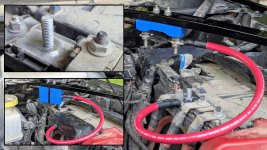
While inspecting the engine compartment, I noted significant dirt accumulation, prompting a thorough cleaning before my next trip. I installed a Victron Energy MEGA Fuse Holder to power a Victron Energy Orion XS 50-amp DC-DC charger, which charges my house batteries while driving. Based on my calculations, Ancor 4 AWG wire was suitable for this application. The RAM's High Amperage Power Point (HAPP), an M8 stud on the battery rated for 300 amps, facilitates this connection, located on the driver’s side within the power bus.
RC 25-298.jpg

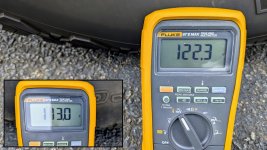
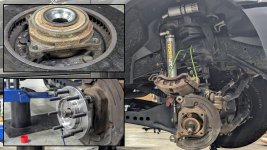
Recently, I noticed a soft grinding noise from the front of my truck at 15-25 mph, louder during left turns and quieter during right turns. Despite my hearing challenges from past exposure to helicopters and machine guns, and my habit of driving with windows down and radio on, I suspected the passenger-side hub assembly (wheel bearing) was failing. After driving briefly and stopping in a parking lot, I confirmed the passenger-side hub was significantly hotter than the driver’s side. On a 95°F day, the driver’s side was hot (approximately 110°F, touchable for 5-10 seconds), while the passenger side was very hot (approximately 120°F, touchable for 1-3 seconds). Using a Fluke 87V-MAX multimeter and Type-K thermocouple, I measured the temperatures, confirming the passenger-side hub assembly failure.
RC 25-299.jpg

With my time in Virginia nearing an end and a strong desire to return west, I enlisted my son’s expertise to replace the faulty hub assembly. After jacking up the truck, we confirmed significant play in the passenger-side wheel by shaking it at the 3 and 9 o’clock and 6 and 12 o’clock positions, compared to the driver’s side. Within an hour, the repair was complete, and I drove away satisfied, grateful for my son’s skillful assistance.
RC 25-300.jpg

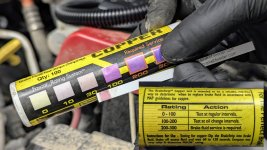
Approaching 100,000 miles on my AEV Prospector, I am planning long-term preventative maintenance, including replacing transmission and transfer case fluid, flushing engine coolant, and checking brake fluid. Using test strips from Phoenix Systems, I measured copper contamination in the brake fluid at 30-100 ppm, indicating no immediate need for a flush. Additionally, I plan to test the brake fluid’s moisture content, as brake fluid is hygroscopic, and increased moisture lowers the boiling point, reducing braking performance and causing corrosion. In my superbike racing days, I flushed brake systems between races to ensure optimal performance.
RC 25-301.jpg

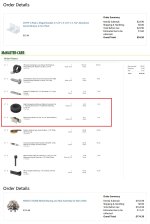
For historical purposes, I have documented the expenses associated with this work.
RC 25-302.jpg

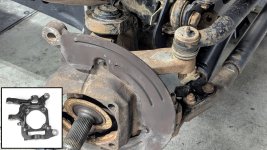
The AEV Prospector’s steering knuckle, drag link, and track bar, part of AEV’s High Steer Kit, are custom-engineered components that address longstanding aftermarket suspension challenges. Few companies possess the engineering expertise, OEM connections, and resources to develop such solutions.
RC 25-303.jpg

If you are interested in a technical discussion related to What It Really Takes to Build a Factory Overlander with Dave Harriton from AEV - here is a great podcast:
 
Last edited:
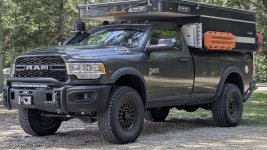
This phase of the project focuses on removing the Four Wheel Camper from my truck bed and fabricating custom-length air lines for my Overland Air Device 145 PSI (OAD-145P). To prepare for camper removal, I first detached two RotopaX 2-gallon water containers from the camper’s front and two 20L Wehrmacht-Einheitskanister (Armed Forces Standard Canisters) from the rear. Next, I installed four Rieco-Titan mechanical camper jacks at each corner of the camper. While some pop-up camper owners keep jacks permanently installed, I remove mine to avoid potential damage from obstacles on rugged trails, which could compromise the camper’s aluminum structure.
RC 25-304.jpg

When pricing camper jacks, I was surprised to find that a set of four new Rieco-Titan jacks cost just over $1,000, with used units ranging from $700 to $900. I briefly considered designing and building my own jacks but ultimately decided against it. Upon inspecting the Rieco-Titan units, their quality was evident, reflecting decades of engineering refinement. Each jack weighs approximately 25–30 pounds, features smooth and robust internal gearing, and can support up to 2,000 pounds independently. The jacks include manual handles, but I also purchased a $29 drill adapter, which significantly improved efficiency.
RC 25-305.jpg

Time constraints forced a change in my approach to removing the factory-installed turnbuckles. Initially, I planned to soak them with penetrating oil and use a wrench, but the threaded sections were too rusted. Instead, I used a 4.5-inch angle grinder with a cutting wheel, severing all mechanical connections between the camper and truck in under five minutes. I raised the camper by first elevating the front 2–3 inches, then the rear, using a small level to maintain pitch and roll within acceptable limits. Once the camper cleared the truck bed, I moved the truck forward a few feet, disconnected the electrical harness, and drove out from under the camper. Clearance was tight, with approximately 0.50–0.75 inches between the fender flares, wheels, and camper jacks.
RC 25-306.jpg

My initial design of the OAD-145P incorporated DOT-approved push-to-connect fittings and SAE J844 tubing, commonly used in heavy-duty trucks. This choice was driven by the availability of replacement components at truck stops. However, after further research and discussions with full-time overlanders, I determined that while cost-effective and easy to assemble, this system lacked long-term durability. I shifted to custom-length air hoses using Continental 3/8-inch rubber air hose and Milton HIGHFLOWPRO brass fittings. Selecting compatible components was challenging, as the outer diameter (OD) of hoses with identical inner diameters (ID) varies significantly. The goal was to choose a brass ferrule that slides over the hose snugly enough to stay in place but loosely enough to allow full insertion of the brass end fitting. Research suggested using soapy water to ease assembly, noting that overly easy insertion could lead to leaks. Even with soapy water and significant force, I could only seat the brass end fitting halfway; a rawhide hammer and several firm strikes fully seated the fittings.
RC 25-307.jpg

The final step involved selecting the appropriate hardened steel ribbed die for the Heavy-Duty Hose Crimper Tool to crimp the ferrule. This tool accommodates hoses from 1/4-inch single-braid to 3/8-inch two-braid, with die bore sizes of 0.484", 0.531", 0.578", 0.625", and 0.687". While not ideal for all builds, this solution met my need for durable, custom-length hoses capable of withstanding diverse conditions. It will be interesting to evaluate their longevity in real-world use.
RC 25-308.jpg

The first hose I fabricated delivers air from the OAD-145P inside the camper, through a horizontal surface, to the exterior for distribution. I incorporated a loop in this line to prevent kinking, extend service life, and reduce stress on the fittings.
RC 25-309.jpg

With the camper off the truck, accessing its exterior was straightforward, allowing me to preconfigure fittings and measure air lines accurately. Masking tape was invaluable for marking and noting measurements on the camper’s flat aluminum surface. For reference, a 1/4-inch NPT (National Pipe Taper) threaded fitting has 18 threads per inch (TPI), so each full turn shortens the assembly by 0.0556 inches along the axis. Initial hand-tightening requires approximately 3–4 turns, with final wrench-tightening adding 1.5–3 turns, resulting in a total axial shortening of 0.25–0.39 inches. This data informed precise hose length calculations before cutting.
RC 25-310.jpg

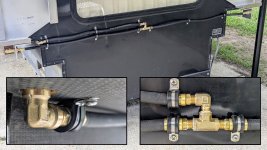
The final assembly uses Continental hoses with Parker-Hannifin elbows and tees, Milton ferrules, and HIGHFLOWPRO couplings and end links. Each hose includes a calculated amount of slack to accommodate camper flex during off-road use. Designing and building the OAD-145P was rewarding, and I anticipate reliable performance on the trail. The air line transitioning from inside to outside the camper (visible in the inset image) may require sealant to ensure a weather-tight interface.
RC 25-311.jpg

For this phase, I documented expenses carefully. I initially considered purchasing the hose crimper from Milton, priced at $276, but opted for a comparable unit that saved over $150. The Klein Tools cutter performed flawlessly, producing clean, perpendicular cuts on the double-braided hose.
RC 25-312.jpg

Without the camper, my AEV Prospector feels significantly different in both appearance and handling. If I could, I'd trade it all for an automator...
RC 25-313.jpg
 
Last edited:
I would love to have an on-board compressor and receiver but have been getting by with portable equipment I already have. My level-of-need : expense ratio is too low for it to get far from the bottom of the list.
Maybe I've missed it, do you have a way to drain moisture from the system?
 
Wondering what condition the truck bed was in, any debris/dirt buildup?
I assume you have a bed mat?
I haven’t had my camper off since installed in Fall ’21.

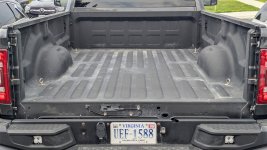
The truck bed is performing well. When I specified the vehicle in December 2020, I selected the spray-in bedliner option for $565, eliminating the need for a bed mat. After removing the camper, I observed some small twigs and branches but noted no visible wear. Attached is a photo taken this afternoon:
RC 25-314.jpg

I would love to have an on-board compressor and receiver but have been getting by with portable equipment I already have. My level-of-need : expense ratio is too low for it to get far from the bottom of the list.
Maybe I've missed it, do you have a way to drain moisture from the system?

My Overland Air Device-145 PSI (OAD-145P) is equipped with a manual drain integrated into the Milton 1144M 1/4" NPT Metal Mini Micro Filter, as shown in images six and seven of this post. The filter's installation is partially obscured, with its upper section positioned above the air system's top level and its lower section extending below. The airflow passes through the compressor head, travels through a seven-foot heat dissipation hose, enters the one-gallon air tank, and then proceeds through the filter before reaching the distribution section of the network.

I concur that 99.997% of individuals, including YouTube content creators, have no need for a permanent onboard air system. A portable air system's key advantage is its versatility, allowing it to be stored discreetly, shared between vehicles, or used as needed. However, my circumstances are unique, as I travel full-time and frequently spend consecutive months on back-to-back exploring hundreds-of-miles of trails.
1144M_1hero_600x600_d8998445-99bb-43fd-ac82-b1fe1e2893e4_900x.jpg
 
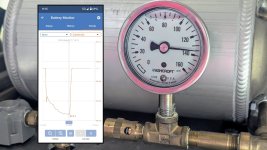
The Overland Air Device 145 PSI (OAD-145P) is operational and performing within specifications. Initially pressurized to 145 PSI, the system stabilized at 135 PSI within minutes. This pressure drop is attributed to thermal equilibrium, hose and line expansion, and minor leaks or settling. As compressed air cools to ambient temperature in the aluminum tank and lines, its pressure decreases. Hose and line expansion results from slight stretching under initial pressurization. Minor leaks at fittings or valves are typical in new systems as they stabilize. A pressure loss exceeding 10 PSI per hour in a mature system warrants further investigation. The VictronConnect app, displaying the BMV-712 Battery Monitor, confirms that the 12-volt ExtremeAire Magnum compressor drew a maximum of 82.9 amps and pressurized the system in under 30 seconds, aligning with predictions and establishing a baseline for future measurements.
RC 25-315.jpg

Electrical connections between the truck and camper are located on the driver’s-side forward wall of the truck bed. The Marnico 70A Trolling Motor Receptacle and Plug, specified four years ago, continues to perform reliably. For 50A DC-DC power transfer between alternators and house batteries, 4 AWG wire connects to a Blue Sea Systems Feed-Through Connector (red). The chassis ground uses 1/0 AWG wire to connect system bus bars to the vehicle frame. Drilled holes for these connections are coated with protective paint for corrosion resistance.
RC 25-316.jpg

When mounting the 3.5-inch aluminum bracket to the bottom of the aluminum RotopaX carriers, rounded-head screws were initially used. To prevent potential damage to full RotopaX containers from focused pressure, 1-inch x 1/8-inch aluminum flat stock strips, bonded with 3M VHB tape, were installed as a temporary solution. Countersunk flat-head screws are planned for a future upgrade to provide a permanent, damage-free mounting solution.
RC 25-317.jpg

The chassis ground connection enhances electrical safety, stabilizes voltage reference, and reduces electrical noise. System designers are encouraged to implement a clean chassis ground connection to the vehicle frame. A bolt, cut to length and chamfered using a bench grinder, was used for this installation to ensure a secure and precise fit.
RC 25-318.jpg

The solar SAE connector, installed on the camper roof by Four Wheel Camper during manufacturing, has performed adequately but will be upgraded to a more robust variant. Additional electrical connections, located below the rooftop connector, are concealed above the wooden lift-assist bar on the camper ceiling.
RC 25-319.jpg

Installation of four Yakima 60-inch tracks on the camper’s aluminum roof required drilling 44 blind holes into a thin, one-piece aluminum roof supported by 1-inch square aluminum tubing. This complex task required extensive research and consultation, leading to the decision to upgrade components and adopt a precise installation method. Tracks were centered, and distances to the camper’s front and rear faces were measured. Internally, wooden trim strips attached to the underside of the 1-inch tubing were located. A 1/16-inch pilot hole, centered on the strip and piercing the roof, established reference points for track alignment. Tracks were aligned parallel to the camper’s perimeter using percussion testing, temporarily taped in place, and marked with a Starrett automatic center punch. The presence of wood in the outermost beams was confirmed. Pilot holes for outermost beams were 5/64-inch (0.0781"), intermediate holes were 1/8-inch (0.1250"), and final holes were drilled with a #21 bit (0.1590") per the screw manufacturer’s specifications.
RC 25-320.jpg

Butyl rubber sealing tape (1-1/2") was applied under the tracks, and screws were re-torqued after settling. 3M 5200 marine-grade adhesive sealant was applied to each screw. Unlike standard installations using 24 screws, all 44 holes were utilized with tri-lobular 10-32 x 3/4" Fastite sheet-metal screws, which provide enhanced thread engagement in 0.028" to 0.063" thick sheets, preventing overtightening and thread damage.
RC 25-321.jpg

The initial Yakima T-bolt screws were incompatible due to overly thick heads; a call to Yakima provided the correct anchor plates for the T-slots. A Newborn 250 caulk gun with an 18:1 thrust ratio was selected for applying the 3M 5200 marine-grade adhesive sealant after researching thrust ratio compatibility. The tri-lobular screws, T25 Torx bit, #21 drill bits, butyl rubber sealing tape, and 3M 5200 adhesive were procured earlier here and here for this installation.
RC 25-322.jpg

The Yakima tracks were finalized by trimming excess butyl rubber tape flush, ensuring a clean and secure mounting system. Drive like the wind straining the limits of machine and man, laughing out loud with fear and hope I've got a desperate plan...
RC 25-323.jpg
 
Last edited:
Over many months, I have carefully considered the optimal routing for the exhaust from the Wallas Nordic DT diesel cooktop and heater to the exterior of the camper. As a reminder, the Wallas unit is mounted atop the MES-K470 (Modular Energy System housed in a Zarges K470 case), which is densely packed with Victron Energy components. The exhaust must pass through this enclosure before exiting the camper. While it may appear counterintuitive to route diesel exhaust through a confined space containing temperature-sensitive equipment - and indeed, this is likely why no one else has attempted such a configuration - I thrive on these challenges. With decades of experience in designing, fabricating, and commissioning projects deemed impossible by others, I proceeded confidently. Once my exhaust plans were finalized, the only missing component was a straight exhaust pipe. I contacted Chris at Scan Marine USA one final time, and he informed me they had just received straight exhausts, albeit with a curved mounting bracket welded on. This posed no issue; I carefully removed the unnecessary bracket using an angle grinder. The result may not be aesthetically perfect, but it functions reliably.
RC 25-324.jpg

The subsequent step involved drilling a 45 mm hole through the MES-K470 enclosure, sized to accommodate a high-temperature rubber bushing, a 28 mm stainless steel exhaust pipe, and surrounding exhaust insulation. Ideally, the placement of this exhaust penetration should have been determined during the initial design phase. However, at that time, the only available exhaust option from Scan Marine featured a tube bent 90 degrees relative to the mounting surface, which influenced my early decisions. After drilling, I deburred the edges and thoroughly vacuumed the interior to eliminate any contaminants.
RC 25-325.jpg

The corresponding hole through the camper wall was drilled at 32 mm. To ensure perfect concentricity between the interior 45 mm hole and the exterior 32 mm one, I first drilled a pilot hole through both surfaces. Another key challenge in penetrating the camper wall was avoiding damage to structural members, wiring, or positioning the exit in a location where exhaust fumes could reenter via a window or door. For verification, I partially disassembled the wall and inspected the corner. To my surprise, the planned location aligned precisely with a 4-inch-wide by 12-inch-tall wooden structural element - ideal for routing the exhaust. This was fortuitous, and I must emphasize that thorough research and planning for exhaust routing should have occurred months earlier. The total exhaust length exceeds one meter, with combined turns not surpassing 180 degrees, ensuring acceptable backpressure for efficient combustion, gas flow, and safety.
RC 25-326.jpg

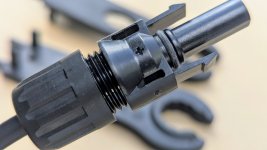
Returning my attention to the MES-K470 and finalizing the solar system installation, I removed the new solar panels to shorten their wires and replace the inferior connectors with genuine Stäubli MC4 cable couplers.

Connectors not made by Stäubli which can be mated with Stäubli elements and in some cases are also described as ”Stäubli-compatible” do not conform to the requirements for safe electrical connection with long-term stability, and for safety reasons must not be plugged together with Stäubli elements.

RC 25-327.jpg

Employing two Stäubli MCR wrenches as part of the assembly process.
RC 25-328.jpg

A completed Stäubli female MC4 cable coupler. Though it may externally resemble a male coupler, it is the internal contact that designates it as the female variant.
RC 25-329.jpg

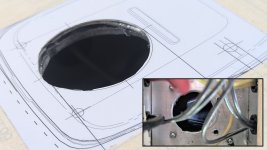
This step required enlarging an existing 24 mm hole to 32 mm to accommodate a Scanstrut cable gland. Despite the provided template, I verified its scale accuracy, as I have encountered issues in the past with imprecise templates leading to errors in drilling or cutting metal.
RC 25-330.jpg

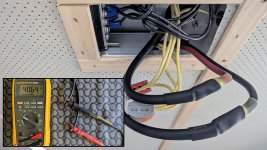
This view shows the underside from the previous image, now with the Stäubli solar wires routed in and connected to the FWC 10 AWG red and black wires. Notably, the insulation on the Stäubli 10 AWG solar wire was oversized for the Ancor 12-10 AWG butt splices, necessitating creative reinforcement with additional Ancor heat shrink tubing. I operated the solar system in this configuration for two days, monitoring connection temperatures, which remained within acceptable limits. The inset image depicts the Stäubli solar wires before splicing; my objective was to confirm polarity to ensure correct connections and prevent damage to the solar charge controller.
RC 25-331.jpg

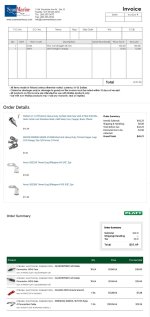
All expenses continue to be documented for reference.
RC 25-332.jpg

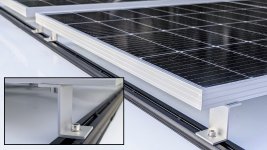
Here, I am marking the solar panel frames prior to drilling four mounting holes in each of the two panels. To achieve precise hole placement at both ends of each panel, I accounted for tolerance stacking - the cumulative effect of individual dimensional variations in an assembly that can affect overall fit, function, or performance. In this instance, I drilled four sets of holes at varying widths (55.875", 55.625", 55.688", and 55.375") across a 64" span, indicating the tracks were not perfectly parallel. Extrapolating these measurements along the full 120" length of both tracks suggests each track deviates approximately 0.46875" from true center. My initial pilot holes were centered precisely on the underlying wood strips, though I acknowledge the exit points one inch higher through the roof may have been offset by up to 0.125". At the rear, my percussion testing could have introduced up to 0.250" error, so I attribute 0.280" of the 0.46875" discrepancy to my measurements, with the remainder belonging to FWC fabrication tolerances.

Here is my calculation for my portion of the error: (1) identify individual tolerances: t1=0.125 and t2=0.250 (2) square each tolerance: t1²=0.015625 and t2²=0.0625 (3) sum the squares: 0.015625+0.0625=0.078125 (4) take the square root: √0.078125≈0.280 (5) thus, my bilateral stacked tolerance is ±0.280 and FWC owns the balance. As evidenced, I approach such matters quantitatively, with a deep appreciation for numerical precision.
RC 25-333.jpg
 
Last edited:
Your attention to detail is truly amazing, and inspiring to slowdown and plan more before doing any of my own projects. Thank you for sharing this journey with us.

Thank you for your kind words @Darkone but these are gifts we have all been given. This reminds me of a work day at NASA LaRC many years ago - I was in my office late performing some very intensive calculations and the beautiful blonde from across the hall came in to talk. Anyway, she always appreciated and respected how deep I was involved in my work and unable to stop until it was as close to perfect as possible. She asked me out of the blue, "Who do you work for?", and I replied, NASA. Then she said something that changed the trajectory of my life - she smiled and said, "No, that's who pays you. You work for God and we are here on earth doing His work." She was correct, we are here to do His work and the closer we are to doing our absolute best in everything we do, the closer we are to Him. And yes, we ended up dating for years and despite us both being interested in becoming married, it just didn't work out.

So slow down and do your very best - and pass it on to other men. We have so much work to do and must do it well...

"All my strength, all my work, all my success is but a reflection of God’s mercy working through me." – St. Pius X
 
These solar panels may be the only ones installed on a camper with tolerances optimized to a thousandth of an inch. Precision reflects a commitment to quality, accuracy, and reliability, which is critical in engineering, manufacturing, and design, where tight tolerances can significantly affect performance, safety, and efficiency. However, excessive precision can lead to diminishing returns, wasted resources, or decision-making paralysis. On this personal project, I prioritized high precision, as I am funding the labor and find the exercise rewarding. In contrast, when managing external budgets, I adopt a professional yet practical level of precision to balance cost and quality.
RC 25-334.jpg

A minimum 4-inch gap beneath and between the solar panels ensures adequate airflow, dissipating heat generated during operation. Research, including solar engineering studies, indicates that a 10–15 cm (4–6 inch) gap can reduce panel temperatures by 5–10°C compared to flush-mounted panels, depending on wind speed and ambient temperature. Solar panel efficiency typically decreases by 0.3% to 0.5% per degree Celsius above the standard test condition of 25°C (77°F), based on the panel’s material and design. These panels have a temperature coefficient of power of -0.39%/°C, typical for high-quality monocrystalline panels. The panels are connected in series using high-quality Stäubli MC4 connectors.
RC 25-335.jpg

One design goal was to mount both panels as close as possible to the roof’s centerline, which slightly conflicted with the objective of maximizing airflow around the panels. Calculations showed that positioning the panels 4 inches forward from the ventilation fan would have a greater impact on lifting the camper roof’s front than the minor power loss from reduced cooling. The 500-watt solar array exceeds my power requirements, which was intentional to ensure ample capacity.
RC 25-336.jpg

To address excessive condensation from cold weather, which can lead to mold, rust, and material degradation, I replaced a propane heater with a diesel heater. Diesel heaters produce dry heat, reducing indoor moisture. During this upgrade, I replaced twelve rusted screws and finish washers with stainless steel equivalents, costing $10–15 and requiring approximately 10 minutes of labor.
RC 25-337.jpg

Installing a new fire and carbon monoxide (CO) detector with a 10-year sealed battery significantly enhances camper safety. Diesel heaters, while efficient, can produce CO, a colorless, odorless, and potentially lethal gas. In a confined camper space, CO buildup or fire risks from heater malfunctions are critical concerns. The long-life battery ensures reliable operation during off-grid travel, providing peace of mind and compliance with safety standards. This cost-effective upgrade is essential for camper safety.
RC 25-338.jpg

Four Sealcon glands are being installed: two within the Modular Energy System K470 (MES-K470) and two in the bed of the AEV Prospector. These glands facilitate the passage of the diesel fuel line and five wires from the MES-K470, through the camper’s side, and into the truck bed. Three wires connect to the fuel level sensor, while the remaining two extend along the frame to the auxiliary Power Distribution Center.
RC 25-339.jpg

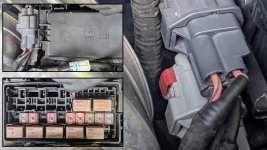
The main image shows the upfitter connectors (dark and light gray), which are part of the auxiliary Power Distribution Center, on the firewall near the brake booster. These connectors, part of the vehicle’s upfitter wiring kit, use eight wires with 1/4-inch blade terminals. Controlled by six auxiliary switches in the cab, the connectors can be programmed via the Electronic Vehicle Information Center (EVIC) for battery or ignition function, momentary or latching operation, and state retention (for ignition mode). My auxiliary switches are configured as follows:
  1. Diode Dynamics 30-inch front bumper light bar
  2. Diode Dynamics A-pillar lights
  3. Baja Designs rear bumper chase lights
  4. ExtremeAire Magnum compressor activation
  5. Victron Energy Orion XS 12/12-50 DC-DC charger activation
  6. BD Diesel 2 Low UNLOC engagement
RC 25-340.jpg

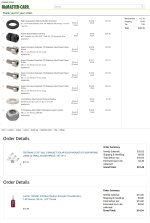
Expenses for this phase of upgrades are being documented.
RC 25-341.jpg

Since the AEV Prospector did not have the camper installed, I weighed the vehicle on a certified scale at a truck stop. The results, compared to previous measurements, are as follows:
  • June 2021 (6,475 lbs)
    • Stock vehicle, no AEV Prospector package or Four Wheel Camper
  • October 2022 (8,660 lbs)
    • AEV Prospector package and Four Wheel Camper installed
    • Front axle: 4,640 lbs
    • Rear axle: 4,020 lbs
  • August 2025 (7,260 lbs / 7,089 lbs adjusted)
    • AEV Prospector package installed, no Four Wheel Camper
    • Front axle: 4,460 lbs / 4,355 lbs adjusted
    • Rear axle: 2,800 lbs / 2,734 lbs adjusted
    • Adjustments:
      • PEWAG tire chains: -141 lbs
      • AEV full-size trail recovery kit: -56 lbs
      • Deadman recovery kit: -10 lbs
      • Six gallons of gasoline: +37 lbs
The data indicates that the AEV Prospector package added 614 pounds, while the Four Wheel Camper and additional gear contributed 1,571 pounds as of October 2022. The stock RAM 3500 chassis had a Gross Vehicle Weight Rating (GVWR) of 11,000 pounds and a payload capacity of 4,529 pounds. The AEV package (614 lbs) and Four Wheel Camper with gear (1,571 lbs) consumed 48% of the payload capacity. In October 2022, the fully loaded AEV Prospector retained 2,340 pounds of available payload. I plan to reweigh the vehicle once the camper is reinstalled to confirm these figures. Can't we give ourselves one more chance?
RC 25-342.jpg
 
Back
Top