What's new
Ram Heavy Duty Forum

Register a free account today to become a member! Once signed in, you'll be able to participate on this site by adding your own topics and posts, as well as connect with other members through your own private inbox!

Yet Another Lifter Failure Story

Didn't you also demonstrate a way to do a non-invasive borescope to check for lifter issues? How difficult is that provided you have the camera equipment?
Yes there’s a way to borescope the lifters and cam. I’ve never done it, but @CTF2019 has and can probably give you some specifics and tips. If I remember correctly it requires a borescope with the ability to pivot the head.
 
Came across this thread after my service advisor just told me that I may need a new cam and lifters. I took it in because it suddenly started being hard to start. I never had any ticking sounds though, and I'm at around 87k miles. He said that the tech needs to tear it down to make sure. I've had almost no problems with this truck and owned it since new, so it's surprising. Luckily, I still have a warranty.
 
Came across this thread after my service advisor just told me that I may need a new cam and lifters. I took it in because it suddenly started being hard to start. I never had any ticking sounds though, and I'm at around 87k miles. He said that the tech needs to tear it down to make sure. I've had almost no problems with this truck and owned it since new, so it's surprising. Luckily, I still have a warranty.
What year is the truck?
 
If yours should fail outside of warranty, have the lifters replaced with the flat tappet conversion kit made by Hamilton and then you’re set. Otherwise, run it until it’s out of warranty and then offload it.

Wasn't there a clearance issue at the rear most lifter bore base with some blocks?
 
Update: According to my service advisor, and I quote, "guess [the] tech's an idiot and can't read paperwork. Having to replace starter on your truck". Which is what I brought it in for in the first place.
So your cam/lifters are fine?

At some of the dealerships I've been to, according to some of those "service techs", the starter and the cam/lifters are basically the same thing.
 
Wasn't there a clearance issue at the rear most lifter bore base with some blocks?
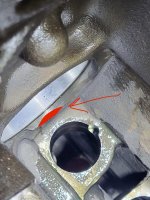
Yes, that potential exists on early trucks. From what i understand it is rare but it is something to be mindful of. Theres a “shelf” in the casting on some early blocks that will impede the installation of the flat tappet. Requires some machining work to resolve, and obviously a complete removal and disassembly of the engine in order to rectify.IMG_0760.jpeg
 
Have you tried removing the valve cover and inspecting your rocker ball seats and push rod cups for signs of galling / spalling ?
Had a look at my pushrods and pushrod guides and zero evidence of spalling/delimitation. Full disclaimer I am not doing this work myself, I am fully capable but never done it and the guys doing this is been doing it a very long time and had done many of these repairs.
I am on 24,000km now, drew a oil sample of the engine before stripping. Doing a few upgrades while busy with this. I had the opportunity to look at two camshafts of other vehicles that were renewed with solid lifter kits. The most interesting thing they had in common was two different engines with the exact same wear patterns on the cam shafts. I will take photos tomorrow morning and up load them so you can see.
This workshop claims they have never seen a hydraulic lifter fail internally, yes we can argue that all the trucks in OZ together is probably less than your average dealership has in the lot so our sample evidence is far smaller than you guys in the US.
 

Attachments

  • IMG_5774.jpeg
    IMG_5774.jpeg
    934.8 KB · Views: 45
  • IMG_5773.jpeg
    IMG_5773.jpeg
    1 MB · Views: 44
  • IMG_5776.jpeg
    IMG_5776.jpeg
    1 MB · Views: 44
. I had the opportunity to look at two camshafts of other vehicles that were renewed with solid lifter kits. The most interesting thing they had in common was two different engines with the exact same wear patterns on the cam shafts. I will take photos tomorrow morning and up load them so you can see.
Can’t wait to see this cam photos. I suspect they will show wear consistent with a roller that was not perpendicular to the cam lobe. This would result in a wavy wear pattern which indicates the roller was causing the entire lifter assembly to rotate in the bore. This causes uneven wear and a very distinct wear pattern.
This workshop claims they have never seen a hydraulic lifter fail internally, .
I have yet to see one of these where the lifter collapsed or otherwise failed internally in the hydraulic portion. All of the ones I’ve documented and reviewed were either caused by a bad roller-to-cam relationship (not perpendicular) or it was an upper valvetrain related failure where the push rods and rockers experienced premature and aggressive spalling, resulting in valve lash beyond what the system can accommodate for.

This is one of the other areas where testing is still taking place. The theory is that, due to the design of the HLA driven valvetrain, the rockers and push rods remain in constant contact, unlike previous ones where there was actual lash. This constant contact might be resulting in a lack of proper oiling between the surfaces, or at very least, a lack of sufficient exchange of oil.
 
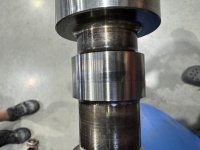
Here are the wear patterns on the cam shaft.
The first photo is the pressure/ramp side of the cam shaft where the cam shaft is busy building the pressure to open the valve, look very close and you will see the edges where the cam follower makes contact is not straight lines, its because the follower walks up the ramp and the reason is believed to be because the guide groove and the hole the hydraulic lifter is running in is too big.
The second photo is where the pressure is less because its where the valve is closing and look at the wear mark the outside edges are a perfect straight line and exactly the width of the cam follower.
The third picture is the rear of the cam shaft where the least pressure is, look how thin the line is where the cam follower was making contact, this makes sense to me where this workshop says they recon the cam follower holes and guide groove is too big.
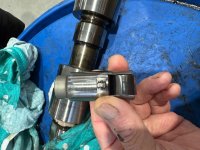
Photo 4&5 is the cam follower in the flesh, the little button looking bit just above the roller is the guide that is suppose to keep the cam follower from rotating.
Look closely to the top edge and the bottom edge of the follower how that is the only parts of the follower wearing nothing in between showing wear, this also strengthens the theory the follower and hole and guide groove are too big.
 

Attachments

  • IMG_5791.jpeg
    IMG_5791.jpeg
    843.7 KB · Views: 60
  • IMG_5790.jpeg
    IMG_5790.jpeg
    889.2 KB · Views: 58
  • IMG_5787.jpeg
    IMG_5787.jpeg
    675.9 KB · Views: 59
  • IMG_5788.jpeg
    IMG_5788.jpeg
    648.2 KB · Views: 59
  • IMG_5789.jpeg
    IMG_5789.jpeg
    684 KB · Views: 61
So your cam/lifters are fine?

At some of the dealerships I've been to, according to some of those "service techs", the starter and the cam/lifters are basically the same thing.
So far, that seems like the case. I haven't actually gotten the truck back yet. They're also replacing the drag link and haven't gotten that quote dialed in yet.
 
Here are the wear patterns on the cam shaft.
The first photo is the pressure/ramp side of the cam shaft where the cam shaft is busy building the pressure to open the valve, look very close and you will see the edges where the cam follower makes contact is not straight lines, its because the follower walks up the ramp and the reason is believed to be because the guide groove and the hole the hydraulic lifter is running in is too big.
The second photo is where the pressure is less because its where the valve is closing and look at the wear mark the outside edges are a perfect straight line and exactly the width of the cam follower.
The third picture is the rear of the cam shaft where the least pressure is, look how thin the line is where the cam follower was making contact, this makes sense to me where this workshop says they recon the cam follower holes and guide groove is too big.
Photo 4&5 is the cam follower in the flesh, the little button looking bit just above the roller is the guide that is suppose to keep the cam follower from rotating.
Look closely to the top edge and the bottom edge of the follower how that is the only parts of the follower wearing nothing in between showing wear, this also strengthens the theory the follower and hole and guide groove are too big.
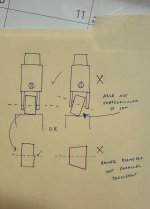
To me, that wavy pattern of wear on the lift side of the lobe points directly to a roller that wasn’t tracking perpendicular to a cam lobe. Either the lifter body’s axle was not drilled perpendicular or the roller profile itself was not parallel to itself. In either case, that causes the lifter to rotate axially in the bore. The keeper tab is designed to provide up to about 6° of rotation either direction. If everything else is made in spec this is completely fine. However when a component is out of spec, and the lifter is meeting the cam unevenly, this uneven connection causes it drive the lifter to rotate. This will progress as the wear increases. At some point it’ll start to spall the roller and / or cam face because it’s not tracking properly. You’ll have to excuse my crude sketch but this is what I’m trying to articulate:IMG_0864.jpeg
 
To me, that wavy pattern of wear on the lift side of the lobe points directly to a roller that wasn’t tracking perpendicular to a cam lobe. Either the lifter body’s axle was not drilled perpendicular or the roller profile itself was not parallel to itself. In either case, that causes the lifter to rotate axially in the bore. The keeper tab is designed to provide up to about 6° of rotation either direction. If everything else is made in spec this is completely fine. However when a component is out of spec, and the lifter is meeting the cam unevenly, this uneven connection causes it drive the lifter to rotate. This will progress as the wear increases. At some point it’ll start to spall the roller and / or cam face because it’s not tracking properly. You’ll have to excuse my crude sketch but this is what I’m trying to articulate:

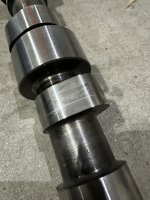
This is the answer. Attaching 4 photos for reference:
  1. Cam with 30K miles of uneven wear from lifter axial rotation. Looks like a weird heat scar
  2. Replacement cam with 200 miles of wear. Hard to see the axial wear, but it was beginning to develop. You can, however, see the scratches on cylinder 2, 4 and 6 from a side loaded lifter. Could have something partially to do with picture number 3
  3. A seized trunion installed upside down on the pedestal by the dealer tech after warranty work. This bit is plain stupid - whomever did this definitely had no idea what they were doing
  4. Cam bearing damage from vertical shear in camshaft, presumably from frictional force caused by photo number3
Cam with 30K miles:
1741734904602.jpeg
Replacement cam with 200 miles:
1741735019083.jpeg

Trunion installed upside down during warranty repair (cracked pedestal):
1741735161920.jpeg

Cam bearing damage:
1741735248798.jpeg
 
To me, that wavy pattern of wear on the lift side of the lobe points directly to a roller that wasn’t tracking perpendicular to a cam lobe. Either the lifter body’s axle was not drilled perpendicular or the roller profile itself was not parallel to itself. In either case, that causes the lifter to rotate axially in the bore. The keeper tab is designed to provide up to about 6° of rotation either direction. If everything else is made in spec this is completely fine. However when a component is out of spec, and the lifter is meeting the cam unevenly, this uneven connection causes it drive the lifter to rotate. This will progress as the wear increases. At some point it’ll start to spall the roller and / or cam face because it’s not tracking properly. You’ll have to excuse my crude sketch but this is what I’m trying to articulate:View attachment 83324
Absolutely nothing wrong with those pictures you have drawn, makes perfect sense. To me the wear pattern would be consistently too narrow if the rollers looked like the RH drawing. The cam conversion from hydraulic to solid followers is on my to do list well it will be my next mod as soon as funds are available. I just did the valve body of the gearbox and oil pan upgrade for the drain plug convenience, and grid heater delete and ARP head studs. Yes yes head studs was a bit of extra wank but been using those baby's my whole life in many engine builds I absolutely love them they do make a serious difference.
 
Tl;dr - If you live in or around the Atlanta area with a fifth gen rattle, go see Ram Diesel Specialist and have them install the Hamilton Flat Tappet conversion kit. You won't regret it.

I wanted to take a moment to document my story, which like many others, began with a slight tick. I've linked a few videos at the end of the post that show the symptom pre-fix and a tribute video for the fix being installed. A little context that should answer most of the initial questions:
  1. 2023 RAM 2500 SO 6.7 ISB
  2. Climate/Locale: Southeast US (Atlanta)
  3. Current Mileage/Hours/Idle %: 38,500/950/16%
  4. Oil Used/OCI: Valv PB 5w40, Shell T6 10w30/Every 7500 miles
  5. All powertrain/emissions equipment are factory and still under full warranty
I originally noticed the faint tick around 24,000 miles at high idle when at operating temperature. Over time, this faint tick became a loud rattle and very pronounced in tow-haul mode (undoubtedly from higher operating characteristics). I began searching here and over at CumminsForum to see if others were experiencing the same issue, as well as to informally confirm my suspicion that it was likely valve train noise from the HLAs. NOTE: I'm not going to rehash the fifth gen HLA failure modes here. This is well documented on this forum and over at cumminsforum.com

Here's a warm idle video, a high idle video, and a loaded power brake video all documenting the rattle symptom. This is what I was working with...

NOTE: I'm intentionally leaving out dealer names here, but if you love in or around the Atlanta area, I'd be happy to share specifics in a PM.

Enter diagnosis attempt #1: I called around to see how many diesel techs each dealer had, and if they had encountered the valve train failure common to these fifth gens. Unsurprisingly, many (if not all) of the dealers inside the perimeter had one diesel tech or none at all, and no dealer in Atlanta claimed to have any experience with valve train failure. I ended up taking it to a reputable dealer in Gwinnett county who claimed that "all of their techs were diesel certified", but most importantly, they had appointment availability inside of a week. What a miserable bunch of humans... My truck sat at their shop for almost 3 weeks with a tech who only wanted to treat me like an idiot (as if I've never owned a diesel engine) and who insisted that the noise was a "loose heat shield". He also berated me for "using the wrong oil" in the truck (I was using Valv PB 5w40 at the time) and that it was somehow related. After 3 weeks of no progress, I demanded to get the truck back with writing which stated they confirmed there was a mechanical issue, but were unable to diagnose it.

Enter diagnosis attempt #2: Back on the phone - I found a few dealers in North Atlanta that had diesel techs, but were booked out for weeks. It's important to note here that none of the dealers I ever worked with were willing to provide a loaner, nor was RamCares willing to reimburse a rental. I finally found a "truck center" which seemed knowledgeable on the RAM HD platform, but also claimed they had never encountered valve train failure on a fifth gen because "the Cummins is too good for that". What a moron that guy ended up being. The truck was in their shop for 72 days. 14 days to finally diagnose the issue as "scissor gear failure" (go figure), but would require cam, lifter and rocker replacement. I chose at the time to not argue about the scissor gear diagnosis because it landed the repair I was seeking. They sent several pictures of the cam which definitely had strike damage from what I thought would be collapsed lifters. Turns out, after finally getting the truck back, the tech agreed. His notes indicated that he found several collapsed lifters, cam damage and a few other minor things that appeared unrelated, but no mention of the scissor gear. What I didn't know was things were about to get much worse...

Within about 200 miles of the repair, the rattle returned with a vengeance. I had a hard time believing lifters would fail that fast, but it sure seemed like they had. I drove it for a few thousand miles on a couple of oil changes (by now I was running T6 10w30) to no avail.

Enter repair #2: I'd finally had enough, and after watching @cumminsturbofreak go through his saga, I decided I was going to switch to Hamilton's conversion kit. I spent an hour or so on the phone with Zach at Hamilton to learn more about the kit, and since I'm fortunate enough to be right down the road from Geno's Garage, I took it to Brennan and Dustin at Ram Diesel Specialist at Geno's recommendation. These guys are the next best thing to sliced bread. Not only did the install the conversion, but they uncovered why the valve train had failed so spectacularly a second time: the idiot dealer installed a trunion upside down. We're still perplexed at how someone could even do that without noticing. This in turn caused the cam to wobble in the bearings, which also had to be replaced. Engine came out a second time...

Here we are now - I'm a thousand miles down the road on this overhaul, and I couldn't be happier. The truck sounds like a fourth gen, no rattles, and the throttle response is quite improved.

Here's a tribute video the shop put together to show everything coming apart and back together.

Your scenario is the same as mine. I have a 2023 Ram 3500 with the cummins and the dealer confirmed it was lifters. They replaced half of them and some rods and lifters. Within a couple hundred miles of driving it the sound came back. I watched the idle video you posted and it's the same sound.

As of now the dealer will not do anything further because rhe "fix" did not fix it and they do not do the same procedure twice. They opened up a STAR case and said it's under investigation. Could take months or years to hear anything back. That is what they told me.

I do not understand why Ram doesn't do the flat tappet conversion. This issued started at around 20k miles. I currently have 30k on the truck. Apparently the 25 and 26 models now have the flat tappet lifters which tells me the hydrolic lifters are definily a problem they could not fix. I am not in the position to spend the 7k it will cost to do the conversion. And I definitely should not have to on a vehicle under warranty.

Now my worry is driving the truck with this issue and what it may do to my engine.
 
Your scenario is the same as mine. I have a 2023 Ram 3500 with the cummins and the dealer confirmed it was lifters. They replaced half of them and some rods and lifters. Within a couple hundred miles of driving it the sound came back. I watched the idle video you posted and it's the same sound.

As of now the dealer will not do anything further because rhe "fix" did not fix it and they do not do the same procedure twice. They opened up a STAR case and said it's under investigation. Could take months or years to hear anything back. That is what they told me.

I do not understand why Ram doesn't do the flat tappet conversion. This issued started at around 20k miles. I currently have 30k on the truck. Apparently the 25 and 26 models now have the flat tappet lifters which tells me the hydrolic lifters are definily a problem they could not fix. I am not in the position to spend the 7k it will cost to do the conversion. And I definitely should not have to on a vehicle under warranty.

Now my worry is driving the truck with this issue and what it may do to my engine.

The 6.7 redesign for 2025 uses the same lifters as 19-24. You’re not going to get a flat tappet conversion from Ram.
 
Your scenario is the same as mine. I have a 2023 Ram 3500 with the cummins and the dealer confirmed it was lifters. They replaced half of them and some rods and lifters. Within a couple hundred miles of driving it the sound came back. I watched the idle video you posted and it's the same sound.

As of now the dealer will not do anything further because rhe "fix" did not fix it and they do not do the same procedure twice. They opened up a STAR case and said it's under investigation. Could take months or years to hear anything back. That is what they told me.

I do not understand why Ram doesn't do the flat tappet conversion. This issued started at around 20k miles. I currently have 30k on the truck. Apparently the 25 and 26 models now have the flat tappet lifters which tells me the hydrolic lifters are definily a problem they could not fix. I am not in the position to spend the 7k it will cost to do the conversion. And I definitely should not have to on a vehicle under warranty.

Now my worry is driving the truck with this issue and what it may do to my engine.
Very common for lifter failure to repeat itself after a warranty repair. Could be several things causing it. Damage to the lifter bores in the block, damage to the cam, damage to other lifters they didn’t replace the first time, casting material remaining in the block and causing oil passage obstructions and lack of lubrication etc etc. Only replacing half of the components was mistake #1 but these corporations cut every corner they can.

Did they show you any of the lifters and push rods they replaced? Were they indeed damaged?
 
Back
Top