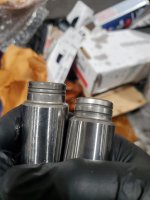
The only failures i had seen online were 10w30 but if they are both failing thats crap..
He said he’s actually seen more trucks with failed lifters running 5w40 than 10w30. And we’re in PA so it’s not really “cold” here. We rarely see subzero temp and for the past five years or so, our winters have been generally mild in comparison to what they were 20-30 years ago. I’d say generally our average winter lows for the past 3-5 years have been in the 20’s. Maybe an occasion dip into the teens, single digits, or rarely a sub zero.
Personally I think a lot of these lifter failures are attributable to several factors. Maybe some of which combine to make matters even worse.
1. The use of poor quality aftermarket oil and air filters. Some of the filters are so poorly manufactured you can tear the media out with your hands with very little effort. The cheap filters are absolutely letting more contaminants past, especially when they’re pushed to long intervals like 15k miles.
2. Using mediocre, subpar, or incorrect engine oils (like 15w40) and running them beyond their useful life. (There’s a common misconception among owners that these truck can
always go to 15,000 miles without an issue. That isn’t the case, and regular oil analysis can prove that.
3. Owners failing to monitor their active regeneration cycle frequency and not noticing that their trucks are regenerating more frequently than they should be. This can significantly increase fuel dilution in the oil and reduce its lubrication. Lifters and cam would be very susceptible to increased wear from a drop in oil viscosity. (Also a reason for regular oil analysis and more frequent changes when called for.)
4. Long periods of idle time at lower oil pressure.
5. Metallurgical or physical imperfections in lifters and cams as parts are sourced from various suppliers