

Rockcrawlindude
a rock crawlin’ dude
depending on how you look at the physics, it could be argued that a larger diameter tire could give you better highway mileage by effectively raising (lower numerically) your final drive ratio. Every revolution of the tire you travel further saving you rpm at a given speed
But, an important thing to remember about physics class is all the things that are ignored like rolling resistance, air resistance, etc. hell, i once asked a physics professor “if friction is independent of surface area, then why do drag cars have super fat tires?” She had to reach out to colleagues and they didn’t have an answer. In physics class this is an assumed rule when you calculate a block sliding down a ramp but all of us know that contact patch matters in real life
In the real world, where we live, everybody who is being completely honest will tell you larger tires hurt mileage. It takes more to get them going and you downshift more frequently and that cancels out the hundred RPM cruise savings.
If you want bigger tires definitely get them. Couple percent lost mpg is nothing compared to a good looking truck with meaty rubbers
But, an important thing to remember about physics class is all the things that are ignored like rolling resistance, air resistance, etc. hell, i once asked a physics professor “if friction is independent of surface area, then why do drag cars have super fat tires?” She had to reach out to colleagues and they didn’t have an answer. In physics class this is an assumed rule when you calculate a block sliding down a ramp but all of us know that contact patch matters in real life
In the real world, where we live, everybody who is being completely honest will tell you larger tires hurt mileage. It takes more to get them going and you downshift more frequently and that cancels out the hundred RPM cruise savings.
If you want bigger tires definitely get them. Couple percent lost mpg is nothing compared to a good looking truck with meaty rubbers
Last edited:


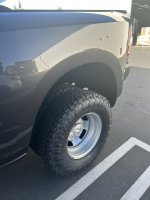


 . Don't get me wrong, great choice, they look terrific, and me personally I wouldn't put highway tread tires on unless I was only on the road, only running in decent weather.