What's new
Ram Heavy Duty Forum

Register a free account today to become a member! Once signed in, you'll be able to participate on this site by adding your own topics and posts, as well as connect with other members through your own private inbox!

Automatic Regen too often

I know you said you don’t monitor it, but can you look and tell me what the dash gauge is at?

Cross monitoring the dash and PID paints the best picture.
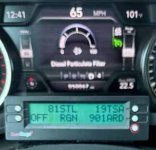
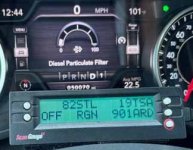
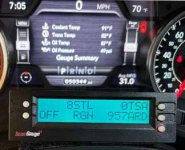
Here is the follow up to my trip to Phoenix last Friday and took some pics of the dash DPF screen and SG2 on the drive down and back.
Start: 78% soot load and 15 hours into the 24 hour cycle.
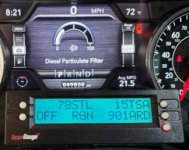
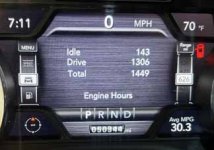
Start Home.jpgEngHrs.jpg
Upon my arrival in Phoenix the dash gauge never changed. The SG2 soot load was up as high as 88% and down as low as 68% on the drive down. Shortly after leaving Phoenix the dash gauge dropped three times to 0%.
DestPhx.jpg%Drop1.jpg%Drop2.jpg
Arrived back home with 91% soot load and 22 hours.
End Home.jpg
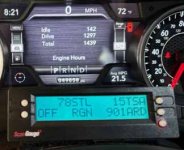
Didn't drive anywhere Saturday but did go out Sunday and the soot level reached 99% and 23 hours on the SG2, and SG3 got as high as 99.64% and 23 hours, but I wasn't able to get a pic any higher before it went into regen because of traffic. I reset my trip B meter to compare the "average regen distance with the next cycle. This morning the dash gauge is 0% as usual, the SG2 is 8% and the SG3 is 8.63% after regen.

RegSept8 3.jpgRegSept8 4.jpgRegSept8 5.jpg
So the trip Friday and yesterday was 486 miles and 10 hours driving.
 

Attachments

  • RegSept8 2.jpg
    RegSept8 2.jpg
    64.6 KB · Views: 1
With these monitors and our trucks, I think the only thing that is calculating soot load levels is the differential pressure sensor. When the differential pressure gets to a certain point it regens or the 24 hour timer. I’ve noticed that the DPF soot load is tracking right in line with the hour meter on my truck since last regen. It may go up a little while in town but lines back up after a highway run.
 
Here is the follow up to my trip to Phoenix last Friday and took some pics of the dash DPF screen and SG2 on the drive down and back.
Start: 78% soot load and 15 hours into the 24 hour cycle.
View attachment 77014View attachment 77020
Upon my arrival in Phoenix the dash gauge never changed. The SG2 soot load was up as high as 88% and down as low as 68% on the drive down. Shortly after leaving Phoenix the dash gauge dropped three times to 0%.
View attachment 77015View attachment 77016View attachment 77017
Arrived back home with 91% soot load and 22 hours.
View attachment 77019
Didn't drive anywhere Saturday but did go out Sunday and the soot level reached 99% and 23 hours on the SG2, and SG3 got as high as 99.64% and 23 hours, but I wasn't able to get a pic any higher before it went into regen because of traffic. I reset my trip B meter to compare the "average regen distance with the next cycle. This morning the dash gauge is 0% as usual, the SG2 is 8% and the SG3 is 8.63% after regen.
View attachment 77023View attachment 77024View attachment 77025
So the trip Friday and yesterday was 486 miles and 10 hours driving.

Good to know the TSR is accurate. I’ll have to ask Edge about that PID for the CTS3.

Looks like everything is working normal in your truck and the 8.63% after the regen is a sign of a good regen and a clean DPF.

Nice low idle hours too, probably the lowest I’ve seen on a gen 4.5.
 
Good to know the TSR is accurate. I’ll have to ask Edge about that PID for the CTS3.

Looks like everything is working normal in your truck and the 8.63% after the regen is a sign of a good regen and a clean DPF.

Nice low idle hours too, probably the lowest I’ve seen on a gen 4.5.
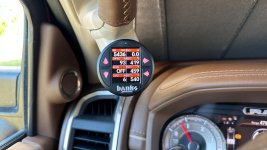
I think the monitors like Scangauge, Banks, Edge, make it much easier to monitor a regen, and you see it more in of a real time activity, than what the dash gauge shows. As far a clean DPF I use the Stanadyne Performance Formula 8 oz additive per tank, which seems to cover most everything year round. Every couple months I'll do an 8 oz bottle of their injector cleaner per tank, and sometimes I'll add some of their Cetane additive as well. I'm not promoting Stanadyne additives or think they're any better than some of the other brands, a diesel mechanic friend suggested it and I've been using since 2014. The whole purpose of buying the Scangauge, was to monitor the regen cycle, and make sure I drive it till completed so I don't get the warnings or plug it up etc.

I would think all the monitor brands use the same PID's that are programmed into the truck. Here is the Time Since Active PID as seen in the SG2 and the SG3 download directly from the truck calls it Time Since Regen and they show identical hours.

TXD: 07E0228122
RXF: C46205813622
RXD: 4010
MTH: 000100010000
NAME: TSA
 
Another small update. After the 60 miles between regens (1st non 24 hour regen I had since dpf and maf replacement), I used 6400d on a tank then got new tires (295-65-20). With about 500 miles on the tires with an average speed of 50mph, and no fuel treatment my DPF gauge hasn't moved off of 0. My last tank was 435 miles on 24 gallons or about 18mpg. Compared to my normal 20 ish mpg it seems to be making the engine work more and EGTs must be staying higher thus giving me the passive regen I was hoping for. I'll keep updating here as things progress.
 
Another small update. After the 60 miles between regens (1st non 24 hour regen I had since dpf and maf replacement), I used 6400d on a tank then got new tires (295-65-20). With about 500 miles on the tires with an average speed of 50mph, and no fuel treatment my DPF gauge hasn't moved off of 0. My last tank was 435 miles on 24 gallons or about 18mpg. Compared to my normal 20 ish mpg it seems to be making the engine work more and EGTs must be staying higher thus giving me the passive regen I was hoping for. I'll keep updating here as things progress.
That 6400D is incredibly potent stuff. I’m not sure what the “magic ingredient” is, but it will absolutely reduce soot loading in almost every driving scenario. If the truck is consuming fuel treated with that, and it’s seeing routine highway travel, it will absolutely drop soot loading and clean the DPF out.
 
That 6400D is incredibly potent stuff. I’m not sure what the “magic ingredient” is, but it will absolutely reduce soot loading in almost every driving scenario. If the truck is consuming fuel treated with that, and it’s seeing routine highway travel, it will absolutely drop soot loading and clean the DPF out.
I concur. My 19 HO with 115K miles was starting to regen every few hundred running empty and I was starting to get concerned. Even after a couple of thousand mile trips driving at higher speeds it was going into regen and taking close to an hour to clear.

After pouring in the 6400D my DPF gauge went to nearly half and went into regen mode. After that it dropped to zero and has stayed there. I recently finished a 999-mile run of combined highway and city, and the gauge never moved off zero. At 24 hours it went into automatic regeneration, and it took 17 minutes to clear. After the initial treatment, I've been running an ounce to 10 gallons of the 6500. I'm pretty amazed at the stuff and I'm taking it out of the "snake oil" category.
 
I concur. My 19 HO with 115K miles was starting to regen every few hundred running empty and I was starting to get concerned. Even after a couple of thousand mile trips driving at higher speeds it was going into regen and taking close to an hour to clear.

After pouring in the 6400D my DPF gauge went to nearly half and went into regen mode. After that it dropped to zero and has stayed there. I recently finished a 999-mile run of combined highway and city, and the gauge never moved off zero. At 24 hours it went into automatic regeneration, and it took 17 minutes to clear. After the initial treatment, I've been running an ounce to 10 gallons of the 6500. I'm pretty amazed at the stuff and I'm taking it out of the "snake oil" category.
I was using the 1 oz to 10 gallons, and with my drive cycle, it wouldn’t quite make it to the 24 hr timed regen. I’ve since started using the performance dose, 2 oz per 10 gallons, and it has significantly stretched the soot loading out farther mileage wise. For instance, my latest mileage since my last regen is 373 miles with 13 hours since the last regen. The evic DPF gauge has only moved up to the first notch which is about 1/16 on the gauge. My soot loading on the SG3 is tracking right with the hour meter but I’ve not seen egt’s go over 625 degrees and that was only momentarily. Most times it varies right at 600 +/- . I definitely wouldn’t call it snake oil.
This drive cycle is not my normal. I have been doing more idling getting my SG set up and tinkering with it but I’m still amazed at how it is currently doing with the regen situation compared to how it has done in the past.
 
For everyone using the different types or brands of monitors, are you using them with the bypass cable or without ? Or does it make any difference ?
 
So just some updates and data to add to the discussion:

I am currently a little over 22 engine hours and 858 miles since the last regen cycle completed. Currently burning fuel treated with archoil 6500 at the 1oz per 10 gallon rate. The previous week or so, we had very cool mornings and mild daytime temps. Typically around 40°F on my morning commute to work (12 miles all highway) and around 75°F on the way home. This proved to permit better passive regeneration and has substantially increased my time and miles since last cycle. For comparison, my previous regen cycle was initiated after only 10 engine hours and 382 miles. That cycle saw the exact same drive cycles as the current one, the only difference being a dramatic change in temperature.

DPF % REG currently reading 93%
Dashboard DPF gauge showing 3rd notch on the gauge, or roughly about 3/4 of the way to a soot driven active regen cycle.

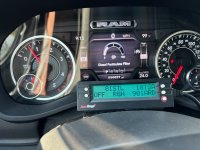
93% of 24 is 22.32 so the DPF % REG pid is being driven by the regen timer at this point. Should be able to make it to the 24 hour regen this time if I can achieve some good passive regeneration on my way to work. Mornings have been in the low 50’s so it’s not as effective as when the temps dip into the 40’s or lower. Although passive regeneration has been less effective this week, I have noted that soot loading has been much slower than previous weeks. Not seeing the Dashboard DPF gauge jump up anywhere near as fast as it did in previous drive cycles over the summer. This current cycle and the previous cycle saw 100% non-towing, non-hauling drive cycles. Just unloaded operation on the highway at 75mph. Mostly commutes to and from work 12 miles each way with some longer (30-40 minute) trips and some back roads slower driving mixed in. Last regen cycles average speed worked out to 40mph over the interval, while this one I’m currently at about 39mph average. Clearly the morning low temperatures are having a substantial positive impact on passive regeneration and reducing soot load. I’m nearly 2.5 times as far in miles and 2.2 times as many engine hours into this cycle over the previous one, and still haven’t even regenerated yet.
IMG_8221.jpegIMG_8222.jpegIMG_8223.jpeg
 
So question, my truck went into Regen the other day with no bars on the gauge on the evic. Any thoughts?
 
Temp was below 50°F this morning on the way to work.

Mileage and DPF gauge when I left for work:IMG_8222.jpeg

12 miles later when I arrived at work:IMG_8228.jpeg

Passive regeneration is much easier to achieve below 50°F.
 
But it shouldn’t be… which makes me wonder if that’s DPF sensor programming or engine programming.
I agree completely.
I think it’s partly due to the significantly higher EGT’s from the cold engine working harder to get moving. My EGT’s across 1,2, and 3 were basically 700+ for most of the trip, sometimes nearing 800 on some grades.
 
Well, I think my good regen times are over. The DPF replacement from last April seemed to have my truck operating 'normally' with great passive and 24 hr regens. The Archoil treatments seemed to help as well. I've now had 2 soot based regens in less than 8 engine hours, with the one this morning taking almost 40 minutes of hard mountain driving. It was nice while it lasted.
 
Back
Top