Over the next few weeks things are going to become quite interesting; I am going to begin to unravel my plans for something that I have not seen done before. Throughout my life I have always enjoyed identifying potential problems, and also suggesting effective solutions, while giving consideration to time, money, and effort. I fix things.
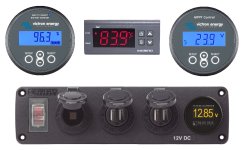
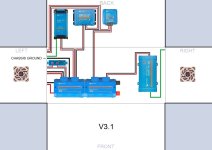
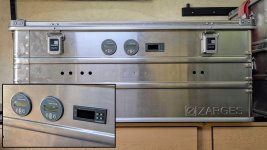
In this case I needed to create a cooling solution for the Victron Energy components I would soon be installing inside of a Zarges aluminum box. Although these components are very efficient they still produce heat, and when current flows through a wire, heat is created also. All these things may seem minor but they stack up, and when you are operating in austere conditions, and components are really being worked hard, that is the worst time to experience a failure.
Oh, and don't forget I am bolting a
Wallas Nordic DT diesel stove/heater onto the lid so there will be more heat created there. After a few hours of calculations considering how much heat can be created I outlined several cooling system options. My choice was a simple system that is all 12 volt DC, uses off-the-shelf components, has significant variability, and a massive safety factor. Time will tell if my calculations were correct!
The first piece of this system will be an
Inkbird ITC-1000 Temperature Controller.
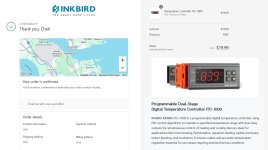
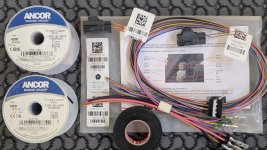
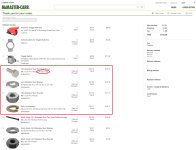
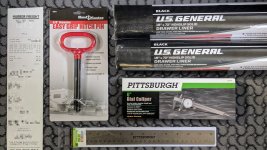
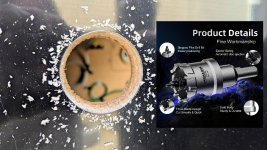
Below are a few additional components I ordered mixed in with others that solve additional issues I will discuss in the future. Pay particular attention to the Mollom 120mm hole saw, Noctua fan grills, two
Noctua 120mm PWM (pulse width modulated) fans, and
Noctua NA-FC1 PWM fan controller. In summary, the Inkbird will monitor temperature inside the case and if applicable, will notify the fan controller to initiate cooling, and as you might have already guessed, the fan controller will control the fans.
My calculations suggested that one 120mm fan would be sufficient provided there was additional ventilation to provide cooler air. Since I had so much of the system already purchased, adding one additional fan was only slightly more. One fan will push while the other pulls. I am expecting the volume of air in the case to be replaced dozens of times per minute at full capacity. It will draw very little and be whisper quiet.

Switching gears, I am also creating a more permanent installation of my
ExtremeAire Magnum 12 volt air compressor. Since this will be a permanent installation I would like to include a filter to clean up that "hot, dirty, and wet" air being produced. An FRL system (Filter, Regulator, and Lubrication) combines different components with varying capacities, for many applications. In my case I will not be running air tools so there is no need for lubrication, and another part of my system already regulates the pressure, so a filter is all I require.
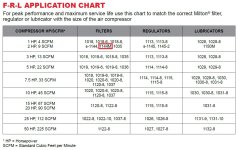
With my compressor being 1.5 HP and pushing a maximum of 6 CFM at zero PSI, the
Milton 1/4" NPT Metal Mini Micro Filter (1144M) was the filter I selected.
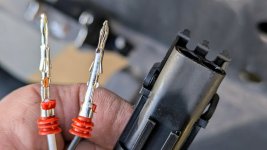
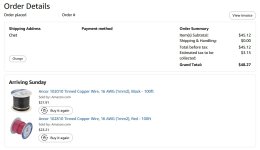
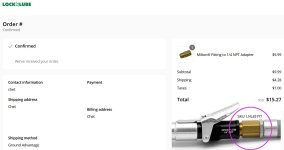
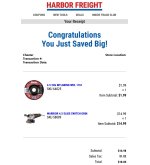
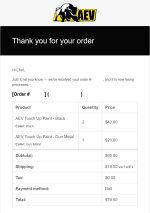
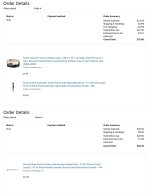
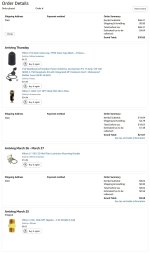
Here are the order details so I am able to track my expenses and use this information for reference purposes in the future. Notice also the fine Milton tire stem valve caps which contain an o-ring inside, very cool. And don't forget yet another 110 Vac plug, the correct mounting bracket (S-1163-22), and
brass male nipples.
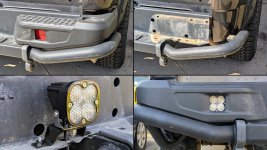
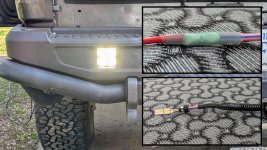
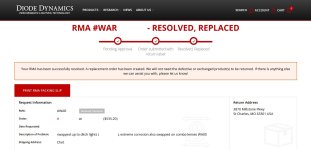
Some time ago I purchased a pair of Diode Dynamics SS3 pod lights along with AEV brackets so I could mount lights in my rear bumper. This is especially helpful off-road, at night, while backing up. I won't go into any details right now but the DD SS3s would not fit properly and instead of reinventing the wheel, I purchased a pair
Baja Designs Squadron Sport LED Auxiliary lights with Work Scene glass, that AEV designed the system with.
Initially, I began to design a different bracket, reroute the rear facing wiring, etc. After a few hours, I considered that time was critical so I ordered the Baja Designs LEDs - problem solved.

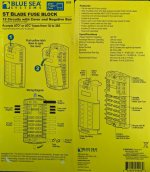
Now we begin the deconstruction of the existing electrical system. This OEM Four Wheel Camper wooden box housed a
Blue Sea Systems accessory panel and since my new system will occupy the same space, and a new accessory panel will be installed elsewhere, these components had to go.

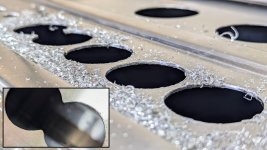
Opening the cabinet down below, adjacent to the door, reveals the OEM 70 Ah AGM battery that has been worked hard over the past several years. Two 12V 100 Ah LiFePO4 batteries will soon occupy spaces 1 and 2 - it is nice that FWC has included all the space and parts necessary to mount a second battery. The red mark in the upper-left corner is where I will be drilling a 51mm hole and trust me, I measured about ten times before I even considered placing a bit into the drill motor.
The placement of this hole is important since a
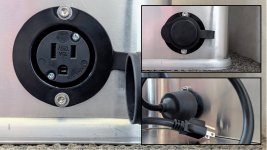
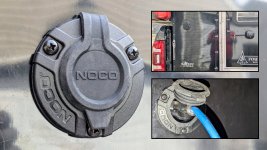
NOCO AC Port Plug (GCP1) will be mounted here. When oriented properly, the extension comes in and faces downward so it must make a 180° turn and head back up where it will connect with an outlet on the side of the Zarges case. When you consider the NOCO plug is only 16-inches long, there's much to do with just a little.

Of course, the hole turned out just fine - my measurements were correct. I don't understand why but drilling a hole into a new vehicle or camper give me great satisfaction. My guess is that once this action is taken, there is no going back, and I like to operate that way. As Julius Caesar said after crossing the Rubicon River,
"Alea iacta est."
NOCO AC port plug installed, tested, and now operational.
Even though I am home for a few weeks I am sleeping every night in my camper. It's hard to explain but I enjoy sleeping outside and for the past six to seven years I have closed my eyes virtually every night outdoors. As the sun was rising this morning and my eyes began to open, these beautiful shadows fell upon the sailcloth of of my camper so I wanted to share this relaxing and peaceful picture with you. My goal is to get you outdoors more frequently so you can live a joyful life.
When you see the Southern Cross for the first time,
you understand now why you came this way...