What's new
Ram Heavy Duty Forum

Register a free account today to become a member! Once signed in, you'll be able to participate on this site by adding your own topics and posts, as well as connect with other members through your own private inbox!

2021 RAM 3500 Tradesman | AEV Prospector | FWC Grandby

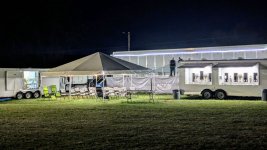
Using the next three photographs I will provide you with a peek inside a Wildland Fire Camp. Let me begin by saying that a fire camp is essentially a mobile town that to a very large degree is self-sufficient. Generally a large field is selected and organized to support 500-1,000 wildland firefighters and support personnel. This field will include a large area for tents to sleep in, another area for operations tents, specialized trucks to provide food, showers, laundry, a supply area, communications, etc.

Below is the shower truck and associated wash stations at the fire camp I am currently at south of Hood River, Oregon. The shower section, to the rear, is a modified 18-wheeler containing 20+ individual hot showers that are accessed through the side. A large aluminum patio with steps is erected so you are able to step up, walk, and enter the shower. There are separate water storage and containment systems for fresh and used water. The trailers with wash stations have seven stations on each side and are plentiful. Hot water is unlimited and after a long day outside a good shower will boost your morale.

Showers open at 0500 and close at 2200 - they are free.
RC 24-082.jpg

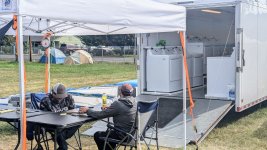
Here is a laundry truck with a attendants playing cards. In summary, you drop off your clothes and they will be washed, dried, folded, and returned to you in a sealed bag. Laundry is professional and free.
RC 24-083.jpg

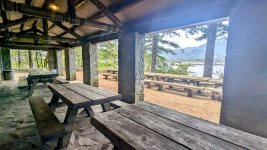
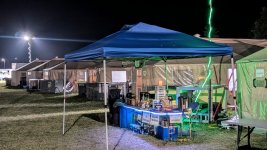
Here are some of the communications and meeting tents. Different teams such as operations, logistics, communications, emergency, etc., use these tents while working the fire. The tents usually contain tables and seating for dozens of people, are air conditioned and heated, and have reliable electrical power usually provided by large portable diesel generators. It's really an impressive set up and with one phone call these mobile wildland fire camps can be operational or demobilized within 24-48 hours. It's really an impressive operations and reminds me of military operations to some degree.
RC 24-084.jpg

Every few weeks we are required to take a mandatory day off for rest and recuperation - on my recent day off I decided to visit the Western Antique Aeroplane and Automotive Museum in near the Columbia River Gorge. They have 160 antique aircraft and 180 antique automobiles along with an assortment of tractors, motorcycles, military firearms, etc. What is truly amazing is the fact that all of the aeroplanes and automobiles are operational and regularly flown and driven. Truth be told, this is the most amazing collection of antique aeroplanes I have have ever seen.

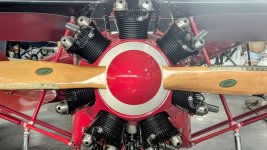
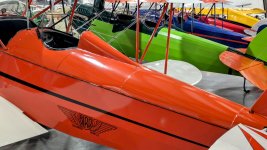
This is a Saint Louis Cardinal C-2 powered by a Ken Royce 90 horsepower 7-cylinder, air-cooled radial engine, manufactured in 1929. Only twenty-two were ever built - this was the age of experimentation and advancement in aeronautics.
RC 24-085.jpg

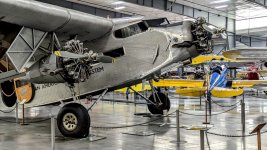
Here is a beautiful example of a Ford Tri-Motor. I'm not sure exactly what it is, and maybe it is only me, but walking up near the old beauties, examining the craftsmanship, smelling the metal and oil, hearing their radial engines backfire, sputter, and then roar as they wake up from the dead, it's a beautiful experience.

These were the days when man and machine communicated with each other, the two had a relationship, a mutual respect, a sort of love for one another. What an adventure those days must have been...
RC 24-086.jpg

With a 3.5 acre indoor hangar facility you really should plan on spending a full day enjoying this amazing private collection. I could take dozens of pictures but none of them give the museum the proper credit it deserved. If you have any interest in machines or mechanization in general, I would recommend you stop by if you are in the area. It's just a beautiful collection and everything is in immaculate condition.
RC 24-087.jpg

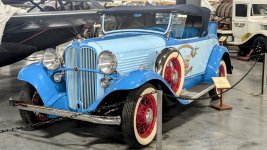
When I happened upon a 1932 Willys Overland Model 6-90 my pace slowed and I smiled as I examined this classic and thought of our group of adventurers. Rumor is this particular vehicle was used during the filming of Hopalong Cassidy and contains a few bullet holes that were later patched.
RC 24-088.jpg

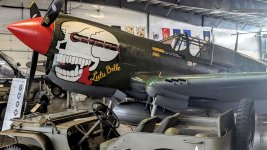
This is a Curtiss Wright P-40N Warhawk used early in World War Two. When I was very young I saved up and purchased model airplanes to build and this was one of the first I ever completed. The paint markings on my model had the classic "Flying Tigers" design which I still love to this day.
RC 24-089.jpg

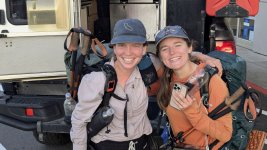
Back to work - here I am at the Eagle Creek trailhead hanging out with a group of northbound Pacific Crest Trail thru-hikers. The PCT is a 2,650 mile long trail that begins at the border with Mexico and ends at the border with Canada. Don't take this as a derogatory remark but after 2,000+ miles you will smell these hardcore hikers before you see or hear them. What I found most interesting is that around 30% or so of the hikers were from Europe. Each of them has a story and all are interesting people who possess that desirable can-do attitude despite austere conditions and never-ending obstacles.
RC 24-090.jpg

Since I spend time at the trailhead in my AEV Prospector and Four Wheel Camper dressed in a Yellow Nomex Wildland Fire Shirt and 5.11 Tactical "Battle Brown" Apex pants, it should not be surprising that I am in a word...irresistible. These two young ladies had been hanging out for some time flirting with me, complimenting me on my Prospector, etc. After endless eye contact, countless ooh's and ahh's, playing with their hair, etc. they finally mustered the courage to ask for a ride in my adventure vehicle.

Just kidding, they needed a ride into town and if you have ever hung around the Appalachian Trail, or in this case the Pacific Crest Trail, you know that a simple ride into town for supplies is helpful and very appreciated. These girls, and all the others I met, only have maybe 500 or so miles to go until they reach Canada. There are some even larger fires up north in Washington, I hope and pray they an unharmed and able to complete their adventure.
RC 24-091.jpg
 
The past few weeks have been very relaxing - when people ask what I am doing I most often reply that I am taking a vacation from my vacation. Don't get me wrong, travel full time is fun and I wouldn't trade it for anything at this moment but when you are moving all the time you are also constantly identifying locations to camp, top off on gas, purchase supplies, and visit local attractions. Sleeping at fire camp each night, enjoying a hot meal with the men, relaxing in a hot shower at 0530 each morning, and plugging in to charge my house battery overnight, has been very relaxing. This could never last too long though, I am already itching to get back on the road.

If you recall, I recently has my oil changed at Prestige Chrysler Dodge near Loveland, Colorado. Everything went well and I much appreciated them squeezing me in just before I began my trip to the next fire out here in Oregon. During a mandatory day off I decided to venture west and explore a bit of Portland. While walking out to my vehicle after lunch, I noticed a small puddle of fresh oil under my rig and although I was sure it was not from me - I peeked underneath and discovered it was. The oil drain plug could be spun with my finger so the first thing I did was snug it up and check my oil level.
RC 24-092.jpg

My next step was to call the Service Manager at Prestige and discuss. He did a great job and within minutes asked me to drive 1.4 miles over to Gresham Dodge, pull directly into the service area, and let them check everything. A few minutes later I rolled in and greeted by a fellow veteran - a technician then inspected my vehicle, tightened the drain plug to the appropriate torque, added approximately 1/2 quart of oil, sprayed off the underside, and returned the vehicle to me. Although this has never happened previously, I will be inspecting underneath on a regular basis. This could have turned out far worse if that plug would have dropped out while exploring the desert or mountains. Yikes!
RC 24-093.jpg

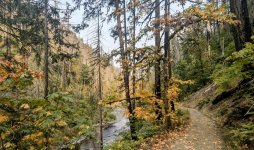
Here is an early morning shot from the Eagle Creek Trail where I spend much of my time. If you are near Cascade Locks east of Portland my suggestion is to stop in for a few hours and enjoy a hike - there is parking at the trailhead. It seems most folks opt for a two mile hike out to Punch Bowl Falls while others opt for a six mile hike out to Twister Falls. There is so much to do outside in this area of the country you will never become bored if you enjoy the outdoors.
RC 24-094.jpg

Well, it's fall spawning season for the salmon and what a beautiful sight to behold. It's really something special to watch these large fish fight the current and shallow waters to move upstream, spawn, and then die. At the head of the creek is the Eagle Creek National Fish Hatchery and yes, they offer tours.
RC 24-095.jpg

Just across the highway from the hatchery is the Eagle Creek Overlook which was "developed by the Civilian Conservation Corps in the 1930's as a place to view construction of the Bonneville Dam." I love visiting the old CCC facilities and viewing what ten-of-thousands of young men built in such a short period of time. Dams, bridges, buildings, roads through the forest, etc. - I'm not quite sure if any of those men working for $30 per month realized what a treasure they were leaving future generations. Thank you men.
RC 24-096.jpg

Speaking of being broke and not having a dime, it's sad to hear of the repeated break-in attempts by local individuals. From what local law enforcement tell me, groups travel out of Portland and make a loop to the east, then south, and then back to south-west Portland. They travel through the area smashing windows and stealing anything of value before hitting the pawn shops in SW Portland where they sell their stolen goods.

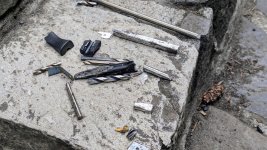
Below is a self-pay station where there was an attempted break in on Sunday night. The station is constructed using 1" thick steel which is anchored several feet into the concrete below. I though it was crazy that this was necessary until I saw first-hand how determined some people were to break in.
RC 24-097.jpg

A quick call to the US Forest Service and a short time later a few Federal Officers arrived to investigate. Within minutes they were collecting bits and pieces of punches, drill bits, and saw blades. Without a doubt the increase in local crime can be directly attributed to legalization and proliferation of drugs throughout the area. Although it may seem natural to immediately separate oneself from "those addicts," as I grow older, and hopefully a bit wiser, I am trying to understand exactly what is taking place.

These people, are people - they are someones son, or daughter. They are brothers, sisters, aunts, uncles; possibly a father, or mother. As I sit here looking at this pile of broken tools laying on the dirty ground I wonder what else they might have been used to build. In a strange way these broken tools represent the broken lives of those addicts. If they were not broken, what else could they have built?

As a traditional Catholic, I pray frequently - and yes, we have a prayer for those addicted...

God of life, You made me in Your perfect image, to live in Your love and to give You glory, honor and praise. Open my heart to Your healing power. Come, Lord Jesus, calm my soul just as you whispered “Peace” to the stormy sea. St. Jude, most holy Apostle, in my need I reach out to you. I beg you to intercede for me that I may find strength to overcome my illness. Bless all those who struggle with addiction. Touch them, heal them, reassure them of the Father’s constant love. Remain at my side, St. Jude, to chase away all evil temptations, fears, and doubts. May the quiet assurance of your loving presence illuminate the darkness in my heart and bring lasting peace. Amen.

RC 24-098.jpg

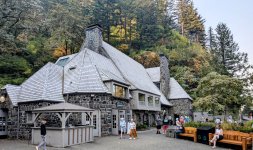
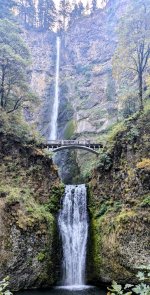
When you travel along the historic Columbia River Gorge Highway (U.S. Route 30) just east of Portland there are many beautiful waterfalls for you to enjoy. This is a visitors center at Multnomah Falls.
RC 24-099.jpg

And here she is, standing 620+ feet tall. Stop by, check her out, and listen to her sing!
RC 24-100.jpg
 
My rear passenger brake light failed so I reviewed the owners manual and stopped by to pick up a replacement bulb. When I attempted to install the new bulb I noticed it the #3157 was incorrect and would not fit. What bulb does your manual show?
RC 24-101.jpg

Since I had the OEM bulb out I looked at the number and it was #7443 which was nowhere to be found in my owners manual. Maybe I made a mistake although I returned the original bulbs and purchased the correct new ones.
RC 24-102.jpg

I'm not sure what the proper name is for this tool but it is one that helped me out several times. It originally came with a set of Kobalt tools that I purchased as an extra set to carry with me while traveling and to be honest I never thought I would use it. In this instance I only had a few inches between my camper and the two T25 Torx bolts that held the tail light in place and it was the only tool that would work. It also has a ratchet mechanism inside so despite the tight space, it only took a few seconds to remove the bolts.
RC 24-103.jpg

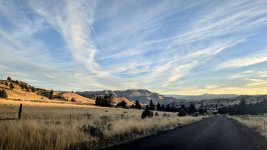
Since crews were demobilizing from the Whisky Creek fire it was time for me to leave and head to another fire. Here I am driving through the Spring Basin Wilderness approximately fifteen miles north of Mitchell, Oregon. My four hour ride was so beautiful and relaxing I almost turned back to do it again.
RC 24-104.jpg

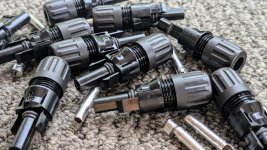
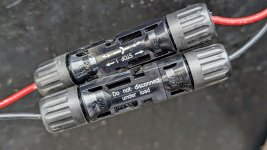
In one of my future posts I will spend time and go into greater detail although I will give you a hint: when the MC4 connectors began to fail on my Renogy 200 watt Solar Suitcase I began researching MC4 and other appropriate DC connectors. During my research I went deep down the MC4 connector rabbit-hole and quickly discovered that all MC4 connectors are not the same. Surprise!
RC 24-105.jpg

My research lead me back to the company that owns the original design of the MC4 connector - Stäubli International AG. Let me summarize by stating that the difference between these connectors and the ones used on the Renogy seem to be night and day. Maybe the Stäubli MC4s cost more compared to ones made somewhere else that look similar but if the help minimize the potential of having a fire where I sleep, it's a small price to pay. And don't mix and match different brands of MC4s - more on this topic soon.
RC 24-106.jpg

I was able to connect with the Stäubli field service engineer and he was able to recommend several companies in the area who stocked the specific components I was looking for. Don't be afraid to call manufacturers and spend time on the phone with them asking questions - they are the experts and that is what they are there for.
RC 24-107.jpg

Since this was my third fire I figured it was time to step up to something larger than the previous 10,000 and 3,000 acre ones. For the past week I have been at the 167,000 acre Rail Ridge fire in central Oregon. This fire is so large we actually have a primary camp along with two Spike camps which is a smaller camp that is separate from the main camp.

To help put things into perspective regarding the size of the fire and travel - some of our team members are driving 1.5 hours to their location prior to beginning work. Consider that your work day begins at 0700 and ends at 1900, and you must depart camp at 0530 to arrive on time, and you return at 2030 each night. Also consider that chow and showers open at 0600 and close at 2200 and you can begin to see the conflict. Add in 700+ men showing up to eat and shower within minutes of each other and you can begin to understand why spike camps and disbursing teams becomes not just a good idea, but mandatory.
RC 24-108.jpg

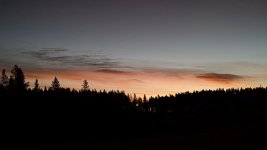
Here's a parting show of the sun obscured by the smoke just a day ago. Happy trails and check your MC4 connectors - you may prevent a fire :)
RC 24-109.jpg
 
I'm not exactly sure how to describe the process but there is something about travelers being able to spot other travelers in a crowd and stopping to say hello. In this case we were both out in the middle of Oregon and happened upon one another although there have been other times where I have been shopping in a large store and have been approached and asked, "Hey, is that your truck outside?" It's always fun to meet other adventurers in random places, share a few stories and laughs, and slowly drift apart...sometimes we meet again.

This European adventure vehicle manufactured by Woelcke in Germany was being driven by a single Swiss lady. She was very happy to share all sorts of travel information regarding her recent Panamericana Tour which lasted 180 days, driving 30.000 km, and spanning 15 countries. And although its hunting season here in Oregon, she just wasn't my type. I wished her happy trails and will continue my own adventure - always looking, listening, and smiling!
RC 24-110.jpg

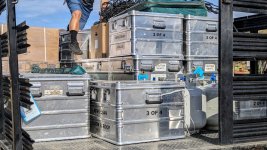
Yes, I am still at the Incident Command Post here at the Ridge Rail Fire in central Oregon and as of yesterday she was 176,000 acres and mostly contained. A supply truck was rolling in and I noticed a dozen or so huge Zarges K470 aluminum cases identical to the seven that I own, only much larger. This put a big smile on my face in the middle of another long day - we don't recognize weekends out here and since arriving, I have worked thirty days straight. It's fun though and the guys in the delivery truck were entirely confused when I began taking pictures of the large shiny boxes.
RC 24-111.jpg

Since many of these incidents take place in remote areas that do not have cellular service, or the ability to support a significant increase in cellular traffic, most every time a deployable cellular tower is erected on site. Here is an example for you guys who enjoy NotaRubicon Productions videos.
RC 24-112.jpg

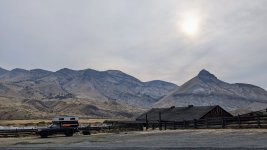
Just snapped a picture of my rig on a smoky day at fire camp. It's a large camp and when I arrived there were 1,200 people total. As I explained in an earlier post, large groups of people and much large equipment have been relocated to two spike camps and one equipment staging area even closer to the fire.
RC 24-113.jpg

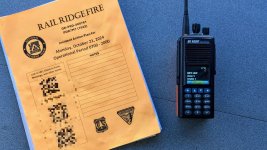
Every day at morning brief, revised forty page action plans are handed out and discussed. Let me summarize and say that there is so much going on it really impressive to see how well everything is organized with very specific and detailed information being updated and shared daily. Weather plays a huge role in planning with RH (relative humidity) and winds being key metrics in shaping the plan of the day. As you might imagine, communications are critical also with portable radios and repeater stations spread over many miles of back country.
RC 24-114.jpg

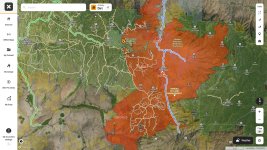
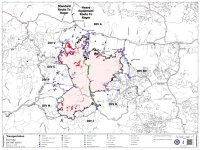
There are many different maps used for specific purposes and here is one example. To put the size into perspective, the city of Atlanta is 132 square miles and this fire is currently twice that size and still growing.
RC 24-115.jpg

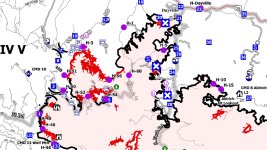
Here is a close up of the map above showing additional detail such as drop points, helispots, division breaks, contained and uncontained areas, etc.
RC 24-116.jpg

As the sun was setting I stopped to replay song in my head about that rumor spreading round in that Texas town, about that shack outside La Grange. I wonder where I will be in a few weeks...
RC 24-117.jpg
 
I think I missed it - what role are you taking on with the fire crews? Looks like exciting work!

I'm retired military so occasionally I perform contract work as an independent contractor - this was a sweet security detail that was just too good to pass up. Most of the men I was working with were retired LEO, Rangers, Green Beret, etc. There are many other contracts out there around the world to include maritime security, hostage rescue, armed details in foreign countries, etc., but to be honest, these INCONUS contracts pay very well and there is little danger.

Now driving through the surrounding area during the fire was another story - at one fire we had five deer strikes, one horse was hit, and another fella locked up his brakes and came to rest just a few feet from a cow standing in the middle of the road. The funny thing is one of our greatest concerns was being able to place people at remote drop points due to the above-average amount of vehicle damage sustained in remote locations. One of our guys encountered significant issues and the nearest town with repair services was several hours away and no one would drive out to tow him in. Another fella on our team drove him into that nearest town, he rented a U-Haul with a car hauler, drove out to retrieve his vehicle himself, and drove in back into the BMW dealer. A few weeks later and after $6k worth of repairs, he was driving again.
 
Last edited:
It was 1400 and I was informed that I should prepare to demobilize and move to another fire approximately 1,000 miles to the east in northeast Wyoming. Things were really kicking up there and it looked like this fire would be wrapping up within the next week so after working for one month straight and not even leaving fire camp, I was ready to be on the road for a long day. A few hours later I decided to pack up my gear and depart before the sun fell - my goal was to get away from the fire and minimize my chances of hitting any deer, elk, horses, etc.

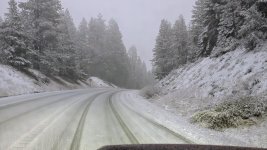
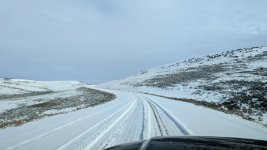
The weather was calling for rain and sleet below 4k feet with snow above that altitude - here I am rolling along U.S. Route 26 between Prairie City and Unity just slightly above 4,000 feet. It had been some time since I had driven in snow so I frequently tested brakes and steering, and generally drove a bit on the cautious side.
RC 24-118.jpg

The new fire I was heading to was the 98,000 acre Elk Fire just outside Sheridan, Wyoming. One of my buddies from a previous fire was leading the team at this event so I was looking forward to meeting up with him, sharing some stories and laughs, and slowly beginning to move back towards the east. My schedule was stacking up and I had adventure with other friends scheduled for late November and this next fire was conveniently on the way there.
RC 24-119.jpg

After rolling into Sheridan and meeting up with the team, our initial fire camp was quickly relocated to the Sheridan County Fairgrounds. I want to take a moment to point out a difference most people are not aware of - there is a significant different between working out in cold weather for a few hours, even a full day, when compared to living in cold weather 24/7 for several weeks or months. Something changes in our body and although you just become accustomed to always being cold - a slight bit of occasional warmth, even one warm meal, makes you feel like a million bucks.

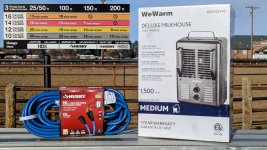
On that note, since we would now be parking at the fairgrounds which has utility poles all had power, I decided to splurge on a simple electric heater along with a 50' extension. I was heading into town anyway to finally order a ratcheting crimper so I considered the additional $60 for the heater and cord well spent. Note the inset in the picture I included information regarding which extensions are appropriate for a given length and load. Since amps = watts / volts, this 1,500 watt unit divided by 120 volts would create a 12.5 amp load - the 50 foot 16 gauge would handle 13 amps and be fine for this application.
RC 24-120.jpg

Here are the Klein Solar Ratcheting Crimper for MC4 Connectors that I purchased for $40. I really though long and hard about purchasing the Stäubli ratcheting crimper for $500 since they were TÜV and UL certified but I decided to try these first. If I were doing this for a living I would not hesitate to purchase the Stäubli and if the Klein do not perform well, I will not hesitate to purchase the Stäubli. But for my application, I suspect the Klein make take a bit longer to align and crimp, but they should be just fine.
RC 24-121.jpg

Receipts for my on-line digital record.
RC 24-122.jpg

This picture was taken just off U.S. Highway 14 in the Big Horn National Forest. The temperatures are currently in the 50s during the day but slip into the 20s and 30s at night - the wind always adds a bit more bite. This area was once shared by the Shoshone and Crow Indian tribes. According to Crow oral tradition, a young boy was saved here by seven bighorn rams. While saving the boy, the chief ram spoke and told him the name of the nearby river was Big Horn and if it ever changed the Crow tribe would cease to exist.
RC 24-123.jpg

Since I was in the Sheridan area I made it a point to stop by Weatherby, Inc. which is located just outside of town. Their iconic Mark V action has always been of interest to me so I wanted to stop by and learn more. If you are in the area and have an hour or so, I would recommend stopping by their showroom and manufacturing facility. BTW - next year will be the 80th anniversary so I would expect something special to be taking place at his location.
RC 24-124.jpg

Below is a cutaway of their Mark V with it's 9-lug magnum action - reported to be the strongest action available. Note the inset which is a close-up of the lugs and bolt-locking interface. For reference, most actions use two large lugs with a 90° bolt rotation whereas the Mark V uses nine smaller lugs (with more surface area) and a much shorter 54° bolt rotation. It's really a classy piece of work and ideal for handling the entire line of Weatherby belted-magnum cartridges.
RC 24-125.jpg

Off to the side of the showroom is a small "museum" with a wide variety of rifles to handle along with some amazing historical artifacts. Seeing a gold plated Weatherby custom manufactured for John Wayne put a big smile on my face. It was nice to spend time examining the rifles, working the actions, and comparing the various configurations. Some were steel receivers, barrels, and wooden stocks, whereas others used titanium actions, carbon fiber composite barrels, with carbon fiber stocks. If you have ever packed a heavy rifle around during a long hunt you know very well that ounces equal pounds and pounds equal pain. This is like an adult petting zoo.
RC 24-126.jpg

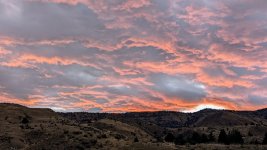
Today is my final morning watching the sunrise in the Big Horn Mountains of Wyoming. This picture was taken in absolute silence above 8,000 feet on a cold and windless morning.

A new incident management team arrived and at the same time the weather was really beating down the fire - this is good for everyone. For me, this fire season has ended and although I have enjoyed the past few months, I have been dreaming of getting back out on the road again, exploring, adventuring, spending time with friends, and living life...
RC 24-127.jpg
 
Last edited:
It was 1400 and I was informed that I should prepare to demobilize and move to another fire approximately 1,000 miles to the east in northeast Wyoming. Things were really kicking up there and it looked like this fire would be wrapping up within the next week also and after working for one month straight and not even leaving fire camp, I was ready to be on the road for a long day. A few hours later I decided to pack up my gear and depart before the sun fell - my goal was to get away from the fire and minimize my chances of hitting any deer, elk, horses, etc.

The weather was calling for rain and sleet below 4k feet with snow above that altitude - here I am rolling along U.S. Route 26 between Prairie City and Unity just slightly above 4,000 feet. It had been some time since I had driven in snow so I frequently tested brakes and steering, and generally drove a bit on the cautious side.


The new fire I was heading to was the 98,000 acre Elk Fire just outside Sheridan, Wyoming. One of my buddies from a previous fire was leading the team at this event so I was looking forward to meeting up with him, sharing some stories and laughs, and slowly beginning to move back towards the east. My schedule was stacking up and I had adventure with other friends scheduled for late November.


After rolling into Sheridan and meeting up with the team, our fire camp was being relocated to the Sheridan County Fairgrounds. I want to take a moment to point out a difference most people are not aware of - there is a significant different between working out in cold weather for a few hours, or days, when compared to living in cold weather for several weeks or months. Something changes in our body and although you just become accustomed to always being cold - a slight bit of occasional warmth, even one warm meal, makes you smile.

On that note, since we would be parking in the fairgrounds and the utility poles all had power, I decided to splurge on a simple electric heater along with a 50' extension. I was heading into town anyway to finally order a ratcheting crimper so I considered the additional $60 well spent. Note the inset I included detailing which extensions are appropriate for a given length and load. Since amps = watts / volts, this 1,500 watt unit divided by 120 volts would create a 12.5 amp load - the 50 foot 16 gauge would be fine for this application.


Here are the Klein Solar Ratcheting Crimper for MC4 Connectors that I purchased for $40. I really though long and hard about purchasing the Stäubli ratcheting crimper for $500 since they were TÜV and UL certified but even I could not sell myself on that. If I were doing this for a living I would not hesitate to purchase the Stäubli and if the Klein do not perform well, I will purchase them also. But for my application, I suspect the Klein make take a bit longer, but should be just fine.


Receipts for my on-line digital record.


Just off U.S. Highway 14 in the Big Horn National Forest. The temperatures are currently in the 50s during the day but slip into the 20s and 30s at night - the wind always adds a bit more bite. This area was once shared by the Shoshone and Crow Indian tribes. According to Crow oral tradition, a young boy was saved here by seven bighorn rams. The chief ram spoke to the boy and told him the name of the nearby river was Bog Horn and if it ever changed the Crow tribe would cease to exist.


Since I was in the Sheridan area I made it a point to stop by Weatherby, Inc. just outside of town. Their Mark V action has always been of interest to me so I wanted to stop by and learn more. If you are in the area and have an hour or so, I would recommend stopping by their showroom and manufacturing facility. BTW - next year will be the 80th anniversary so I would expect something special to be taking place at his location.


Below is a cutaway of their Mark V with it's 9-lug magnum action - reported to be the strongest action available. Note the inset which is a close-up. For reference, most actions use two large lugs with a 90° bolt rotation whereas the Mark V uses nine smaller lugs (with more surface area) and a much shorter 54° bolt rotation. It's really a classy piece of work and ideal for handling the entire line of Weatherby belted-magnum cartridges.
View attachment 78819

Off to the side of the showroom is a small "museum" with a wide variety of rifles to handle along with some amazing historical artifacts. Seeing a gold plated Weatherby custom manufactured for John Wayne put a big smile on my face. It was nice to spend time examining the rifles, working the actions, and comparing the various configurations. Some were steel receivers, barrels, and wooden stocks, whereas others used titanium actions, carbon fiber composite barrels, with carbon fiber stocks. If you have ever packed a heavy rifle around during a long hunt you know very well that ounces equal pounds and pounds equal pain.


Today is my final morning watching the sunrise in the Big Horn Mountains of Wyoming. This picture was taken in absolute silence above 8,000 feet on a cold and windless morning.

A new incident management team arrived and at the same time the weather was really beating down the fire - this is good. For me, this fire season has ended and although I have enjoyed the past few months, I have been dreaming of getting back out on the road again, exploring, adventuring, spending time with friends, and living life...

Interesting they offer that action for modern cartridges like 300PRC as well as "legacy" belted magnums.
 
On my last day in Sheridan, Wyoming, I took time to roam the streets that had "been home to outlaws and icons such as Butch Cassidy, the Sundance Kid, and Buffalo Bill Cody." One particular store, King's Saddlery / King Ropes, caught my eye so I stopped in and boy, did I stumble upon a gem. Up front was a Western tack store the likes that I had never laid eyes upon before while in the back of the building was the world famous Rope Shop. I spent time with the men and they taught me all about how to select a rope by asking me questions like; are you going to use this for competition or ranch work? Or, will you be roping solo or on a team? And, are you looking to rope horns or hoofs? Along with countless others. It was really fun to peer into this world and learn a bit about this particular profession. In the end, they recommended I begin my roping career with a "chicken rope" and buy some chickens to practice on.
RC 24-128.jpg

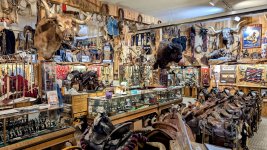
Out back across the alley is The Don King Museum where I could have spent an entire day. The picture below represents maybe 10-15% of what the museum contains and everything is interesting. There are hundreds of saddles from spanning a few centuries from all around the world, stuffed animals and birds of every kind imaginable, countless pistols, rifles, and shotguns; Indian artifacts, cowboy memorabilia, etc. In all honesty, if you spent an entire day back in the museum you still would only see maybe 50% of what it contains. I am already looking forward to visiting again sometime in the future.
RC 24-129.jpg

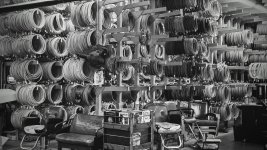
I guess after talking and asking so many questions the folks upstairs in the Rope Shop wanted to get back to work so they suggested I go downstairs and take a peek to learn how their ropes are manufactured. The men downstairs were awesome and I spent a full hour downstairs where they were twisting and waxing ropes that had recently been brought in from the rope farm. I asked what the rope farm was and they went into great detail explaining how they have a farm outside of town dedicated to exposing the ropes to many days worth of exposure to the warm sunlight during the day and cool dry nights. This is all done prior to winding and eventual waxing. Such an interesting a detailed process!
RC 24-130.jpg

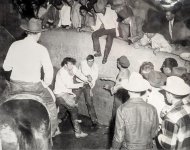
The picture below was one of many on the wall at King's - here is a condensed explanation:

The fight (between Slim Pickens and Phil Stadtler) was over a dwarf longhorn bull Slim wouldn't pay for. He had used him in his clown acts for over a year and then he died. Phil said Slim was always a tight bastard. They remained friends for years after the fight with Slim often coming to the ranch to hunt geese and swap old rodeo stories. The man on the horse is Dutch Bartum. Buckshot Sorrels is pictured with his feet over the wall. He had just kicked the cop in the head because he was going to stop the fight. The little-bitty guy in the middle is Willie Shoemaker, the now famous jockey.

RC 24-131.jpg

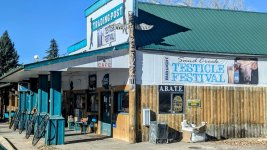
Just in case you are passing through Beulah, Wyoming - you might want to stop by the Sand Creek Trading Post and snack on a plate of Rocky Mountain Oysters.
RC 24-133.jpg

This may sound goofy but I am just so impressed by the Stäubli MC4 connectors that I used to upgrade the failed Renogy connectors on my solar system. To give you an idea what I am talking about - you know what you examine something, and operate it, and you just are convinced it is a premium product? It's like pushing a button on the dashboard of a Mercedes or BMW - they just feel and sound different. Well, as picky as I am, I feel much the same way about these Stäubli MC4 connectors and am glad I spent the extra time and effort on installing them.
RC 24-134.jpg

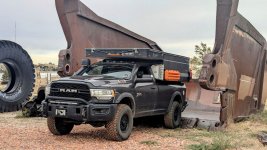
By staying off the interstate system and sticking to the backroads I regularly come upon places I have never heard of. This time I was passing through Gillette, Wyoming, and noticed this massive dragline bucket. I soon discovered that the local Eagle Butte Coal Mine produces approximately 41% of all coal produced in these United States. They do offer tours during the summer so I marked this spot on my map and have plans to return. And how about the tire off to my side!?!
RC 24-135.jpg

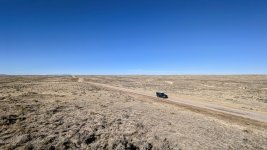
This picture was taken in the Thunder Basin National Grassland - I had been driving for hours and had not seen another person. Some of the prairie dogs watched me drive by while others continued to scurry about, the free-range cattle stood and stared, a herd of pronghorn ran along side of me at an amazing speed, just feet away. I was amazed at their coordination, concentration, how smooth their muscles flexed, it was beautiful to see and hear.

While taking this picture, a particular song came to mind. My eyes teared up so much it was difficult to see what I was taking a picture of so I just snapped and walked back to my truck. Driving away I rolled down the windows, turned up the volume, and played Heartland, by U2. For many reasons it reminds my of my father - he loved the west, he loved adventure, he loved nature. He loved me...

If you don't have a son - make some. If you do, take him out with you and spend time together. He will cherish his time with you forever.

RC 24-136.jpg
 
Last edited:
Red Desert Wyoming BDR-X

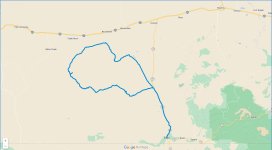
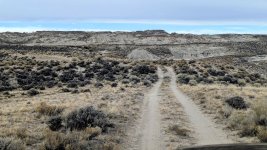
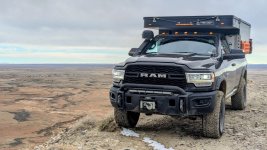
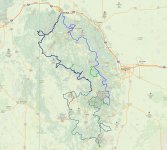
It seems like it has been forever since I have been in the desert alone, exploring an overland trail. The region I am exploring is referred to as the High Plains and this trail begins at 6,300' with the highest elevation being above 7,500'. The daily temperatures are mostly in the 40s with the nights dropping down into the 20s and occasionally 30s - add to that an almost constant stiff westerly wind. The name of this loop is the Red Desert Wyoming BDR-X and was created by the fine folks at Backcountry Discovery Routes. This is a 149-mile loop with dispersed camping and although it can be completed in one day, I would recommend setting aside two.

If it appears that there is virtually nothing on the map its because there is very little in the surrounding area. My suggestion is to place a premium on water, fuel, and food, when venturing into areas like this alone since cellular service will be at best, limited, and it is reasonable to suggest that you may not see another person for days, or even weeks. The night before I began I slept in Rawlins, Wyoming, at the Carbon County Fairgrounds. I topped off my gasoline and did so once again in Baggs just for safety.

Riders will enjoy varied landscape of buttes, dunes, sagebrush steppe, mountains, and rocky pinnacles. If you think about it, these are the same views and trails that hundreds of thousands of pioneers on the Oregon Trail experienced as they made their way toward Oregon, California, and Washington.

Depending on your skill level and current conditions, the Red Desert BDR-X will contain modest to difficult terrain. So, we recommend riding the loop in a clockwise direction putting the most challenging sections early on in the ride – allowing you the option to turn around if the sand or technical areas become overwhelming. This way you’ll have a shorter distance to backtrack and a lower risk of running out of fuel.

RDY 001.jpg

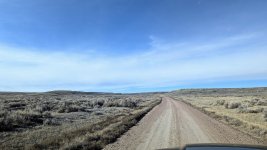
As suggested by the BDR folks I followed the route in a clockwise direction. The initial miles were generally smooth although the road surface was hard and slightly rough for stretches.
RDY 002.jpg

As the trail transitioned from a gravel road to two-track it became a bit bumpier and rougher. The pace slowed and I began to encounter washed-out areas that were a bit soft although two-wheel drive was still just fine.
RDY 003.jpg

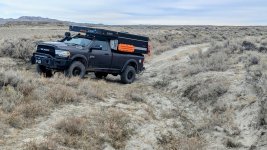
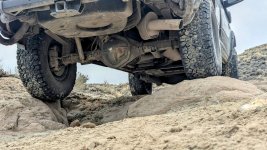
The first obstacles in the rougher area consisted of large rocks breaking out of the soil. These were easy so long as you picked a good line - generally, I prioritize driving my tires over the highest sections and secondly, I do my best to keep the vehicle as level as possible the entire tire. Keeping tire on the high sections minimizes the chance of damage to the underside and keeping the vehicle level distributes the power to the wheels as equally as possible.
RDY 004.jpg

This is just a beautiful view of the terrain I was exploring. Although it was an overcast day and a bit on the chilly side it was still beautiful.
RDY 005.jpg

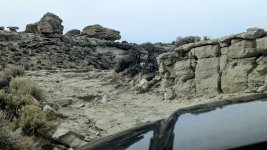
This is about as difficult as the Red Desert Wyoming BDR-X becomes. In an effort to slow things down and minimize any potential damage I elected to shift into four wheel drive low range for this short section. It really was not necessary but I like to shift into low range on occasion just to exercise the transfer case, associated solenoids, etc. It was quite fun slowly crawling a 9,000 pound full sized truck up and over these rough spots.
RDY 006.jpg

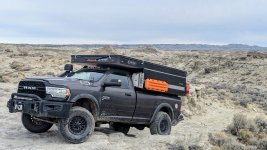
Nothing special here - it was just a nice overall angle and background so I though you might enjoy it also. In case you are wondering, I do not take a ton of photos when I am on the trail. What I generally do is stop the vehicle in a specific area that I wish to capture, set the parking brake, turn on the lights, and shoot a few photos from various angles around the vehicle. Many times my primary photo ends up being the one I select although sometimes an unplanned shot from an odd angle ends up being more appealing to me.
RDY 007.jpg

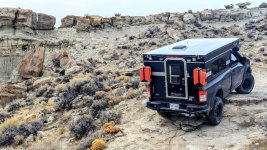
Here is a good example of what I was just talking about - this is the same spot as the previous one but shot from a different angle. Yes, I like the photo above but I like this one even more - it displays more details in the rocks in the background along with some additional texture and color provided by the vegetation in the lower left. I also enjoy the additional detail of the obstacle which clearly depicts the ledge and rocks I was crawling up and over - the picture above just does not display the same level of detail.
RDY 008.jpg

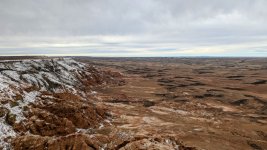
This was taken from Delaney Rim Viewpoint which is a mesa around 800' above the desert floor. As you might imagine, this area was quite windy although I always enjoy watching the hawks working the updraft and gliding back and forth along the edge of the mesa. At 149-miles this was a relatively short loop but certainly an enjoyable one - if you are in the area or passing though I would definitely recommend you taking a few days to stop and explore this section of the High Plains.
RDY 009.jpg

There's just something special about the Red Desert - she's not the prettiest place I've ever been, she's kind of different, and I look forward to possibly returning once again during the summer. Over the next month I will be slowly moving back towards the east and hitting other trails along the way. In closing, I would like to thank the folks at Backcountry Discovery Routes for providing dozens of amazing routes throughout the country to include GPX files along with detailed descriptions, waypoints, and constant updates.

Anyone know where I can find a shave and hot bath around these parts?
RDY 010.jpg
 
Last edited:
Gosh, I think Wyoming really wanted me to stay there. When I packed up and decided to depart Rawlins my plan was to head east on Interstate 80 for just a few miles and then turn south on back roads. If any of you are familiar with I-80 through Wyoming then you also know how frequently this road is closed due to snow and high winds. The fact that the interstate was closed immediately forced me south and then when I desired to turn east the only option was a dirt road through Vulcan Mountain. It was obvious that others had blazed the trail for me so I forged ahead and enjoyed the ride.
RC 24-137.jpg

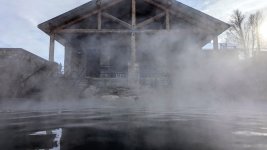
My immediate destination was Saratoga Hobo Hot Springs for a shower and some relaxation in a 109° F natural mineral bath. It felt so good I have now begun looking for other natural hot springs in my travels.

The Saratoga “Hobo Hot Pool” is a favorite among locals and visitors alike. Open 24 hours a day all year, seven days a week, and FREE to the public, the pool is owned and maintained by the Town of Saratoga. The bath house is complete with showers and restroom facilities at the Hot Springs. Original inhabitants of the Valley, the American Indians, used the hot springs as a neutral area and believed that the hot springs had a healing power. The hot pool averages around 106° F from its coolest part to 119° F to its warmest part of the pool. The pool is now used as a place to relax and enjoy.

RC 24-138.jpg

Later the next day I decided to take a chance and climb over Sugarloaf Mountain which resides in the Medicine Bow-Routt National Forest in SE Wyoming. It was a beautiful drive although slick as you know what. What I experienced around 50% of the time was a road surface that "felt ok" but as soon as you touched the brakes or turned too quick you began to slide and barely notice any deceleration or change in direction.
RC 24-139.jpg

It's always fun to see how drastically the weather changes as you ascend or descend a mountain. Just a few hours earlier it was a beautiful blue sky and such - now I was in the clouds and the winds began to pick up. I came upon one full sized truck off the side of the road pretty far and stopped to make sure everyone was ok and consider possibly helping them. Fortunately, they had already called a wrecker service and expected them to arrive soon.
RC 24-140.jpg

There was an interesting place south of Cheyenne that I decided to visit the one event and let me tell you, getting there was quite the experience! My guess is that Interstate 80 was closed once again and much of the truck traffic was being rerouted to the backroads which were thin sheets of ice mixed with excessively high winds. I'm not sure how those drivers were able to keep their rigs on the road but of you can imagine a chain of lights slowly crawling through the mountains at 5-10 MPH that exactly what I was inside of.
RC 24-141.jpg

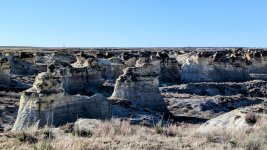
A day and a few miles later everything changed to warm weather and blue skies. I want to make sure and mention that I stumble upon interesting places to shower and spend a day or two - one of which is a roadside park in St. Francis, Kansas. Whenever I encounter great little stops like this I also make sure to spend money in the local community such as stopping for a healthy meal, visit a small museum, or fill up my tank of gas. The shot below is of Little Jerusalem Badlands State Park in Kansas.
RC 24-142.jpg

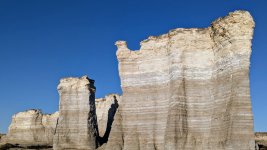
Just a bit to the east in Oakley, Kansas, are Monument Rocks. It's always fun to stop by these strange little places in the middle of nowhere since it is common to bump into other adventurers at the same places. Sometime its just a simple wave and smile, other times you may talk for hours, sharing stories, recommendations, etc.
RC 24-143.jpg

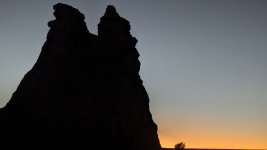
I pulled in late in the day at Castle Rock Badlands so I decided to fix some dinner and spend the night. As I fell asleep I initially heard free range cattle mooing - it didn't sound like too big of a deal so maybe it was a cow calling for her calf or something. A bit later I drifted off and listened to a few packs of coyotes begin to move into the area yipping, yapping, and howling. It was a bit windy so the rocking of my camper had me sleeping like a baby. I snapped the picture below and hope you enjoy it - I would have never expected to see features like this in Kansas.
RC 24-144.jpg

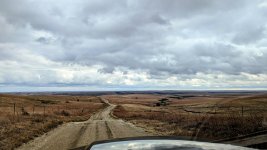
If you imagined this is what most of Kansas looked like when driving you would be correct. But, there is something beautiful about driving a regular cab longbed pickup with the windows down along a long dusty country road...happy trails y'all!
RC 24-145.jpg
 
Black Hills South Dakota BDR-X

Part One of Two

Years ago I stumbled upon the Black Hills of South Dakota, spent some good times with a fine young Lakota girl from the Pine Ridge Reservation, ended up attending the motorcycle rally in Sturgis, met some Hells Angels; and broke immoral, unethical, and unconstitutional laws that 99% of the world willingly obeys. All I can say is that I have always been looking for a reason to head back to those Pahá Sápa and explore some more. Fast forward to November 2024 and the fact that I happened to be just a few hours away from those hills where the Lakota believe there is a mysterious racetrack where a race took place between the two-legged and four-legged to establish who would eat who.

Spending four or five days alone between 4,000 and 7,000 feet in rugged and rocky mountains in November sounded like a great idea to me. In my mind, adventures such as this are a form of physical, mental, and spiritual exercise. As a modern man, it is rare that we face a challenging situation in life without seeking external support, which demonstrates our inner strength and resilience. I have spent a lifetime placing myself into potentially perilous situations alone, where I must rely solely upon my own abilities to survive and enjoy success. I would encourage other men to do the same.

The Black Hills BDR-X is the perfect introduction to a Backcountry Discovery Route in the midwest. With striking landscapes ranging from wide-open prairie, dense pine forests, and tall aspen trees, this 355-mile loop comprises three distinct sections and encompasses all the elements for your next adventure. Enjoy a plethora of gravel and dirt roads, challenging two-track, and some of the best pavement you’ve ever ridden as you make way through historical towns in an area that shaped the west. Mount Rushmore, Needles Highway, Iron Mountain Road, Spearfish Canyon, Cement Ridge Lookout Tower, and the Custer Wildlife Loop are some of the many incredible features dotting the landscape of this scenic route.
BHSD 001.jpg

My journey began in Spearfish and the direction traveled would be anti-clockwise. The first few dozen miles were through the scenic Spearfish Canyon passing by landmarks such as Bridalveil, Roughlock, and Spearfish Falls. At one point along the trail I crossed back over into Wyoming and found myself at Cement Ridge Fire Lookout Tower where a group of side-by-side riders stopped to enjoy the amazing view.
BHSD 002.jpg

Attempting this particular trail this late in the season didn't seem like the best idea but since I was so close I figured I would give it a shot. If you're not afraid of dying, what's to stop you from trying?!?
BHSD 003.jpg

What I began to notice right away was the difference in terrain and conditions as I ascended, descended, drove on south facing hills versus north facing, etc. The fact that there were other tire tracks simply confirmed that others had already passed through the area so I dialed-down my driving and tuned into the surrounding terrain. Focusing on the task at hand and allowing the vehicle to communicate with you and is very valuable.
BHSD 004.jpg

Near the end of the first day I snapped this picture of the rear of my camper - it was covered with a thick layer of frozen gritty trail grime. And although it has been a long time since I took the time to perfectly reinstall my backup camera, I smile every time I place my transmission into reverse and use it. Some things take a little longer to accomplish in life but if you do it right the first time you will never regret spending those extra few dollars or taking a little bit longer. Do your very best each and every time.
BHSD 005.jpg

Although they were quite beautiful, some of the trails were covered with jagged rocks that concerned me. Cellular reception was intermittent, at best, and I still was not carrying a spare tire. This is something that is long overdue and to be honest - I am acting irresponsible not carrying a spare. Tire repair kits and on-board air is great but nothing beats a full-sized spare. Damaging a tire beyond repair out here with no one else around would transform a small problem into a massive one - I need to resolve my spare tire issue ASAP.
BHSD 006.jpg

It's always funny to look back at a picture and realize how many times the picture I take just does not accurately portray the totality of the situation. This section of trail was a somewhat steep downhill section and the soil was wet and clumpy with a bit of clay so it was also slick. There were several parts of this trail where my entire vehicle slid to one side and nearly made contact with a tree. The good thing was I always had my winch along with a full set of recovery gear to help pull the vehicle away from a bad situation if needed. The traction boards hanging on the side are also easily accessible and might be enough by themselves. It's good to have options on the trail. It's even better to have friends with additional options.
BHSD 007.jpg

This was just one of the countless scenic shots along the way and to be honest - I could have taken so many more pictures to try and capture the beauty of these Black Hills. But my goal with this post is to encourage you to get out and visit somewhere you never have been before. And in the mid-west, the Black Hills are almost like an island paradise just waiting. The folks at Backcountry Discovery Routes have done an amazing job constructing this trail - thank you!
BHSD 008.jpg

Around mid-day on my second day I stopped into a ghost town named Mystic, rolled into Hill City for a good meal, researched the BDR map and made plans for the next day. My goal was to spend a good portion of my third day enjoying places such as Wind Cave National Park, Custer State Park, and the Crazy Horse Memorial. What I was really enjoying about this Black Hills Discovery Route was the frequently changing terrain - at times I would be slogging through sticky mud, other times I was delicately crawling over jagged rocks, and some of the time I was enjoying a smooth ride over a well maintained dirt or gravel road. So far this trip was a little bit of everything and I was enjoying every minute of it.
BHSD 009.jpg

When I was a boy, the Sioux owned the world. The sun rose and set on their land; they sent ten thousand men to battle. Where are the warriors today? Who slew them? Where are our lands? Who owns them? ~ Sitting Bull

Remember up above I mentioned the cute girl from the Pine Ridge Reservation??? Unfortunately it's the poorest county in the entire country and also has the lowest average life expectancy for men and women. My plan is to visit there someday and learn more. Never ever forget about your God-given freedom and the fact that someone, somewhere, is counting backwards to zero...

BHSD 010.jpg
 
Last edited:
Black Hills South Dakota BDR-X

Part Two of Two

What I really enjoyed about traveling the 355 mile Black Hills South Dakota BDR-X was the changing scenery and trail conditions. On short trails of one or two days its not that big of a deal if everything appears to be much the same but when you are off-road for three or more days straight it is really nice to transition between somewhat different areas. A mixture of well maintained gravel roads, some dirt two-track, add some miles of rocky ascents and descents, break up with a few miles of pavement, climb up the north face of a mountain and cool off, crawl down the south face and warm up, some straightaways, some gentle curves, I like it all and this Backcountry Discovery Route delivered. It's really a relaxing and enjoyable ride.
BHSD 011.jpg

If you visit the area make sure to pick up the free 11"x15" Attractions Map provided by the Black Hills & Badlands Tourism Association - there is so much valuable information contained on this one piece of paper you will be amazed. In all honesty, it would be easy to spend a month in the Black Hills and you would just begin to scratch the surface of how much there is to do. Don't forget to consider there are other nearby attractions such as Devils Tower National Monument, Badlands National Park, and Rapid City, just to name a few. If you're wondering if I ever plan to return the answer is a resounding yes! Next time will be my third time and I plan to stay even longer.
BHSD 012.jpg

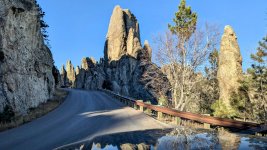
The heart-stopping Needles Highway is a 14 mile scenic drive that you must experience at least once in your life. Keep in mind this beautiful road closes down normally around mid-October when the first snow falls and remains closed until April 1st or possibly longer. I really was sure it was too late in the year for me to experience this drive once again and since it was part of the BDR it would bug me that I had not completed all of the route, but as my luck would have it, this beauty was still open and I slowly rolled through in my adventure rig with a massive smile on my face the entire time. If you are able to pass through when the sun is rising or falling its even better!
BHSD 013.jpg

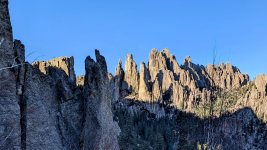
The Needles Highway is more than a 14-mile road—it’s a spectacular drive through pine and spruce forests, meadows surrounded by birch and aspen, and rugged granite mountains. The road’s name comes from the needlelike granite formations that seem to pierce the horizon along the highway. The roadway was carefully planned by former South Dakota Governor Peter Norbeck, who marked the entire course on foot and by horseback. Construction was completed in 1922.

BHSD 014.jpg

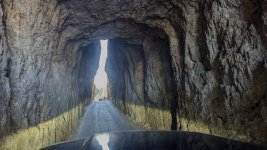
I'm not sure how this picture looks to you but I imagined this is what a fat girl feels like trying to squeeze into an old pair of jeans. There are three tunnels on the Needles Highway with one being 8'4" wide and another only being 10'7" tall. There were places where my tow mirrors only had a few inches on either side although the mirrors served as a good reference for the sides of my camper. In my case I had around two feet of clearance above but again, it felt quite a bit tighter than it actually was. I heard that local drivers squeeze full size tour busses through with no problems - wow!!!
BHSD 015.jpg

Here was a bumpy section that lasted a few miles and although it was easily passable in two wheel drive, it still required you to slow down and pick a line. Again, it was nice to see a trail with a fair amount of variation in it - some sections on the dirt or gravel were 20-25 mph whereas others forced you to slow down to 3-5 or 5-10 mph for a period of time. The really cool thing about traveling where few others go is the fact that if you stumble upon a special place you can just stop in on the trail, roll your windows down, secure the engine, and relax for a bit. There is no need to "pull over" most of the time because the chances of another coming along are slim to none in some places.
BHSD 016.jpg

Stockade Lake is a mile-high and just one of the beauties to stop by and visit in the area. Other popular lakes to camp, hike, and explore in these Black Hills include Sylvan, Sheridan, Horse Thief, etc. As mentioned, many have adjacent campgrounds and hiking trails that will leave your head spinning. I'm not sure what exactly it is but hiking around a crystal clear lake a mile high in the mountains and watching the sun set is beyond peaceful. I just wish I was able to take pictures that more accurately reflected what I actually saw, heard, smelled, and felt...
BHSD 017.jpg

This was taken on my final full day on the trail just a few hours on the trail south of a city named Lead. As might have imagined there was much mining that tool place in these hills over the past 150 years or so. The largest, deepest, and most productive gold mine in the Western Hemisphere was located here up until recently and the deepest of it's mine-shafts stretched almost a full two miles straight down. It's a small town but it has it's own character and I look forward to spending more time in Lead during the summer sometime.
BHSD 018.jpg

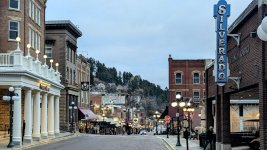
This is a shot of Main Street in downtown Deadwood, South Dakota - just a few miles up the road from Lead. Famous people such as Theodore Roosevelt, William Taft, John Wayne, Buffalo Bill Cody, and Babe Ruth, stayed at the famous Franklin Hotel on the left in this photo. This entire area seems to be centered around gambling and having fun.

After the Custer Expedition of 1874 discovered gold in the forbidden Lakota lands of the Black Hills, thousands of prospectors from across the nation poured into the region. In late 1875, the Frank Bryant party began exploring the mountain streams and cascading creeks of the northern Black Hills for the precious yellow metal. It wasn't long before they found it, and within a few months nearly 10,000 miners, muleskinners, madams, gamblers and gunslingers had made their way into narrow Deadwood Gulch.

BHSD 019.jpg

This picture was taken on the last evening of my 355 mile journey through these historic Black Hills. The temperature dropped sharply, winds were picking up, and the sun was falling asleep. Moments later the moon began to rise and the stars began to shine - I turned on all of my accessory driving lights and pushed the final few hours through the darkness and rolled into Spearfish to complete this trip.

Where to next? Lord, I was born a ramblin' man...
BHSD 020.jpg
 
Last edited:
Eastern Kansas Flint Hills Overland Route

Part One of Two

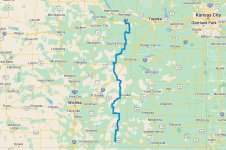
Since the colder weather had begun to roll into Wyoming and South Dakota I figured it was time for me to continue heading towards the east and I might as well drop south a bit also in search of slightly warmer weather. Another benefit would be lower elevations since the mean elevation in Wyoming is around 6,500', the Black Hills ranging from 4,000' to 7,000', and Kansas having an average of 2,000' or so. Not many people associate Kansas with modern overland trails although historic ones such as California, Oregon, and Santa Fe trails pass through this hidden gem. With that in mind I located a newer 199 mile trail called the Eastern Kansas Flint Hills Overland Route that was only a few hours away.

The Flint Hills, historically known as Bluestem Pastures or Blue Stem Hills, are a region in eastern Kansas and north-central Oklahoma named for the abundant residual flint eroded from the bedrock that lies near or at the surface.This 200 mile long off-road route begins in the town of Alma, KS and ends in Cedar Vale, KS near the Oklahoma border. Find yourself on high on the hills and low in the meadows on this beautiful tour through the sunflower state. After completing the route, head east to West Mineral, KS and catch Big Brutus open 7 days a week on your way to the #MOORE Expo.

EKFHOR 001.jpg

Prior to hitting a trail I always perform a sort of pre-flight and systematically check off a list I have in my head. A full bag of gas, topping off all my water containers, checking perishable and non-perishable foods, and drinks such as milk, juice, and soda, are the first things I check. I then perform a walk around of my rig to visually check the overall condition, make sure all six camper top latches are secure, verify the four pins holding my Maxtrax are locked, windows and lights are clean, etc. I then jump inside my rig and fire her up making sure to check all temperatures and pressures. If my memory is correct I normally see 210° for coolant, 168° for transmission, 217° for oil, and 54 PSI oil pressure. Tires generally range between 40-45 PSI and vary quite a bit with temperature and elevation. I am pretty big on checking temps and pressures routinely while on the trail.

Everything checks good on deck so off we go, beginning a seemingly easy overland route in Kansas.
EKFHOR 002.jpg

Throughout the first few hours my speed ranged between 5 and 25 MPH with most of the time being spent around 15 MPH. Some of the sections of the trail were farm roads whereas others were a bit rougher and infrequently used. Overall, I was just relaxing, taking my time, and enjoying the ride. To me, this is how most of my time on the trail can be described - just rolling down a dirt or gravel road, knowing where I am going but never having been there before, and seeing, hearing, and smelling, all sorts of places in different conditions. Occasionally, my leisure travel can be interrupted by an obstacle such as rocks, mud, maybe an overgrown trail, a washed out bridge, etc. Encountering problems and dealing with them is part of the fun, especially when you are alone, far away from civilization, and even farther away from home and friends.
EKFHOR 003.jpg

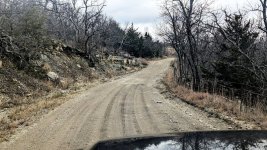
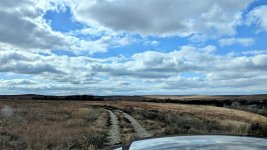
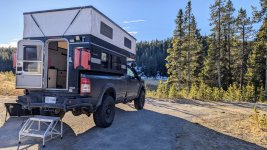
Here is a beautiful section of two-track that ended up being quite interesting. The top layer was gravel but there was a sticky and somewhat slick layer of mud underneath which proved to be a bit more challenging compared to what I had expected. This seemed to be a seldom used trail splitting between two major fields mixed with some mild elevation changes and a bit of off-camber travel. The scenery was beautiful and my mind was wandering thinking about just how fortunate and blessed I was being able to travel and explore like this. Everything was going perfect and I was looking forward to meeting my buddies soon.
EKFHOR 004.jpg

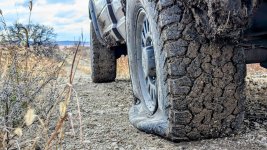
And then it happened - at first I thought the strange sound I was listening to was more of the sticky mud being flung up into the wheel wells. Since the trail was uneven and off-camber in spots the lean angle didn't cause any concern. My low tire pressure warning light did not illuminate since either AEV or possibly myself had disabled that feature - I really can't recall but I don't remember doing that specifically. Now I was having recollections of losing a tire earlier in the year while 1,358 mile Five tribes Overland Trail in Texas. Darn, new tires and once again a flat - I was beginning to wonder why after the last time, I had not immediately completed the design and fabrication for the rear spare tire carrier I had in mind. My thoughts over the past half-year have been, certainly experiencing an irreparable flat tire 50-100 miles away from a good sized city can't happen twice!
EKFHOR 005.jpg

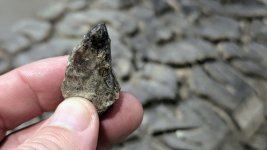
Well, I was wrong and here I was with an irreparable tire far away from civilization. A sharp rock that looked like a small dinosaur tooth was the culprit and I could easily push my thumb through the hole in the middle of the tread. So hear I am, fifty miles outside Topeka and the best thing about all of this is that I deserve it. Earlier I spoke of how I check this and that but here I am without a spare, again. Failure of a tire was always part of the equation that I conveniently ignored and I accepted it not once, but twice!
EKFHOR 006.jpg

Accept whatever happens to you; in periods of humiliation be patient. For in fire gold is tested, and the chosen, in the crucible of humiliation. Trust in God, and He will help you; make your ways straight and hope in Him. ~ Sirach 2:4-6

It's quite a long way to Topeka, it's getting late, and it looks like a storm is beginning to roll in. A half-century ago there were a half-dozen men from Topeka who foresaw that I was soaring ever higher, but I flew too high...I love the mess I get myself into sometimes.

EKFHOR 007.jpg
 
Last edited:
Wow, sorry to hear about your hardships, and thanks for sharing your story here; it is truly epic! GODSPEED
 
I recall on an atv trail around 2 decades ago I had a sidewall blowout approximately 1” long. No spare tire but a pack of tire plugs and an air pump. I was actually able to stuff enough of them in there along with some rubber cement to get several miles back to the trailhead without any pressure loss.
 
The Flint Hills in Kansas are no joke. Those roads will eat tires all day.

There’s a big gravel bike race out there every year and sticky mud and flat tires are pretty much the standard.
 
Back
Top