What's new
Ram Heavy Duty Forum

Register a free account today to become a member! Once signed in, you'll be able to participate on this site by adding your own topics and posts, as well as connect with other members through your own private inbox!

Which battery tender to use

THank you for all the advise. I decided to go with the NOCO Genius 5a mounted under the hood and the NOCO single plug for the bumper valence.
I'll be installing a Vantrue Element 2 dash cam and a pair of KC Cyclone V2 under the hood.
Ill attach pictures once I get it all installed.
 
I am installing a dashcam system in my 2022 Limited 3500. It has the capability of monitoring while the truck sits. I'm looking to install a battery trickle charges/tender to keep my battery topped off since the truck is parked most of the time and I drive my Prius. Yes, the Prius get 40 mpg compared to the 15 mpg the truck gets, so I drive it most of the time. I'm looking at a NOCO Genius2 or a NOCO Genius 5. Do I need the 5a or will the 2a get me by? I don't want to have to buy another charger if the 2a isn't enough but would the 5a be too much?
I think you're good with either. I have a NOCO, but can't recall which model and it works on everything I have.
 
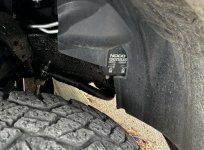
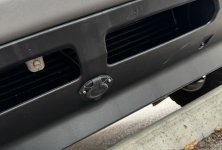
I use a Noco onboard 10Ax2 battery charger and a Noco Dual plug to plug the charger as well as the block heater into it with a switch. Now if I plug in, either the block heater and the charger will engage or just the charger depending on the switch orientation. Great for plugging in during winter as the batteries will always be good to go even at -30.
IMG_0183.jpegIMG_0184.jpeg
 
I use a Noco onboard 10Ax2 battery charger and a Noco Dual plug to plug the charger as well as the block heater into it with a switch. Now if I plug in, either the block heater and the charger will engage or just the charger depending on the switch orientation. Great for plugging in during winter as the batteries will always be good to go even at -30.
View attachment 65346View attachment 65347

What do you have the 2nd bank hooked up to?
 
Sorry I should have specified, I have the diesel so 2 batteries under the hood, one bank to each battery.

Interesting, the way the truck is wired the 2 batteries are one bank so you should generally just use a single charger per bank. When you have multiple chargers on one bank the chargers sense the voltage from the other charger and reduce their charge rate (I see this on my RV when it's getting solar and converter charging)
 
Last edited:
I have a similar setup. I have a 10 amp single bank NOCO with a NOCO plug with two outlets. One outlet to the charger and the other to the block heater through a thermostat. Thermostat only puts power to the block heater below 40F. Really haven't needed the block heater since the truck is rarely in cold temps. By cold I mean below 50F. I do plug it in for the charger if the truck is going to sit for more than a week.
 
Interesting, the way the truck is wired the 2 batteries are one bank so you should generally just use a single charger per bank. When you have multiple chargers on one bank the chargers sense the voltage from the other charger and reduce their charge rate (I see this on my RV when it's getting solar and converter charging)
I have each bank of the Noco going directly to each battery. Bank 1 goes to battery 1, bank 2 goes to battery 2. Works perfectly.
 
I have each bank of the Noco going directly to each battery. Bank 1 goes to battery 1, bank 2 goes to battery 2. Works perfectly.
But the batteries are connected to each other is what he’s getting at.
 
But the batteries are connected to each other is what he’s getting at.
So? Putting one bank on 2 batteries is just dumb in my opinion. Like I said it works perfectly. Same reason why I have dual alternators. 2 batteries, 2 alternators. To each his own.
 
So? Putting one bank on 2 batteries is just dumb in my opinion. Like I said it works perfectly. Same reason why I have dual alternators. 2 batteries, 2 alternators. To each his own.

You have two alternators to increase amperage, not because you have two batteries. If you bought it for that reason then you don't understand how the 12V system works. Unlike the NOCO the alternators are driven at different speeds and controlled by the ECM to run in conjunction with each other, the NOCO is setup to run independently on a vehicle/RV/boat/etc with two independent banks of batteries.

You're thinking of your two battery truck as two battery banks, it's not. You have one bigger battery bank comprised of 2 batteries (like making a 12V system with 2 6V batteries, and you don't use 2 chargers for that... or a 24V system with 12 2V batteries, still one bank and one charger).

Your setup does work, but it does not work perfectly, and it not as efficient as a single genius 20A charger would be. Your batteries will charge better and float better with a single bank charger.
 
You have two alternators to increase amperage, not because you have two batteries. If you bought it for that reason then you don't understand how the 12V system works. Unlike the NOCO the alternators are driven at different speeds and controlled by the ECM to run in conjunction with each other, the NOCO is setup to run independently on a vehicle/RV/boat/etc with two independent banks of batteries.

You're thinking of your two battery truck as two battery banks, it's not. You have one bigger battery bank comprised of 2 batteries (like making a 12V system with 2 6V batteries, and you don't use 2 chargers for that... or a 24V system with 12 2V batteries, still one bank and one charger).

Your setup does work, but it does not work perfectly, and it not as efficient as a single genius 20A charger would be. Your batteries will charge better and float better with a single bank charger.
Ok do you want to come to my location and change the setup to whatever you think is best? If not I don’t really care what you think. It works.
 
Ok do you want to come to my location and change the setup to whatever you think is best? If not I don’t really care what you think. It works.

Lots of things work that aren't being properly used, just means it works and not that it's right. It's not about what I think is best, it's about what a system was designed for and simply put you're using it wrong.

"A two-bank onboard battery charger rated at 20-amps (10-amps per bank) for 12-volt batteries, including marine, boat, starter, and deep-cycle batteries. Independently charge and control each battery bank with selectable charging modes - including 12V, 12V AGM, 12V Lithium, and 12V Repair Mode - for all types of lead-acid and lithium-ion batteries."
 
Last edited:
Interesting, the way the truck is wired the 2 batteries are one bank so you should generally just use a single charger per bank. When you have multiple chargers on one bank the chargers sense the voltage from the other charger and reduce their charge rate (I see this on my RV when it's getting solar and converter charging)
Time to go off topic - when you have good sun and you have shore power, do you open your AC breaker to the converter to go solar only? I have been playing with that so I can keep the solar charger in bulk charge mode if my battery is discharged - with the converter in the mix, you may never be in bulk mode (likely just absorption or float only).
 
Uoun
Lots of things work that aren't being properly used, just means it works and not that it's right. It's not about what I think is best, it's about what a system was designed for and simply put you're using it wrong.
You obviously have “issues”. Peace be with you.
 
Time to go off topic - when you have good sun and you have shore power, do you open your AC breaker to the converter to go solar only? I have been playing with that so I can keep the solar charger in bulk charge mode if my battery is discharged - with the converter in the mix, you may never be in bulk mode (likely just absorption or float only).

Generally not because I rarely camp with shore power and when I use the generator I want to get as efficient/quick of a charge as possible and that's with the converter. . My solar does the same thing your does thou, but since I am only running 200W of solar the 55A converter (PD with a charge wizard is great for this) is more important to me for those short charging windows. I have shut the converter off, via the breaker, when I'm on shore power to watch the solar do it's thing, but it's more geeking out than anything as the batteries are usually at 100% SOC by this time.
 
Generally not because I rarely camp with shore power and when I use the generator I want to get as efficient/quick of a charge as possible and that's with the converter. . My solar does the same thing your does thou, but since I am only running 200W of solar the 55A converter (PD with a charge wizard is great for this) is more important to me for those short charging windows. I have shut the converter off, via the breaker, when I'm on shore power to watch the solar do it's thing, but it's more geeking out than anything as the batteries are usually at 100% SOC by this time.
We almost always have shore power so my converter is always on when camping - my issue is that I switched over to Lithium batteries but my converter is not lithium compatible and will never get my battery to 100% SOC. My solar charger is lithium compatible (gets to 14.6V in bulk mode) but with the converter in the mix, can't really get into bulk mode at it sees that voltage vice actual resting battery voltage. Not really a big deal as we have shore power and when not camping the solar will get the battery to 100%.
 
We almost always have shore power so my converter is always on when camping - my issue is that I switched over to Lithium batteries but my converter is not lithium compatible and will never get my battery to 100% SOC. My solar charger is lithium compatible (gets to 14.6V in bulk mode) but with the converter in the mix, can't really get into bulk mode at it sees that voltage vice actual resting battery voltage. Not really a big deal as we have shore power and when not camping the solar will get the battery to 100%.

Ah, yes I’d do the same to get those to 100%.

I have a pair of 300AH GPL-6CT’s and a PD4655. I use the charge wizard as needed and then let the PD do its job. It usually takes 24-36 hours after a camping trip to get to 100%, but then those batteries hold 13.01-13.13 for months when disconnected.

Dad has the same pair of batteries in a trailer we take hunting. The inverter/charger was an old heart freedom and it would always go to absorption voltage too soon and we couldn’t control it. The resting voltage was always 12.85-12.93 after a full charge. Still good, but not the same as my pair. Well this year we put a Victron inverter/charger in and set bulk voltage to 8 hours minimum and the voltages are proper. I just checked the voltage after sitting for a week disconnected and they were at 13.03.

Bottom line, proper charging really is important.
 
Lots of things work that aren't being properly used, just means it works and not that it's right. It's not about what I think is best, it's about what a system was designed for and simply put you're using it wrong.

"A two-bank onboard battery charger rated at 20-amps (10-amps per bank) for 12-volt batteries, including marine, boat, starter, and deep-cycle batteries. Independently charge and control each battery bank with selectable charging modes - including 12V, 12V AGM, 12V Lithium, and 12V Repair Mode - for all types of lead-acid and lithium-ion batteries."
Just gotta let it go sometimes, reminds me of the ford owns cumminGs days. Yayaya ok your right lmao.
 
Back
Top