
ramblinChet
Drinks Alone
- Messages
- 644
- Reaction score
- 3,071
- Points
- 93
I selected the Luverne Grip Step 7" x 98" aluminum wheel-to-wheel running boards after a thorough search for options suited to a regular cab with long bed. Full-length boards proved scarce - most covered only the cab area - while I required frame-mounted brackets exclusively, avoiding any rocker panel attachment. I also prioritized a flat platform with expanded metal tread surface for superior traction and debris shedding in demanding environments. These Luverne steps uniquely met all criteria, making them the clear choice for my build.
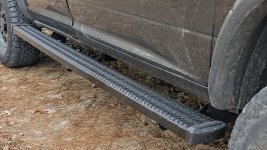
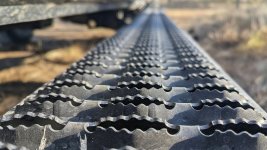
The 7-inch-wide stepping surface ensures safe, comfortable access and egress. The open expanded metal treads effectively shed dirt, snow, and debris from boots, and the powder-coated aluminum construction delivers strength, low weight, and complete rust resistance.
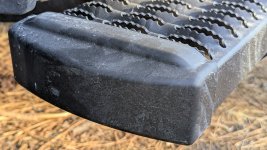
As installation neared completion, I briefly considered omitting the end caps. Upon reflection, their smooth, rounded profile eliminates sharp edges and neatly conceals what would otherwise be an exposed, unfinished end - enhancing both safety and aesthetics.
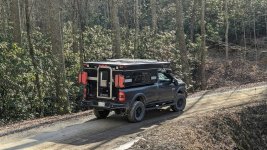
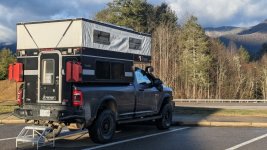
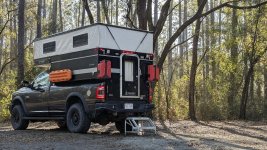
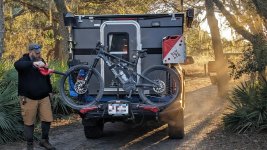
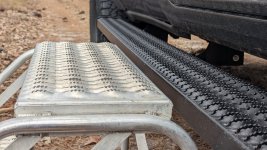
Two standout features deserve mention. First, the expanded metal tread pattern matches that of my camper entry step stand, creating uniform footing and boosting overall safety. Second, the running boards mount at precisely the same height as the top step of my stand. This eliminates the need to haul the stand when securing or releasing the front four roof latches on my Four Wheel Camper - a small but meaningful efficiency gain. In freezing conditions (teens or twenties), manipulating cold metal saps hand warmth quickly, and gloves compromise the dexterity needed for those stubborn latches - making this integration a genuine time- and comfort-saver.
This is the front mounting bracket on the driver's side. The powder-coated brackets employ stainless steel fasteners and exhibit high-quality fabrication.
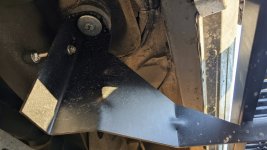
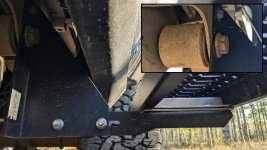
The instructions were thorough and illustrated, but contained a notable gap: body mount bolts are to be discarded without reuse, yet no guidance addresses the substantial factory washers (~4" OD). Luverne tech support offered no explanation for their function and insisted on non-reuse per the manual. Observing the kit's bolts were 10 mm longer each, I applied basic load-distribution logic: the washers must remain to spread force evenly over the rubber body bushings. This critical detail appears to have been omitted during the transition from design to documentation.
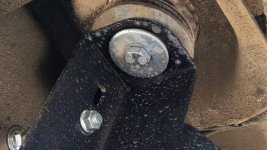
Here is the rear cab bracket on the driver's side. On a crew cab, an additional body mount and bracket would appear between front and rear; for my standard cab, only two per side are required. Vertical adjustment capability here is a smart, practical touch.
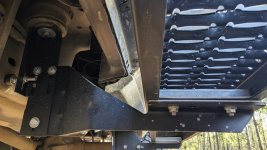
Close inspection of the load reaction studs reveals how they preload the brackets against the frame, channeling step loads directly into the chassis rails. This is a solidly engineered approach with broad adjustment capability that impressed me.
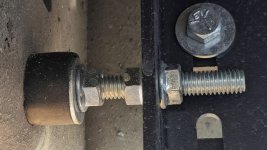
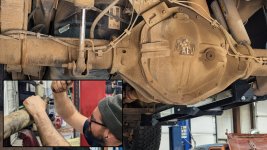
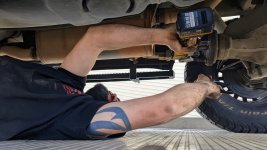
The rearmost bracket attaches to the side of the front eye bracket for the rear leaf spring on my one-ton truck. It uses a 30 mm head bolt torqued to 350 ft-lbs (my son handled the final torque). Horizontal adjustment is available if needed. In summary, the frame brackets reflect thoughtful, heavy-duty engineering with practical adjustability.
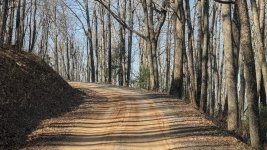
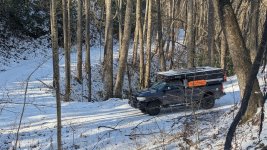
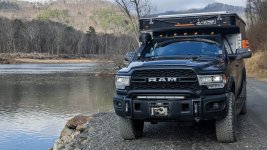
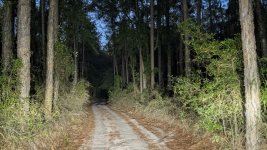
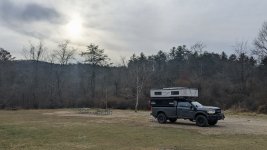
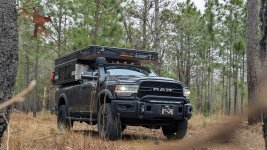
Tonight I camp in the Croatan National Forest where it's been in the 20s the past few nights, the crisp air sharpening every rustle in the underbrush. Named for the Croatoan tribe who once called this region home, the forest guards the echoes of the enigmatic Lost Colony - those 115 English souls who disappeared from Roanoke Island in the late 1580s, leaving behind a single carved word: "CROATOAN." Many believe they blended into the local Native communities hereabouts, their fate a mystery that still draws explorers like me to these shadowy pocosins and tidal edges, searching for traces in the silence.
The 7-inch-wide stepping surface ensures safe, comfortable access and egress. The open expanded metal treads effectively shed dirt, snow, and debris from boots, and the powder-coated aluminum construction delivers strength, low weight, and complete rust resistance.
As installation neared completion, I briefly considered omitting the end caps. Upon reflection, their smooth, rounded profile eliminates sharp edges and neatly conceals what would otherwise be an exposed, unfinished end - enhancing both safety and aesthetics.
Two standout features deserve mention. First, the expanded metal tread pattern matches that of my camper entry step stand, creating uniform footing and boosting overall safety. Second, the running boards mount at precisely the same height as the top step of my stand. This eliminates the need to haul the stand when securing or releasing the front four roof latches on my Four Wheel Camper - a small but meaningful efficiency gain. In freezing conditions (teens or twenties), manipulating cold metal saps hand warmth quickly, and gloves compromise the dexterity needed for those stubborn latches - making this integration a genuine time- and comfort-saver.
This is the front mounting bracket on the driver's side. The powder-coated brackets employ stainless steel fasteners and exhibit high-quality fabrication.
The instructions were thorough and illustrated, but contained a notable gap: body mount bolts are to be discarded without reuse, yet no guidance addresses the substantial factory washers (~4" OD). Luverne tech support offered no explanation for their function and insisted on non-reuse per the manual. Observing the kit's bolts were 10 mm longer each, I applied basic load-distribution logic: the washers must remain to spread force evenly over the rubber body bushings. This critical detail appears to have been omitted during the transition from design to documentation.
Here is the rear cab bracket on the driver's side. On a crew cab, an additional body mount and bracket would appear between front and rear; for my standard cab, only two per side are required. Vertical adjustment capability here is a smart, practical touch.
Close inspection of the load reaction studs reveals how they preload the brackets against the frame, channeling step loads directly into the chassis rails. This is a solidly engineered approach with broad adjustment capability that impressed me.
The rearmost bracket attaches to the side of the front eye bracket for the rear leaf spring on my one-ton truck. It uses a 30 mm head bolt torqued to 350 ft-lbs (my son handled the final torque). Horizontal adjustment is available if needed. In summary, the frame brackets reflect thoughtful, heavy-duty engineering with practical adjustability.
Tonight I camp in the Croatan National Forest where it's been in the 20s the past few nights, the crisp air sharpening every rustle in the underbrush. Named for the Croatoan tribe who once called this region home, the forest guards the echoes of the enigmatic Lost Colony - those 115 English souls who disappeared from Roanoke Island in the late 1580s, leaving behind a single carved word: "CROATOAN." Many believe they blended into the local Native communities hereabouts, their fate a mystery that still draws explorers like me to these shadowy pocosins and tidal edges, searching for traces in the silence.