
Ram Heavy Duty Forum
You are using an out of date browser. It may not display this or other websites correctly.
You should upgrade or use an alternative browser.
You should upgrade or use an alternative browser.
2021 RAM 3500 Tradesman | AEV Prospector | FWC Grandby
- Thread starter ramblinChet
- Start date


UglyViking
Well-Known Member
- Messages
- 1,410
- Reaction score
- 1,788
- Points
- 113
That museum is very cool, and I've added it to my list. If you ever make your way further north I recommend a stop at the Fraunces Tavern in Manhattan. It's nowhere near the quality as a museum, but the building is in it's mostly original format and includes some interesting pieces. No matter what, it is a cool experience to "stand where Washington stood" and think back to what it must have been like.
As always Chet, you seem to hit the most interesting places.
As always Chet, you seem to hit the most interesting places.

ramblinChet
Drinks Alone
- Messages
- 644
- Reaction score
- 3,069
- Points
- 93
I am glad you all are enjoying the ride. I began this thread to document my build which is still going on and also to help me remember where I have been and what I have seen. As we age we begin to worry about forgetting things and being able to share with others. I hope someday when I am old and tired, or no longer here, my children will stumble upon this thread and visit some of the same places. My greatest fear is that future generations will not enjoy the same freedom to travel and live life.
...the scented country air, sunlight on chrome, the blur of the landscape, every nerve aware...
...the scented country air, sunlight on chrome, the blur of the landscape, every nerve aware...
ramblinChet
Drinks Alone
- Messages
- 644
- Reaction score
- 3,069
- Points
- 93
While visiting Richmond, Virginia, I stopped into Green Top and picked up some gear. One of the items I selected was a Surefire 6PX Pro dual-LED flashlight. For quite some time now I have needed a really nice flashlight and this one reminded me of the Surefire my late father owned. They are not cheap but they work well and last. This model has an aluminum body and has two settings: 15 lumen and 600 lumen. So far it has worked out great and is exactly what a needed.

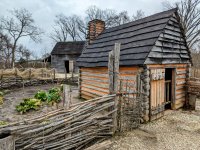
Outside the American Revolution Museum at Yorktown, there is an outdoor area with guided tours. There are two major sections, one is a soldiers encampment with a bunch of tents, and the other is a farm from the period. This is a slave house with a "patch" for a garden.
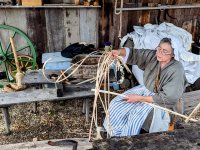
Here was a woman splitting logs into thin strips of wood to ultimately weave baskets.
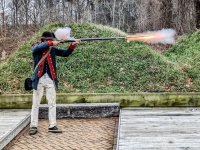
Here is a soldier firing his flintlock musket. All actors did a great job and shared very interesting details related to their specific area.
When visiting Yorktown, make sure to tour the battlefield where Washington and Lafayette defeated Cornwallis. This battle was the beginning of the end for the British so if you are a freedom loving person, this is a special place. Keep in mind that adjacent to the battlefields are a network of sixteen miles of mostly one way roads know as "battlefield tour roads." These are wonderful relaxing rides through the forest.
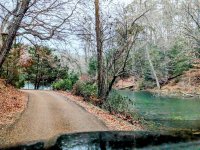
Here I am on a battlefield tour road with a water crossing. If I had my AEV snorkel I would have felt much safer crossing the swift moving 2-inch current.

The battlefield tour roads pass by the British inner defense line, grand French battery, second allied siege line, redoubts nine and ten, Moore house, and Surrender Field. Here is a shot along the way.

Outside the American Revolution Museum at Yorktown, there is an outdoor area with guided tours. There are two major sections, one is a soldiers encampment with a bunch of tents, and the other is a farm from the period. This is a slave house with a "patch" for a garden.
Here was a woman splitting logs into thin strips of wood to ultimately weave baskets.
Here is a soldier firing his flintlock musket. All actors did a great job and shared very interesting details related to their specific area.
When visiting Yorktown, make sure to tour the battlefield where Washington and Lafayette defeated Cornwallis. This battle was the beginning of the end for the British so if you are a freedom loving person, this is a special place. Keep in mind that adjacent to the battlefields are a network of sixteen miles of mostly one way roads know as "battlefield tour roads." These are wonderful relaxing rides through the forest.
Here I am on a battlefield tour road with a water crossing. If I had my AEV snorkel I would have felt much safer crossing the swift moving 2-inch current.
The battlefield tour roads pass by the British inner defense line, grand French battery, second allied siege line, redoubts nine and ten, Moore house, and Surrender Field. Here is a shot along the way.

Great White North Eh
Squish Cat - And So
- Messages
- 2,040
- Reaction score
- 3,606
- Points
- 113
Ah RUSHI am glad you all are enjoying the ride. I began this thread to document my build which is still going on and also to help me remember where I have been and what I have seen. As we age we begin to worry about forgetting things and being able to share with others. I hope someday when I am old and tired, or no longer here, my children will stumble upon this thread and visit some of the same places. My greatest fear is that future generations will not enjoy the same freedom to travel and live life.
...the scented country air, sunlight on chrome, the blur of the landscape, every nerve aware...
……Canada Rocks!!!!!Good ol Yorktown! Went there in 2009 for USCG Machinery Technician “A” school and have been back and forth through my career for numerous technical trainings. The history there is great to see and I spent many evenings running the battlefields. Cool to see someone exploring it as I don’t hear people talk about Yorktown unless their in the Coast Guard. Enjoy seeing your adventures, thanks for sharing.
ramblinChet
Drinks Alone
- Messages
- 644
- Reaction score
- 3,069
- Points
- 93
Since I spent much time in Yorktown I figured I would enjoy a ride up the Colonial Parkway and explore Jamestown Settlement in Jamestown, Virginia, on the shore of the James River. Let me begin by stating there is much to do in Jamestown. If you plan to visit I would suggest at least two full days in Jamestown alone, maybe two in Williamsburg, and at least one, preferably two, for Yorktown. If you are able to squeeze the entire Historic Triangle in over 5-6 days you will be lucky and very tired.
Here is a reconstruction of a block of actual English row houses in the Westminster section of London in the early 1600s. This museum in Jamestown turned out to be another beauty with hundreds of historic pieces and tons of detailed information to support.
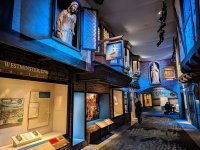
This elegant room had much information related to the Virginia Company of London which was the company owned by King James I who sold stocks to finance the colonies in America. Many original oil paintings and interesting details.

Coming upon an actual human skull was a strange surprise. I am not a supporter of placing human remains on public display and feel they would best be left interred. The purpose associated with this display had to do with clay pipes and associated dental wear. You can see on the left side of this man's mouth where he commonly held a clay pipe which wore away his tooth enamel. Strange display but not uncommon as I would find out later.

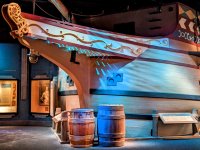
This display is associated with the Susan Constant, which was the largest of the three ships which initially sailed to these United States. She was 120-ton and loaded with people, pigs and chickens, arms and armor, and even artillery. When she and two others left England they were to sail south until the butter melted, then turn right and head west. The trade winds would push them over to the Virgin Islands and from there they would sail north up to the Chesapeake Bay.
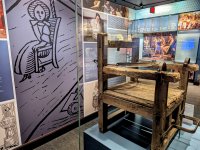
Here is a ducking chair that was used to shame and publicly torture women. It was used for "brabling women who often slander and scandalize their neighbors poor husbands." In short, a convicted woman would be bound into the chair, it would be hoisted up over a pond, and she would be lowered into the water for around thirty seconds. After that she would be pulled up and if the lesson was not complete, she would be lowered into the water again. Quite romantic...
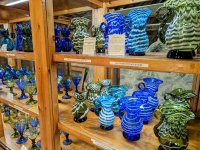
Down at the glasshouse, they actually have a huge mound with molten glass inside it where you can watch artists blow glass. It was really interesting to talk with the young lady working the kiln and blowing glass., I spent around thirty minutes there and watched her make two very simple but beautiful pieces. They have a store in the same building where you can purchase pieces. If you have not guessed it, making glass was one of the initial industries attempted in the colonies.
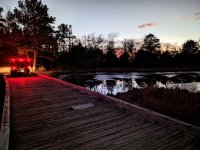
Here is a shot of me late in the evening exploring Jamestown Island. This is part of an additional five mile loop on the end of the Colonial Parkway. If you are like me and enjoy relaxing Sunday drives, this is the place for you. It was just beautiful with minimal traffic.
Here is a reconstruction of a block of actual English row houses in the Westminster section of London in the early 1600s. This museum in Jamestown turned out to be another beauty with hundreds of historic pieces and tons of detailed information to support.
This elegant room had much information related to the Virginia Company of London which was the company owned by King James I who sold stocks to finance the colonies in America. Many original oil paintings and interesting details.
Coming upon an actual human skull was a strange surprise. I am not a supporter of placing human remains on public display and feel they would best be left interred. The purpose associated with this display had to do with clay pipes and associated dental wear. You can see on the left side of this man's mouth where he commonly held a clay pipe which wore away his tooth enamel. Strange display but not uncommon as I would find out later.
This display is associated with the Susan Constant, which was the largest of the three ships which initially sailed to these United States. She was 120-ton and loaded with people, pigs and chickens, arms and armor, and even artillery. When she and two others left England they were to sail south until the butter melted, then turn right and head west. The trade winds would push them over to the Virgin Islands and from there they would sail north up to the Chesapeake Bay.
Here is a ducking chair that was used to shame and publicly torture women. It was used for "brabling women who often slander and scandalize their neighbors poor husbands." In short, a convicted woman would be bound into the chair, it would be hoisted up over a pond, and she would be lowered into the water for around thirty seconds. After that she would be pulled up and if the lesson was not complete, she would be lowered into the water again. Quite romantic...
Down at the glasshouse, they actually have a huge mound with molten glass inside it where you can watch artists blow glass. It was really interesting to talk with the young lady working the kiln and blowing glass., I spent around thirty minutes there and watched her make two very simple but beautiful pieces. They have a store in the same building where you can purchase pieces. If you have not guessed it, making glass was one of the initial industries attempted in the colonies.
Here is a shot of me late in the evening exploring Jamestown Island. This is part of an additional five mile loop on the end of the Colonial Parkway. If you are like me and enjoy relaxing Sunday drives, this is the place for you. It was just beautiful with minimal traffic.
ramblinChet
Drinks Alone
- Messages
- 644
- Reaction score
- 3,069
- Points
- 93
Okay, I need to back off on trips to museums in the Jamestown, Williamsburg, and Yorktown area - there is just too much to see. Realistically, someone should devote an entire thread to this area alone...and it would go on forever. If you enjoy history, love Freedom, and are interested in learning, the Historic Triangle is a great place to spend time. This will be my last post dedicated to this area - I have plans to head to Texas in the next few weeks.
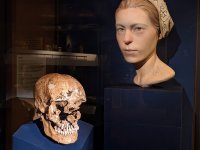
This is the skull of a fourteen year old girl who had her head split open with an axe and her brains eaten. You can see four marks on her forehead where initial attempts were made. There are two blows on the rear of her skull with the final removing approximately 35% to permit the brain to be removed. There are also sharp cuts on her cheekbones where he face was cut away and eaten.
Yes, this is a horrific story and the archeologist I spoke with stated that independent experts throughout the world who have examined the skull are able to identify that there was hesitation present. This indicates the person cutting her open and eating her was doing so under duress. Out of the few hundred original settlers who landed just months earlier, two out of every three perished. This was known as the Starving Time of 1609-1610.
This is a Catholic reliquary that was found buried with Captain Gabriel Archer, a rival of Captain John Smith. Wait, Catholic? I thought the Church of England was Protestant since King Henry VIII broke away from the Roman Catholic church in the early 1500s but this suggests reliquary suggests there were secret Catholics present on the first ships that landed. BTW - a Catholic reliquary must contain the mortal remains of a Saint such as bones or other physical remains. Essentially, this is a holder of a sacred relic. This particular one was imaged using a CT-scan and found to contain seven pieces of bone and single lead ampulla which may have contained holy water or blood.

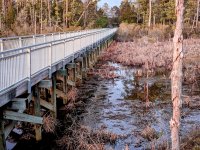
This is a wonderful walkway spanning a pitch and tar swamp used by the settlers at Jamestown. What I found most interesting during my days touring the area was the fact that England insisted that raw resources be shipped to the homeland for processing and distribution. This meant that tobacco grown in Virginia would first be shipped to England for processing and packaging, then shipped back to the colony for sale.
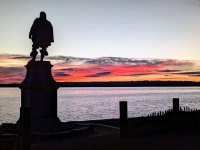
Here is Captain John Smith looking out over the James River at the exact location where the ships named Susan Constant, Godspeed, and Discovery, came ashore. To this day, this area is beautiful and I would encourage you to visit. If you feel like reading up on a very interesting person, Captain John Smith is an interesting fellow.
Here we are exploring the Island Loop Drive on Jamestown Island. This is a very relaxing ride that is essentially an extension of the Colonial Parkway. The small loop is three miles whereas the large one if five. There are historical markers along the way to stop and read, or fall asleep at as I did a few times.

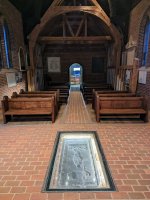
A Knight's Tomb inside a timber church from 1617, which is housed inside a brick church from 1639. The Knight interred here in 1627 is Sir George Yeardley, the presiding Governor of the first General Assembly in 1619. Let me tell you, it is pretty cool to stand walk the grounds and stand in the same location where it all began.
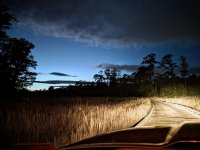
Jest feeling a bit artistic looking to the west as the sun set on the third day. If you look closely, the water below appears to be disturbed but in a strange way. It has to do with the tide coming in or going out. It was fun to watch and see a marsh nearly dry, but hours later flooded under several feet of water.

This is somewhat of a duplicate shot of a previous picture although this time it was shot from inside the cab, at during sunset. Did you know there are three different types of sunsets? Civil occurs when the center of the sun is 6° below the horizon, nautical at 12° below, and astronomical at 18° below.
This is the skull of a fourteen year old girl who had her head split open with an axe and her brains eaten. You can see four marks on her forehead where initial attempts were made. There are two blows on the rear of her skull with the final removing approximately 35% to permit the brain to be removed. There are also sharp cuts on her cheekbones where he face was cut away and eaten.
Yes, this is a horrific story and the archeologist I spoke with stated that independent experts throughout the world who have examined the skull are able to identify that there was hesitation present. This indicates the person cutting her open and eating her was doing so under duress. Out of the few hundred original settlers who landed just months earlier, two out of every three perished. This was known as the Starving Time of 1609-1610.
This is a Catholic reliquary that was found buried with Captain Gabriel Archer, a rival of Captain John Smith. Wait, Catholic? I thought the Church of England was Protestant since King Henry VIII broke away from the Roman Catholic church in the early 1500s but this suggests reliquary suggests there were secret Catholics present on the first ships that landed. BTW - a Catholic reliquary must contain the mortal remains of a Saint such as bones or other physical remains. Essentially, this is a holder of a sacred relic. This particular one was imaged using a CT-scan and found to contain seven pieces of bone and single lead ampulla which may have contained holy water or blood.
This is a wonderful walkway spanning a pitch and tar swamp used by the settlers at Jamestown. What I found most interesting during my days touring the area was the fact that England insisted that raw resources be shipped to the homeland for processing and distribution. This meant that tobacco grown in Virginia would first be shipped to England for processing and packaging, then shipped back to the colony for sale.
Here is Captain John Smith looking out over the James River at the exact location where the ships named Susan Constant, Godspeed, and Discovery, came ashore. To this day, this area is beautiful and I would encourage you to visit. If you feel like reading up on a very interesting person, Captain John Smith is an interesting fellow.
Here we are exploring the Island Loop Drive on Jamestown Island. This is a very relaxing ride that is essentially an extension of the Colonial Parkway. The small loop is three miles whereas the large one if five. There are historical markers along the way to stop and read, or fall asleep at as I did a few times.
A Knight's Tomb inside a timber church from 1617, which is housed inside a brick church from 1639. The Knight interred here in 1627 is Sir George Yeardley, the presiding Governor of the first General Assembly in 1619. Let me tell you, it is pretty cool to stand walk the grounds and stand in the same location where it all began.
Jest feeling a bit artistic looking to the west as the sun set on the third day. If you look closely, the water below appears to be disturbed but in a strange way. It has to do with the tide coming in or going out. It was fun to watch and see a marsh nearly dry, but hours later flooded under several feet of water.
This is somewhat of a duplicate shot of a previous picture although this time it was shot from inside the cab, at during sunset. Did you know there are three different types of sunsets? Civil occurs when the center of the sun is 6° below the horizon, nautical at 12° below, and astronomical at 18° below.
Last edited:
ramblinChet
Drinks Alone
- Messages
- 644
- Reaction score
- 3,069
- Points
- 93
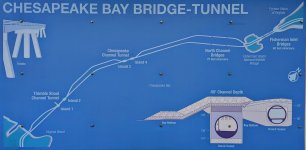
Crossing the 17.6-mile long Chesapeake Bay Bridge Tunnel today which runs between Hampton Roads and Eastern Shore in Virginia. Most of the journey is on low level trestle although there are two bridges, four man-made islands, and two 1-mile long tunnels which dive underwater and underground. Beware of high winds when crossing.

Here is a graphic for all the civil engineers and heavy construction folks in our group. The CBBT is really an engineering marvel.
It was a beautiful evening at Wise Point on the Eastern Shore of Virginia National Wildlife Refuge. There are many birds and other wild animals and reptiles in this area so if you enjoy nature this is a nice place to visit.

Here is a graphic for all the civil engineers and heavy construction folks in our group. The CBBT is really an engineering marvel.
It was a beautiful evening at Wise Point on the Eastern Shore of Virginia National Wildlife Refuge. There are many birds and other wild animals and reptiles in this area so if you enjoy nature this is a nice place to visit.
ramblinChet
Drinks Alone
- Messages
- 644
- Reaction score
- 3,069
- Points
- 93
Virginia's Eastern Shore has been very interesting since it is so different compared to what I am most familiar with. When I visit a new area the first thing I normally look for is a national or state forest, stop by the ranger station to grab a map, gas up, and go. The Eastern Shore has a number of Wildlife Management Areas which are inaccessible or have no trails and Kiptopeke State Park is only 562 acres with five total miles of biking and hiking trails. Some of the other areas are Natural Area Preserves while Chincoteague and Wallops Island are National Wildlife Refuges. It looks like Assateague Island permits driving on the beach during the day although the cost is a whopping $110 - yikes!
With all that being said, the Eastern Shore is a beautiful place with so much history and great seafood. The majority of the rest of land is privately owned and even though population density is low, we are on a peninsula here and everyone knows what's going on. Primitive camping is very much limited and finding a place to sleep for the night has been challenging.
My first night here was spent at the Virginia Welcome Center alongside 18-wheelers and a mix of other RVs and campers. Not glamorous but somewhere to sleep that was legal. The bathrooms are open 24-hours and there is a hiking trail that begins at the parking lot which takes you into the Eastern Shore of Virginia National Wildlife Refuge.

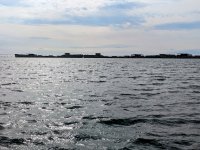
Would you sail in a concrete ship across the ocean? Well, guys have done so in the past. When visiting Kiptopeke State Park there are nine concrete ships sunk offshore as a breakwater for the ferry that once landed here. These ships are 335' x 54' so they are not small boats so with some quick calculations we can observe Archimedes' Principle being successfully employed.. Someday I will read up on how these ships were constructed although I view concrete as brittle whereas steel is more ductile. There are concrete ships manufactured during WWI that are still currently floating though.
Cape Charles is a small town with an assortment of services, nice restaurants, and a beach. They also have a fishing peer where you can fish for free. What caught my interest was this jetty that was previously used by the railroad to park sleeping cars at night so the passengers could hear the waves as they slept. That is very cool.

Here is an exciting and action packed photo gazing out of the salt marsh while walking along the Oyster Village Horse Island Trail. This was actually an interesting little area and from what I gather many folks visit the area to observe migration of birds and butterflys.

As the sun was falling and it was quiet I spotted an area at the mouth of Oyster Slip which appeared to be a parking area minus any "no overnight parking" signs so I decided to take a chance and sleep near the water. Hours later I would hear vehicles coming down to the water, some playing music, etc. so it seemed this quiet little spot was not so quiet after all. I was so tired I fell asleep and slept very well. At 0600, while it was still dark, I began hearing watermen firing up their boats and preparing to go work on Mockhorn Bay. Although no one said anything I do not think it is an ideal place to sleep, even for just one night.
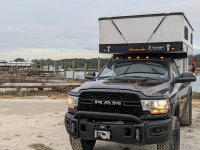
Have you ever viewed a twisted chimney in the attic of a house built during the nineteenth century? Well, if you visit Barrier Islands Center in Machipongo, Virginia, you can see one for yourself. The building was an Almshouse from 1802 through 1953. An Almshouse was a community house for the poor or other disadvantaged.

If you enjoy history associated with hunting and fishing the Barrier Island Center is a place to spend some time. I will not go into great details but this hidden gem is like stepping back in time. Here are two amazing videos produced by them:
Watermen
Spirit of the Bird
With all that being said, the Eastern Shore is a beautiful place with so much history and great seafood. The majority of the rest of land is privately owned and even though population density is low, we are on a peninsula here and everyone knows what's going on. Primitive camping is very much limited and finding a place to sleep for the night has been challenging.
My first night here was spent at the Virginia Welcome Center alongside 18-wheelers and a mix of other RVs and campers. Not glamorous but somewhere to sleep that was legal. The bathrooms are open 24-hours and there is a hiking trail that begins at the parking lot which takes you into the Eastern Shore of Virginia National Wildlife Refuge.
Would you sail in a concrete ship across the ocean? Well, guys have done so in the past. When visiting Kiptopeke State Park there are nine concrete ships sunk offshore as a breakwater for the ferry that once landed here. These ships are 335' x 54' so they are not small boats so with some quick calculations we can observe Archimedes' Principle being successfully employed.. Someday I will read up on how these ships were constructed although I view concrete as brittle whereas steel is more ductile. There are concrete ships manufactured during WWI that are still currently floating though.
Cape Charles is a small town with an assortment of services, nice restaurants, and a beach. They also have a fishing peer where you can fish for free. What caught my interest was this jetty that was previously used by the railroad to park sleeping cars at night so the passengers could hear the waves as they slept. That is very cool.
Here is an exciting and action packed photo gazing out of the salt marsh while walking along the Oyster Village Horse Island Trail. This was actually an interesting little area and from what I gather many folks visit the area to observe migration of birds and butterflys.
As the sun was falling and it was quiet I spotted an area at the mouth of Oyster Slip which appeared to be a parking area minus any "no overnight parking" signs so I decided to take a chance and sleep near the water. Hours later I would hear vehicles coming down to the water, some playing music, etc. so it seemed this quiet little spot was not so quiet after all. I was so tired I fell asleep and slept very well. At 0600, while it was still dark, I began hearing watermen firing up their boats and preparing to go work on Mockhorn Bay. Although no one said anything I do not think it is an ideal place to sleep, even for just one night.
Have you ever viewed a twisted chimney in the attic of a house built during the nineteenth century? Well, if you visit Barrier Islands Center in Machipongo, Virginia, you can see one for yourself. The building was an Almshouse from 1802 through 1953. An Almshouse was a community house for the poor or other disadvantaged.
If you enjoy history associated with hunting and fishing the Barrier Island Center is a place to spend some time. I will not go into great details but this hidden gem is like stepping back in time. Here are two amazing videos produced by them:
Watermen
Spirit of the Bird
ramblinChet
Drinks Alone
- Messages
- 644
- Reaction score
- 3,069
- Points
- 93
I believe I may have begun to figure out how to identify places to sleep here on Virginia's Eastern Shore. Some of the more interesting locations I have been visiting are boat ramps, landings, launches, and wharves, with some having signs stating "no overnight parking." Well, my guess is that the ones that do not have a similar sign are fine for overnight parking. As I have been working my way north I have begun to visit these areas and consider them for a place to sleep.
Here is one such location. I had a wonderful sleep on the water at Parker Creek Landing which opens to Metompkin Bay. I woke up to the sounds of duck hunters calling in ducks followed by the rhythmic boom of their shotguns. I just wish I could have been closer to watch wet dogs retrieving the beautiful birds.

There are many old buildings in the area and all have history. As I was driving past this old church I though it was interesting that there was only one light on inside. My next thoughts centered around how two can truly become one provided they both have unconditional love for one another. This reminded me of a quote by Matthew Henry, “The woman was made of a rib out of the side of Adam; not made out of his head to rule over him, nor out of his feet to be trampled upon by him, but out of his side to be equal with him, under his arm to be protected, and near his heart to be beloved.”

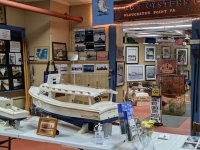
No visit to the Eastern Shore is complete without stopping by the town of Onancock. Years ago I enjoyed a fine dinner at Mallards at the Wharf. Today would be The Blarney Stone Pub and what a meal it was - very friendly folks and fine food. But before that I spent a few hours with Dr. Paul at Eastern Shore Watermen's Museum and Research Center. You know when you meet one of those rare people who are overflowing with interesting information and can tell great stories? Well, Dr. Paul is one of them. He shared with me a meeting he had with an old waterman in his 80s who said he had not seen his grandfather's boat since he was thirteen years old. Dr. Paul searched through thousands of pictures, found one picture of that cherished boat, had it enlarged and framed, and met the old waterman to gift it to him. Stop by and take your time exploring this wonderful world.
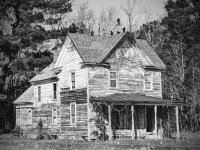
Did I mention there were some old buildings on the shore? Although abandoned buildings are not common, this one caught my eye. Look closely and you will understand why I would associate this building with this quote by Horace, "Seu me tranquilla senectus Exspectat, seu mors atris circumvolat alis."
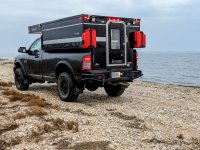
I was rocked and sung to sleep last night by the wind and the waves of Guard Shore south of Saxis, on Virginia's Eastern Shore. We had 25 knot winds off our bow and the waves on Beasley Bay were whitecaps. During the night the storm passed and this morning a beautiful and brilliant sun rose off our stern. It's a new day and time for adventure.

Here is one such location. I had a wonderful sleep on the water at Parker Creek Landing which opens to Metompkin Bay. I woke up to the sounds of duck hunters calling in ducks followed by the rhythmic boom of their shotguns. I just wish I could have been closer to watch wet dogs retrieving the beautiful birds.
There are many old buildings in the area and all have history. As I was driving past this old church I though it was interesting that there was only one light on inside. My next thoughts centered around how two can truly become one provided they both have unconditional love for one another. This reminded me of a quote by Matthew Henry, “The woman was made of a rib out of the side of Adam; not made out of his head to rule over him, nor out of his feet to be trampled upon by him, but out of his side to be equal with him, under his arm to be protected, and near his heart to be beloved.”
No visit to the Eastern Shore is complete without stopping by the town of Onancock. Years ago I enjoyed a fine dinner at Mallards at the Wharf. Today would be The Blarney Stone Pub and what a meal it was - very friendly folks and fine food. But before that I spent a few hours with Dr. Paul at Eastern Shore Watermen's Museum and Research Center. You know when you meet one of those rare people who are overflowing with interesting information and can tell great stories? Well, Dr. Paul is one of them. He shared with me a meeting he had with an old waterman in his 80s who said he had not seen his grandfather's boat since he was thirteen years old. Dr. Paul searched through thousands of pictures, found one picture of that cherished boat, had it enlarged and framed, and met the old waterman to gift it to him. Stop by and take your time exploring this wonderful world.
Did I mention there were some old buildings on the shore? Although abandoned buildings are not common, this one caught my eye. Look closely and you will understand why I would associate this building with this quote by Horace, "Seu me tranquilla senectus Exspectat, seu mors atris circumvolat alis."
I was rocked and sung to sleep last night by the wind and the waves of Guard Shore south of Saxis, on Virginia's Eastern Shore. We had 25 knot winds off our bow and the waves on Beasley Bay were whitecaps. During the night the storm passed and this morning a beautiful and brilliant sun rose off our stern. It's a new day and time for adventure.
Last edited:
ramblinChet
Drinks Alone
- Messages
- 644
- Reaction score
- 3,069
- Points
- 93
Last night was a very special night so I wanted to spend it in a unique and special sort of place. My travels ended in Greenbackville, Virginia, parked on a bed of oyster shells. I am not sure if you have ever driven on oyster shells but it was interesting and memorable. Since I was parking at the edge of the water I checked the tide charts for last night and this morning. It was pretty windy and a bit choppy as the sun disappeared over the horizon so once again I was rocked and sung to sleep by wind and waves. I set my internal clock to wake me up at 0200.
I woke up a bit early and laid there thinking quite a bit. It was three years ago, on January 20th, shortly after 0200 that I sat in silence with the rest of my family as we listened to the end of my father's life on earth and the beginning of his journey to his forever life in Heaven. My father was a professional photographer and I wanted to take one picture to honor him. The only planning I did was to wake up and then figure out what to shoot. I jumped out of my FWC at 0200 and immediately noticed how the night was CAVU (ceiling and visibility unlimited) and there were countless stars; I smiled and knew exactly what to do. I grabbed my camera and set it on my Worx step stool near the water and took one picture. The screen was black so I had no way of knowing if everything was composed properly or not. I stood and gazed into the heavens during the long exposure. The resulting picture is below and turned out ten times better than expected - thank you for the help dad, once again

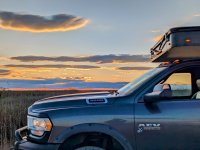
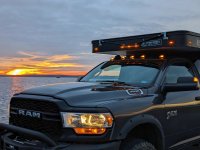
Later in the day, as the sun fell asleep this evening, I found myself on the side of a dirt road on Maddox Island overlooking Manokin River Sanctuary in Maryland. The sky was on fire so I jumped out and took a few shots. This was the last one I took and I liked it the best. My father was not the most vocal man, he lead by example and let his actions speak for him. Yeah, I miss him dearly but at the same time I am so very happy for him since he is where we desire to be one day. For now...
I woke up a bit early and laid there thinking quite a bit. It was three years ago, on January 20th, shortly after 0200 that I sat in silence with the rest of my family as we listened to the end of my father's life on earth and the beginning of his journey to his forever life in Heaven. My father was a professional photographer and I wanted to take one picture to honor him. The only planning I did was to wake up and then figure out what to shoot. I jumped out of my FWC at 0200 and immediately noticed how the night was CAVU (ceiling and visibility unlimited) and there were countless stars; I smiled and knew exactly what to do. I grabbed my camera and set it on my Worx step stool near the water and took one picture. The screen was black so I had no way of knowing if everything was composed properly or not. I stood and gazed into the heavens during the long exposure. The resulting picture is below and turned out ten times better than expected - thank you for the help dad, once again
Later in the day, as the sun fell asleep this evening, I found myself on the side of a dirt road on Maddox Island overlooking Manokin River Sanctuary in Maryland. The sky was on fire so I jumped out and took a few shots. This was the last one I took and I liked it the best. My father was not the most vocal man, he lead by example and let his actions speak for him. Yeah, I miss him dearly but at the same time I am so very happy for him since he is where we desire to be one day. For now...
Last edited:
ramblinChet
Drinks Alone
- Messages
- 644
- Reaction score
- 3,069
- Points
- 93
Earlier this past week I spent time in Chincoteague, Virginia, and had hopes of spending time with Misty of Chincoteague. As my luck would have it, I bumped into a girl late at night in a remote area of the island called Mariner's Point. While inspecting my AEV Prospector she smiled, hopped in, and began proving directions. Moments later in a nearby harbor, we pulled up and set eyes upon another Prospector.

Since it was still early, but dark, we drove around the island for a few hours while she provided a personal tour which was really nice. At one point we stopped at the locked entrance to Chincoteague National Wildlife Refuge which is adjacent to Assateague Island, jumped out of the truck, and walked across the bridge checking out the stars. The cool thing about Assateague is that you can purchase an Over Sand Vehicle (OSV) permit from the National Park Service and explore miles of beach. She owned property on the island and said it would be cool if I wanted to camp there. Here is a view from the inside of my trailer looking out over Black Point Landing.

Here is an old NASA ferry terminal boat ramp previously serving NASA Wallops Island. This was discovered while scouting viewing locations for the upcoming launch of a Rocket Lab Electron launch vehicle. This will be the first launch I have attended in over a decade; the last was STS-135 (Atlantis) and I had front row seats since I was still working at NASA. This is my secondary location since I found one even closer.

Yeah, spent another night at Guard Shore enjoying the sounds of the waves. Seriously, if you ever visit the Eastern Shore of Virginia make it a point to spend at least one night at this location. There is a beach to the south that turns into a salt water marsh where you can take a relaxing walk and step back in time. Although I am still a few months away from installing my diesel heater along with a few other improvements, my vehicle is complete enough for travel in most conditions in its current form. Some of the nights have been on the chilly side but I just deal with it. I'll be honest, the diesel heater will spoil me but also provide me with the ability to go really deep into some cold areas for extended periods which I am looking forward to.

Since it was still early, but dark, we drove around the island for a few hours while she provided a personal tour which was really nice. At one point we stopped at the locked entrance to Chincoteague National Wildlife Refuge which is adjacent to Assateague Island, jumped out of the truck, and walked across the bridge checking out the stars. The cool thing about Assateague is that you can purchase an Over Sand Vehicle (OSV) permit from the National Park Service and explore miles of beach. She owned property on the island and said it would be cool if I wanted to camp there. Here is a view from the inside of my trailer looking out over Black Point Landing.
Here is an old NASA ferry terminal boat ramp previously serving NASA Wallops Island. This was discovered while scouting viewing locations for the upcoming launch of a Rocket Lab Electron launch vehicle. This will be the first launch I have attended in over a decade; the last was STS-135 (Atlantis) and I had front row seats since I was still working at NASA. This is my secondary location since I found one even closer.
Yeah, spent another night at Guard Shore enjoying the sounds of the waves. Seriously, if you ever visit the Eastern Shore of Virginia make it a point to spend at least one night at this location. There is a beach to the south that turns into a salt water marsh where you can take a relaxing walk and step back in time. Although I am still a few months away from installing my diesel heater along with a few other improvements, my vehicle is complete enough for travel in most conditions in its current form. Some of the nights have been on the chilly side but I just deal with it. I'll be honest, the diesel heater will spoil me but also provide me with the ability to go really deep into some cold areas for extended periods which I am looking forward to.
ramblinChet
Drinks Alone
- Messages
- 644
- Reaction score
- 3,069
- Points
- 93
Late in the week before last week, I finished up my adventure on Virginia's Eastern Shore and actually jumped over the state line into Maryland for some time. There I visited Stockton, Pokomoke City, Deal Island, Crisfield, etc. This was an interesting part of Maryland and I plan to return someday to spend more time and really dive into Assateague Island National Seashore.
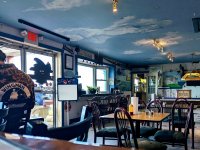
While in Virginia I stopped in for lunch as a former church now called El Crucero. It was take out only so I popped my top and ate food that I had never heard of before. My meal was great and if you enjoy home cooked food this is a great place.

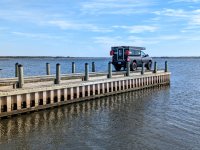
This is a photo taken at a boat launch at Saxis Wildlife Management Area looking out over Messongo Creek. While driving out on the wooden dock I smiled and considered what an amazing picture it would be if I made a mistake of if the structure collapsed. This was yet another area where it was so peaceful and quiet I took time to enjoy an afternoon nap.
A fellow adventurer that I have spent time traveling with suggested that I spend some time exploring the Deal Island area in Maryland. As I will nearing town I came across this unexpected gem; Deal Island Wildlife Management Area. The road lead you out into salt marsh areas where the water level is sometimes just inches below the road. In a single word - beautiful.

I spent time with some watermen at Deal Island, Maryland. Many good guys who were hard working and doing their best to keep a tradition alive despite being paid so little. Arby's Dockside Bar and Grill's motto is, "It's not the end of the world, but you can see it from here."
I zipped back over to Shelly Bay which is nestled between Chincogteague and Wallops Islands. The sounds of the night included Navy E-2D Advanced Hawkeye's conducting touch-and-go operations. It was not even a year ago that we lost an E-2D in the area which claimed the life of a young Lieutenant.
While in Virginia I stopped in for lunch as a former church now called El Crucero. It was take out only so I popped my top and ate food that I had never heard of before. My meal was great and if you enjoy home cooked food this is a great place.
This is a photo taken at a boat launch at Saxis Wildlife Management Area looking out over Messongo Creek. While driving out on the wooden dock I smiled and considered what an amazing picture it would be if I made a mistake of if the structure collapsed. This was yet another area where it was so peaceful and quiet I took time to enjoy an afternoon nap.
A fellow adventurer that I have spent time traveling with suggested that I spend some time exploring the Deal Island area in Maryland. As I will nearing town I came across this unexpected gem; Deal Island Wildlife Management Area. The road lead you out into salt marsh areas where the water level is sometimes just inches below the road. In a single word - beautiful.
I spent time with some watermen at Deal Island, Maryland. Many good guys who were hard working and doing their best to keep a tradition alive despite being paid so little. Arby's Dockside Bar and Grill's motto is, "It's not the end of the world, but you can see it from here."
I zipped back over to Shelly Bay which is nestled between Chincogteague and Wallops Islands. The sounds of the night included Navy E-2D Advanced Hawkeye's conducting touch-and-go operations. It was not even a year ago that we lost an E-2D in the area which claimed the life of a young Lieutenant.
Last edited:
ramblinChet
Drinks Alone
- Messages
- 644
- Reaction score
- 3,069
- Points
- 93
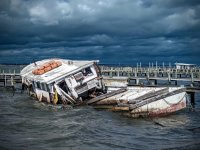
A boat off Main Street on Chincoteague Island, Virginia.
Preparing for a restful night on graven Point on Virginia's Eastern Shore. If you take time and search there are so many wonderful places to spend a night listening to wind, waves, and waterfowl.

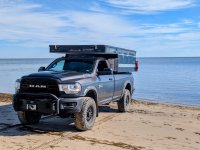
Scouting out future places to stop and relax during future adventures. This is Burton's Shore Beach. The sand felt soft so I backed up towards the water with a large tree approximately 80' off my nose just in case I required use of my Warn 16.5ti.
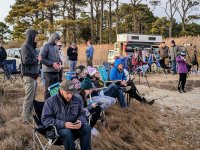
Here is the capstone of my adventures on Virginia's Eastern Shore - observing the Rocket Lab Electron launch from 1.5 miles away. Most of us arrived three hours ahead of the launch and vehicles were parked pointing "out" just in case there was an event which required immediate evacuation. The lunch took place precisely at 1800 EST and I made not effort to take a picture - I just watched and smiled. As the rocket arced away towards the east it crested Orion and moments later we watched main engine cut off (MECO). The second stage lit and everyone cheered. It was a cold night and everyone left with the exception of one other adventurer. I slept just a few feet from the water once again and smiled as I drifted off...
Preparing for a restful night on graven Point on Virginia's Eastern Shore. If you take time and search there are so many wonderful places to spend a night listening to wind, waves, and waterfowl.
Scouting out future places to stop and relax during future adventures. This is Burton's Shore Beach. The sand felt soft so I backed up towards the water with a large tree approximately 80' off my nose just in case I required use of my Warn 16.5ti.
Here is the capstone of my adventures on Virginia's Eastern Shore - observing the Rocket Lab Electron launch from 1.5 miles away. Most of us arrived three hours ahead of the launch and vehicles were parked pointing "out" just in case there was an event which required immediate evacuation. The lunch took place precisely at 1800 EST and I made not effort to take a picture - I just watched and smiled. As the rocket arced away towards the east it crested Orion and moments later we watched main engine cut off (MECO). The second stage lit and everyone cheered. It was a cold night and everyone left with the exception of one other adventurer. I slept just a few feet from the water once again and smiled as I drifted off...
ramblinChet
Drinks Alone
- Messages
- 644
- Reaction score
- 3,069
- Points
- 93
My AEV Prospector has covered many miles over the past few weeks and I am happy to confirm that she continues to drive like an absolute dream. I have been driving lifted and modified vehicles since the early 90s and simply put - there is no comparison. Really, this handles and drives like stock in every scenario.
Following the launch at NASA Wallops in Virginia I turned my ship south and began heading to Florida to attend the Rolex 24 Hours of Daytona. I spoke with the owner of a team who provided me the necessary credentials. Here is a publicity shot taken by Jordan Lenssen/AWA:

If you have never attended the Rolex 24 Hours of Daytona and you have an interest in machines, I would encourage to attend. And make sure to remain on track and enjoy the full 24-hours. There is something magical when the sun begins to rise and you realize teams have been racing non-stop for sixteen hours and there are still eight remaining.

Shot in the pits prior to the race:
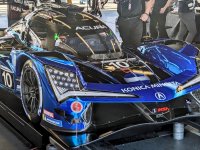
Shot in the pits during practice:

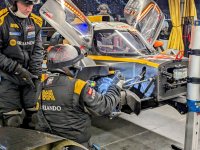
Shot in the pits during the race:
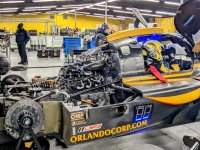
Shot in the pits during the race:
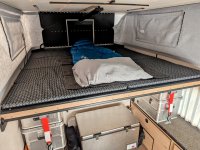
Here is an inside shot of my FWC just before falling asleep after being awake for thirty-plus hours. Extended bed is larger than a king and I often place a Woolrich wool blanket down for some additional comfort and insulation.
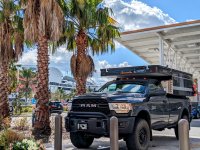
Enjoying breakfast across from Daytona International Speedway the next morning. My AEV Prospector and Four Wheel Pop-Up Camper combination is great since I can travel anywhere and never need to worry about reservations.
Following the launch at NASA Wallops in Virginia I turned my ship south and began heading to Florida to attend the Rolex 24 Hours of Daytona. I spoke with the owner of a team who provided me the necessary credentials. Here is a publicity shot taken by Jordan Lenssen/AWA:
If you have never attended the Rolex 24 Hours of Daytona and you have an interest in machines, I would encourage to attend. And make sure to remain on track and enjoy the full 24-hours. There is something magical when the sun begins to rise and you realize teams have been racing non-stop for sixteen hours and there are still eight remaining.
Shot in the pits prior to the race:
Shot in the pits during practice:
Shot in the pits during the race:
Shot in the pits during the race:
Here is an inside shot of my FWC just before falling asleep after being awake for thirty-plus hours. Extended bed is larger than a king and I often place a Woolrich wool blanket down for some additional comfort and insulation.
Enjoying breakfast across from Daytona International Speedway the next morning. My AEV Prospector and Four Wheel Pop-Up Camper combination is great since I can travel anywhere and never need to worry about reservations.
The level of jealousy I have is hard to describe. 24H of Daytona is a bucket list item for me. Seeing those cars in parts makes me want to build something. I really love the green on that Lamborghini.
Great interior shot of the FWC as well. Looks very cozy.
Great interior shot of the FWC as well. Looks very cozy.
ramblinChet
Drinks Alone
- Messages
- 644
- Reaction score
- 3,069
- Points
- 93
The level of jealousy I have is hard to describe. 24H of Daytona is a bucket list item for me. Seeing those cars in parts makes me want to build something.
My apologies regarding your jealousy - there was no intent. My goal with this is to inspire others to get out and live life while at the same time documenting my build and travels so I can look back when I am really old, and smile. The 24 Hours of Daytona is very cool and up until a week ago, was a bucket-list item for me too. Just do it man!
ramblinChet
Drinks Alone
- Messages
- 644
- Reaction score
- 3,069
- Points
- 93
Major upgrade completed - I now have weather resistant locks for my Wavian fuel cans. I selected Materlock M115XTRILF Laminated Padlocks and expect them to be fine.
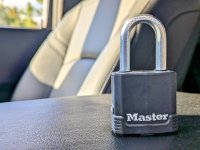
The locks are sold with three to a set using all the same key. Here is a shot of one installed on one of the cans. Two for the cans and the third for locking down the Maxtrax once I mount them. BTW - I was joking regarding the major upgrade. It took longer for me to pick them out than it did to install them

This is the most patient Prospector owner ever - still waiting for the shop to finish his truck. Look at that full-floater rear end though!

Here is a unique overland rig owned by a man from Germany who I met in Daytona. It is so tiny yet so very well laid out inside - it has everything including a diesel engine. We had a great talk and shared stories and laughs. We may cross paths again.

Check out how he mounted the heavy motorcycle low while also positioning the two lighter bicycles up high taking advantage of the free vertical space. This is a custom mount that he designed and built - how innovative.

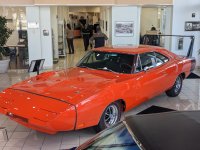
Speaking of Daytona, I stopped in to have my vehicle service at Daytona Dodge Chrysler Jeep RAM. Inside the showroom they have several MOPAR muscle cars and it was nice to see a Dodge Daytona while in Daytona. The service was good and it was nice to check out the beautifully restored muscle cars while waiting on my rig.
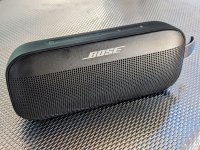
And here is another upgrade I made to the FWC - a Bose SoundLink Flex Bluetooth speaker. I spend much time in the camper and this unit sounds wonderful. Human voice is great and music can be played at a moderate volume. It's really nice and designed for outdoor environments.
"Rigorously tested to meet an IP67 rating, SoundLink Flex is waterproof and dustproof inside and out. Dunk it in water, and it’ll keep on playing. It even floats. The speaker is also protected against dust, so you don’t need to worry if it gets sandy at the beach."
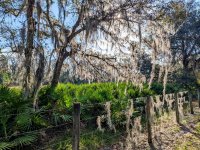
If you are an overlander exploring Florida, you must check out Huntington Ranch. This is one of the most beautiful and peaceful places I have ever camped at and Michael is a salt-of-the-earth man.

The ranch is an active 600-acre cattle ranch and essentially you have it all to yourself. I slept so very well and enjoyed a nice hike in the fresh clean air the next morning. Yeah, walking for a few miles in barefeet I was attacked by chiggers and the occasional sand bur but this is Florida and it was easily worth it.
Oh, did I mention you have a beautiful private dock a few feet from your camp where you can enjoy watching the sun go to sleep? This is one of those places that seems to be too good to be true but consider Michael is an experienced overlander just looking to give back to our community. Enjoy!

The locks are sold with three to a set using all the same key. Here is a shot of one installed on one of the cans. Two for the cans and the third for locking down the Maxtrax once I mount them. BTW - I was joking regarding the major upgrade. It took longer for me to pick them out than it did to install them
This is the most patient Prospector owner ever - still waiting for the shop to finish his truck. Look at that full-floater rear end though!
Here is a unique overland rig owned by a man from Germany who I met in Daytona. It is so tiny yet so very well laid out inside - it has everything including a diesel engine. We had a great talk and shared stories and laughs. We may cross paths again.
Check out how he mounted the heavy motorcycle low while also positioning the two lighter bicycles up high taking advantage of the free vertical space. This is a custom mount that he designed and built - how innovative.
Speaking of Daytona, I stopped in to have my vehicle service at Daytona Dodge Chrysler Jeep RAM. Inside the showroom they have several MOPAR muscle cars and it was nice to see a Dodge Daytona while in Daytona. The service was good and it was nice to check out the beautifully restored muscle cars while waiting on my rig.
And here is another upgrade I made to the FWC - a Bose SoundLink Flex Bluetooth speaker. I spend much time in the camper and this unit sounds wonderful. Human voice is great and music can be played at a moderate volume. It's really nice and designed for outdoor environments.
"Rigorously tested to meet an IP67 rating, SoundLink Flex is waterproof and dustproof inside and out. Dunk it in water, and it’ll keep on playing. It even floats. The speaker is also protected against dust, so you don’t need to worry if it gets sandy at the beach."
If you are an overlander exploring Florida, you must check out Huntington Ranch. This is one of the most beautiful and peaceful places I have ever camped at and Michael is a salt-of-the-earth man.
The ranch is an active 600-acre cattle ranch and essentially you have it all to yourself. I slept so very well and enjoyed a nice hike in the fresh clean air the next morning. Yeah, walking for a few miles in barefeet I was attacked by chiggers and the occasional sand bur but this is Florida and it was easily worth it.
Oh, did I mention you have a beautiful private dock a few feet from your camp where you can enjoy watching the sun go to sleep? This is one of those places that seems to be too good to be true but consider Michael is an experienced overlander just looking to give back to our community. Enjoy!
Last edited: