What's new
Ram Heavy Duty Forum

Register a free account today to become a member! Once signed in, you'll be able to participate on this site by adding your own topics and posts, as well as connect with other members through your own private inbox!

Diesel/Gas justification banter?

The OEM would be silly, legally to not put a get out of jail free clause in there. All OEM’s do that.

There is a small collection of evidence actually. That thread you mentioned has 102 people on it with issues. You realize from 2019-2025 ram produced like 3 million trucks. Even if it were 10% having issues (300,000 trucks) it’s still a very small potatoes pool of people which means it isn’t the normal experience.
We can debate what number constitutes “normal” until the cows come home, as that is a very subjective way of quantifying something.

The simple fact is that it is a common enough issue for ram to issue TSB’s regarding it. That is easily verified, and points to it being more common than I think you’re prepared to admit.

I’m dealing with regen frequency issues with my 2022 (a year with more frequent regen issues than others seem to have) right now. My work truck gets 3x the idle time, and it runs right as the rain. It’s a complex issue to say the least.
 
The OEM would be silly, legally to not put a get out of jail free clause in there. All OEM’s do that.

There is a small collection of evidence actually. That thread you mentioned has 102 people on it with issues. You realize from 2019-2025 ram produced like 3 million trucks. Even if it were 10% having issues (300,000 trucks) it’s still a very small potatoes pool of people which means it isn’t the normal experience.
If you’re attempting to assert that the number of people who are “following” or “contributing” to one specific thread, in one specific category, of one specific Internet forum is in some way demonstrative of, or reflective of, the number of people who have experienced emissions or engine related issues as a result of excessive short tripping or extending idle times out too long…..there is literally no amount of verifiable evidence or data that would satisfy or otherwise placate your perspective on this.

Furthermore, when you charge into a conversation with the “100% wrong” attitude and opening statement, you had better bring with you a litany of evidence to support said claim. Especially when such a comment is directed at a member here who has, on numerous occasions, demonstrated a reputation for contributing verifiable information, factual data, and in some cases…information that the general public shouldn’t necessarily know. And then backing up those contributions with actual information from manufacturers in black and white.

You’re not listening to learn. You’re listening to respond. If you are unwilling to learn why be a part of a forum who’s fundamental purpose is the sharing of factual information and verifiable data in order to promote mutual benefit and gain ? So far your only real contribution has been “you’re wrong and I’m right” yet you’ve not provided a shred of evidence to the contrary of what I and others have provided in plain view.

Facts always trump opinion.

Applying the attempted cop-out of “well they just add that line in there to cover their own a$$ from a legal standpoint” is both laughable and further proof that you have nothing to provide outside of baseless claims.

If you’ve had no issues, great. Wonderful. We’re all happy for you. Sometimes you get lucky.

But there’s a real physical reason why practically every engine manufacturer has, and still does, release countless bulletins, owner warnings and recommendations, white papers, etc that all focus on minimizing engine idle time and short trips wherever possible. And that reason is that it is not conducive to engine and emission system health. Not myth. Not conjecture. Fact. Your own trucks owners manual spells that out clearly. And no…it isn’t for legal CYA. Engine manufacturers wouldn’t sell many engines if the recommendations they provide for service and maintenance on their products were baseless claims meant to keep them from avoiding legal issues. They sell engines because they know what they’re doing, they know their products, and they have a vested interest in helping owners maintain their purchases so they’ll come back and buy more.

 
We can debate what number constitutes “normal” until the cows come home, as that is a very subjective way of quantifying something.

The simple fact is that it is a common enough issue for ram to issue TSB’s regarding it. That is easily verified, and points to it being more common than I think you’re prepared to admit.

I’m dealing with regen frequency issues with my 2022 (a year with more frequent regen issues than others seem to have) right now. My work truck gets 3x the idle time, and it runs right as the rain. It’s a complex issue to say the least.
For sure, and hopefully I didn’t irritate you. I was just speaking from my personal experience and those all around my area. Sorry you are having issues, I hope you can get it fixed. Oddly enough mine is a 2022 as well.
 
If you’re attempting to assert that the number of people who are “following” or “contributing” to one specific thread, in one specific category, of one specific Internet forum is in some way demonstrative of, or reflective of, the number of people who have experienced emissions or engine related issues as a result of excessive short tripping or extending idle times out too long…..there is literally no amount of verifiable evidence or data that would satisfy or otherwise placate your perspective on this.

Furthermore, when you charge into a conversation with the “100% wrong” attitude and opening statement, you had better bring with you a litany of evidence to support said claim. Especially when such a comment is directed at a member here who has, on numerous occasions, demonstrated a reputation for contributing verifiable information, factual data, and in some cases…information that the general public shouldn’t necessarily know. And then backing up those contributions with actual information from manufacturers in black and white.

You’re not listening to learn. You’re listening to respond. If you are unwilling to learn why be a part of a forum who’s fundamental purpose is the sharing of factual information and verifiable data in order to promote mutual benefit and gain ? So far your only real contribution has been “you’re wrong and I’m right” yet you’ve not provided a shred of evidence to the contrary of what I and others have provided in plain view.

Facts always trump opinion.

Applying the attempted cop-out of “well they just add that line in there to cover their own a$$ from a legal standpoint” is both laughable and further proof that you have nothing to provide outside of baseless claims.

If you’ve had no issues, great. Wonderful. We’re all happy for you. Sometimes you get lucky.

But there’s a real physical reason why practically every engine manufacturer has, and still does, release countless bulletins, owner warnings and recommendations, white papers, etc that all focus on minimizing engine idle time and short trips wherever possible. And that reason is that it is not conducive to engine and emission system health. Not myth. Not conjecture. Fact. Your own trucks owners manual spells that out clearly. And no…it isn’t for legal CYA. Engine manufacturers wouldn’t sell many engines if the recommendations they provide for service and maintenance on their products were baseless claims meant to keep them from avoiding legal issues. They sell engines because they know what they’re doing, they know their products, and they have a vested interest in helping owners maintain their purchases so they’ll come back and buy more.
I won’t be reading your entire post, but I did briefly go through it. I did state facts and data as well as personal experience and the experience of many around me in my area which differs from your opinion. Which is what is great, we can all have our own opinion and agree to disagree which is the point we are at now. Thanks.
 
I won’t be reading your entire post, but I did briefly go through it. I did state facts and data as well as personal experience and the experience of many around me in my area which differs from your opinion. Which is what is great, we can all have our own opinion and agree to disagree which is the point we are at now. Thanks.
“I won’t be reading your entire post” but responding to it anyways kinda sums up his point.
 
“I won’t be reading your entire post” but responding to it anyways kinda sums up his point.
1000%
I won’t be reading your entire post, but I did briefly go through it. I did state facts and data as well as personal experience and the experience of many around me in my area which differs from your opinion. Which is what is great, we can all have our own opinion and agree to disagree which is the point we are at now. Thanks.
you’ve not provided a single solitary shred of fact. You’ve added anecdotal experience and opinion, none of which contained any actual factual evidence to support them. And let’s not forget to mention an outright lie (ie: “the OEM agrees with me” statement)

Thanks for proving my previous points correct.
In the meantime I’ll wait patiently for you to provide some actual manufacturer-sourced document(s) which clearly state that short trips are not harmful, or extended idle times are perfectly fine. I won’t be holding my breath.
 
In the meantime I’ll wait patiently for you to provide some actual manufacturer-sourced document(s) which clearly state that short trips are not harmful, or extended idle times are perfectly fine. I won’t be holding my breath.

Define short trips

Define extended Idle
 
I’m ok with anything you guys would like to say other than personal attacks if it gets there.

I have been misunderstood in my wording, I said things incorrectly for sure and I may have misunderstood some of you, I don’t know. I am just saying that short trips, idling, stop and go use, no towing are not an automatic sentence to emissions problems. They do increase the risk, but they don’t garauntee it like some like to say. I and many others are proof of that. I just did some quick searches and it supported that more people are trouble free.

I am just offering personal and multiple others experience as we all do on a forum.

Again I’ll agree to disagree on whatever any of you like. I’ll be the one to walk away here and I'm ok with doing that. Even though I’m not a moderator who is taking personal attacks on a long time active member.
 
Last edited:
What I never understood is why ppl need all the bells and whistles in a heavy duty truck...especially one that is actually used for work.

Sure, leather may be nice and a couple cameras are nice and yes of course you want it to wipe your dirty @$$ and maybe make you coffee but still....even if you're in the damn thing for 30k miles a year you don't need top of the line to have a really nice functional truck.

You asked for banter, so there's mine :)

Haha - in all seriousness, I don't see prices coming down substantially anytime soon. I think with COVID and recent economics the world has "ratcheted itself up" a level in terms of inflation. I don't see it going back to what some might refer to as "normal"...whatever that means.

IMHO...If you haul a lot of payload, just get a nice trimmed out large gas 3/4 or 1 ton. If you tow over 7500 daily or are carrying heavy payload over really rough terrain, go Diesel.

I get this sentiment 100% as until now my truck was an Express so tow package, pwoer windows and locks and thats it. I did long for 1 option and that is a sunroof, and with that came ALL the options save for the 12in radio and wood trim. Do I love the options? ABSOLUTELY. Did I want them? Nope! Either way as many use their trucks as daily drivers from groceries, taking kids sports, to hauling 2k LBS of wood or towning a flatbed or travel trailer my truck, like so many, fills many roles. But yeah its not a need for sure, but is nice...and I dont mind getting in my bells and whistles truck dirty because it is a work truck lol.

To your second point I couldn't agree more. Prices will never go back down as people continue to pay INSANE prices for these trucks and if they cant pay then the bank gets to sell it again.

Define short trips

Define extended Idle

I would say anything over 5 or so minutes idling but thats just me. if it is WELL below freezing then I warm the truck up for 5ish minutes, but its rare that I need more than 1-3 to get things where they need to be. Single digit temps, which are VERY rare here would bump that time up. But running a frigid truck does more damage or possible damage than idling for a few more minutes IMHO. Short trips I would say anything where the truck doesnt get up to full operating temperature. Obviously this is weather dependent.

Well that is my anecdotal opinion lol.
 
Define short trips
There is no set “definition” but you can make an educated inference by means of interpretation of their oil change interval recommendations. Specifically where they state “short trips” in the severe service clause of oil change recommendations. IE: if they’re telling you to change the engine oil more frequently if you do “short trips”, you can safely assume that any operation where the engine oil does not reach and maintain full operating temperature would be considered “short tripping”.

As an example using my 2022 high output dually: my daily commute to work is 15 minutes, all highway at 70mph. In the vast majority of the calendar year, that daily one-way commute would result in an engine oil temperature that barely made full temperature (roughly 190°F or + / - 10°F of engine coolant operating temperature) by the time I arrived at work. Obviously this was even more the case during the cooler / cold months.
Routinely operating the engine in this manner can significantly shorten the engine oil’s service life.

Define extended Idle
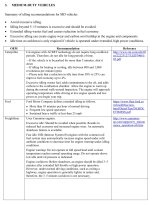
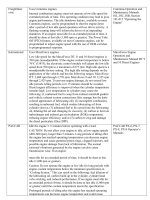
Feel free to read the entire white paper here:
Oak Ridge Lab: OEM Engine Idle Time Summary

Here are some highlights:
IMG_5730.jpeg
IMG_5731.jpeg
IMG_5732.jpeg
 
Define short trips

Define extended Idle

Cummins defines anything over 10 minutes of idle per hour of operation as excessive.

Extended idle isn’t a direct term I’ve seen Cummins use, however they do talk about 3-5 minutes under some circumstances in addition to the excessive definition. That tells me anything over 5 minutes is extended and anything over 10 is excessive.

There is some verbiage about low idle vs fast idle, which indicated fast idle supports better combustion in the cylinder but doesn’t have much effect on the emissions. When the engine goes into net zero idle more than just the rpms change in an effort to reduce idle impacts on the DPF. The very existence of net zero idling validates the issues caused by excessive/extended idle.

Even though I’m not a moderator who is taking personal attacks on a long time active member.

Got an example of said attacks?
 
1000%

you’ve not provided a single solitary shred of fact. You’ve added anecdotal experience and opinion, none of which contained any actual factual evidence to support them. And let’s not forget to mention an outright lie (ie: “the OEM agrees with me” statement)

Thanks for proving my previous points correct.
In the meantime I’ll wait patiently for you to provide some actual manufacturer-sourced document(s) which clearly state that short trips are not harmful, or extended idle times are perfectly fine. I won’t be holding my breath.
If you feed the donkeys, they just keep coming back!
 
There is no set “definition” but you can make an educated inference by means of interpretation of their oil change interval recommendations. Specifically where they state “short trips” in the severe service clause of oil change recommendations. IE: if they’re telling you to change the engine oil more frequently if you do “short trips”, you can safely assume that any operation where the engine oil does not reach and maintain full operating temperature would be considered “short tripping”.

As an example using my 2022 high output dually: my daily commute to work is 15 minutes, all highway at 70mph. In the vast majority of the calendar year, that daily one-way commute would result in an engine oil temperature that barely made full temperature (roughly 190°F or + / - 10°F of engine coolant operating temperature) by the time I arrived at work. Obviously this was even more the case during the cooler / cold months.
Routinely operating the engine in this manner can significantly shorten the engine oil’s service life.


Feel free to read the entire white paper here:
Oak Ridge Lab: OEM Engine Idle Time Summary

Here are some highlights:
Ok,

I think this is very subjective - a study paid for by the US Dept of Energy(Oak Ridge Labs) you have to take that with a grain of salt. I can see they are looking to reduce the overnight/drop off idle time for commercial truckers in this report. I also find it interesting this paper does not mention FCA/Stellantis/Ram directly at all.

It does mention Cummins - with this side note(and other manufactures in the report):

"If an engine must idle for an extended period of time, it should be done at fast idle (1,000 rpm or greater)"

I think anyone here can go in the web and cherry pick information to support their argument, however, I find it odd that the big auto manufactures are making HD trucks that they know will idle for more than 10 minutes for the average consumer who lives in larger cities, highway back ups, and fast food lines etc. The engineers know this, Cummins knows this, yet the warnings about are not very forefront.

I do agree that long idle time are not the best, but I am not going to change my driving habits based on that. Taking trips to finish regens, start regens, not turning off the truck as not interrupt a regen, is silly to me.


I think anyone who is on the fence on gas vs Diesel - get GAS - then you don't have to babysit that truck.
 
Would you mind sharing the name of that dealer and “performance diesel shops”?

I’d like to make sure I never end up bringing my truck to them, because they couldn’t be any more wrong.

Just because the small bubble of the world you live in doesn’t have those issues, doesn’t mean they aren’t widespread. Maybe read the regeneration frequency threads on this very forum to familiarize yourself with it.View attachment 93467


There it is again:

1770303207259.png
 
Ok,

I think this is very subjective - a study paid for by the US Dept of Energy(Oak Ridge Labs) you have to take that with a grain of salt. I can see they are looking to reduce the overnight/drop off idle time for commercial truckers in this report. I also find it interesting this paper does not mention FCA/Stellantis/Ram directly at all.

It does mention Cummins - with this side note(and other manufactures in the report):

"If an engine must idle for an extended period of time, it should be done at fast idle (1,000 rpm or greater)"

I think anyone here can go in the web and cherry pick information to support their argument, however, I find it odd that the big auto manufactures are making HD trucks that they know will idle for more than 10 minutes for the average consumer who lives in larger cities, highway back ups, and fast food lines etc. The engineers know this, Cummins knows this, yet the warnings about are not very forefront.

I do agree that long idle time are not the best, but I am not going to change my driving habits based on that. Taking trips to finish regens, start regens, not turning off the truck as not interrupt a regen, is silly to me.


I think anyone who is on the fence on gas vs Diesel - get GAS - then you don't have to babysit that truck.
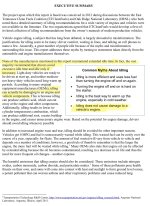
It’s not really a study, it’s a “summary” of manufacturer recommendations regarding idling and how that behavior has an impact on the engines health and fuel economy. I would encourage you to read the summary (again?) in its entirety. I’ve highlighted some important points. IMG_5741.jpeg
These recommendations would be just as important for a gas engine as it would for a diesel engine. The only difference being the diesel has the added complexity of the full aftertreatment system which also has to be considered.

“Can” and “should” are two different things.

Can you short trip and idle long periods? Sure.
But you then assume the burden of increased potential for damage to both the engine and emissions system.

Should you short trip and idle long periods? No.
Reducing both as much as possible greatly reduces the risk for engine and emissions system damage.

If someone is on the fence between gas and diesel, a gas truck will tolerate short trips and idling more so than the diesel due to the lack of an after treatment / emissions system. It’s also a far less costly truck to maintain. Cheaper oil changes means you can change the engine oil more to offset the negative impacts of poor drive cycles. This is why a significant number of ambulance services nationwide have switched their fleets over to gasoline power, as did UPS / FEDEX with their delivery vehicles. Lower initial cost of purchase, lower cost of fuel, lower maintenance headaches, and lower impact on the their bottom line.
 
Back
Top