What's new
Ram Heavy Duty Forum

Register a free account today to become a member! Once signed in, you'll be able to participate on this site by adding your own topics and posts, as well as connect with other members through your own private inbox!

What did you do TO your RAM today?

It’s not on the truck, it’s in my warm kitchen while it’s sleeting outside. But it will be on my truck in the morning, so I guess it counts..?

Power block and trickle charger bolted onto fuse panel cover.View attachment 82496

I’ve always wondered why people mount the NOCO chargers to the fuse panel when both the storage and operating temps are easy to exceed with the unit under hood.

Why not mount the charger outside the truck and just connect the 12V lead when you want to trickle charge?
 
I’ve always wondered why people mount the NOCO chargers to the fuse panel when both the storage and operating temps are easy to exceed with the unit under hood.

Why not mount the charger outside the truck and just connect the 12V lead when you want to trickle charge?

All good points. For me, just consistency, I suppose. I have the Noco 2A chargers on two commercial mowers, a Kawasaki SXS, and an old Honda XR650. Never an issue with any of them.

For years I just ran a Battery Tender with SAE leads on each battery as you describe. I find having it onboard is convenient regardless of where I am.

It’s only $20 more for the whole charger than for a 6-foot SAE lead. For me, the convenience is worth it.
 
For me, the convenience is worth it.

Even if it doesn’t last and potentially isn’t warrantied?

Doesn’t sound like any of your other applications will have the high average heat exposure.
 
Those are imaginary concerns in my real-world experience. The unit that was on my Ford F350 is now on one of the mowers. No issues on the truck, and I’ve never had a reason to check temps, but I’d guess the mowers are very close, if not higher. The battery and fuse panel are inches from the block on a necessarily-compact small engine.

I can’t think of a good reason to do something that doesn’t work for me, so in my 55 years, I’ve made it a practice to not.
 
Your questions made me wonder if you’re thinking this is not a purpose-built charger…? They are designed and marketed for the purpose…
 

Attachments

  • IMG_6683.jpeg
    IMG_6683.jpeg
    332.1 KB · Views: 80
Your questions made me wonder if you’re thinking this is not a purpose-built charger…? They are designed and marketed for the purpose…

I’m well aware of what the charger is, and also well aware of its published temperature range. 140°F in insufficient for the underhood temps of these vehicles.

The 2D is better, but still not quite enough for as much underhood heat as we can create.

In contrast the distribution box you have has an underhood temp rating of 257°F.
 
Either Noco understates their storage max temp, it doesn’t get over 140 on the fuse box, or I’m the luckiest guy in the world. Whatever the reason, I’ve been happy enough with them to buy five.
 
In contrast the distribution box you have has an underhood temp rating of 257°F.

Absolutely correct. Also roughly 20x the cost of the Noco.

140 degrees on a solid surface is hot enough to cause burns. Are you seeing batteries and fuse box exteriors get this hot? (Not a rhetorical question - I’ve never handled a battery or fuse box cover with a surface that hot on any diesel, including Ford 7.3 and 6.7s, and many tractors…).

Isn’t the safe ambient temperature of an auto battery less than 150F?
 
Last edited:
Either Noco understates their storage max temp, it doesn’t get over 140 on the fuse box, or I’m the luckiest guy in the world. Whatever the reason, I’ve been happy enough with them to buy five.

NOCO stuff is awesome, I own lots of it. I’ve been nothing but happy with it. I do try to adhere to their specs, but either way it’s simply great equipment.

Absolutely correct. Also roughly 20x the cost of the Noco.
Cost isn’t the point, the point is the temps that are considered for an underhood rating.

140 degrees on a solid surface is hot enough to cause burns. Are you seeing batteries and fuse box exteriors get this hot? (Not a rhetorical question - I’ve never handled a battery or fuse box cover with a surface that hot on any diesel, including Ford 7.3 and 6.7s, and many tractors…).

Isn’t the safe ambient temperature of an auto battery less than 150F?

Yeah 140° is too hot to touch. It’s been a while, but I have measured underhood temps when pulling hard and it gets that hot. They cool down quick when you stop, but that’s not the only temp that matters.. the max exposed temp at anytime is what matters.

The engine is often over 200° at idle before shutdown when towing and the fan doesn’t run nearly as much as I expected at those temps so there is a lot of heat soak going on.

I mean the worst thing that happens is the charger fails prematurely. It was simply a question of why mount it underhood in temps that it’s not rated for vs mounting it outside the truck and plugging in the 12V connection vs the 120V connection.
 
NOCO stuff is awesome, I own lots of it. I’ve been nothing but happy with it. I do try to adhere to their specs, but either way it’s simply great equipment.


Cost isn’t the point, the point is the temps that are considered for an underhood rating.


Yeah 140° is too hot to touch. It’s been a while, but I have measured underhood temps when pulling hard and it gets that hot. They cool down quick when you stop, but that’s not the only temp that matters.. the max exposed temp at anytime is what matters.

The engine is often over 200° at idle before shutdown when towing and the fan doesn’t run nearly as much as I expected at those temps so there is a lot of heat soak going on.

I mean the worst thing that happens is the charger fails prematurely. It was simply a question of why mount it underhood in temps that it’s not rated for vs mounting it outside the truck and plugging in the 12V connection vs the 120V connection.
Understood. I will report back after this has been installed for some time. I don’t expect to have a different experience than I did on the Ford with roughly the same underhood conditions, but it’s certainly possible, and I’ll give an honest account regardless!
 
I have had my 10 amp NOCO installed with velcro on my fuse box for over three years. Connected to the battery positive and the BMS on the negative. I have it connected through a NOCO "Y" along with the block heater which is connected through a thermostat to come on aound 35F. I have never had an issue with the charger being under the hood. So far it has worked flawlessly. I am aware of the environmental ratings and I guess I am either lucky or they were very conservative in the ratings they published in the manual. I also have a bluetooth battery monitor connected to keep an eye on things.
 
I have had my 10 amp NOCO installed with velcro on my fuse box for over three years. Connected to the battery positive and the BMS on the negative. I have it connected through a NOCO "Y" along with the block heater which is connected through a thermostat to come on aound 35F. I have never had an issue with the charger being under the hood. So far it has worked flawlessly. I am aware of the environmental ratings and I guess I am either lucky or they were very conservative in the ratings they published in the manual. I also have a bluetooth battery monitor connected to keep an eye on things.
That’s great to hear. Do you happen to have a pic of your setup? I’m considering different possibilities for mounting the 110 plug on the Noco…
 
I see a lot of people here and other places putting trickle chargers on their diesel trucks. Do diesels have some extreme parasitic draw that gas trucks don't, or do you guys just leave your trucks sitting for months at a time? My truck usually only gets driven a couple times a week, but I've left it (and my previous Jeeps and Rams) sitting for well over a month and they've always started right up.
 
My truck isn't my DD so it sits a fair amount, but I do try to drive it at least every couple weeks if it's been sitting.

I got in the habit of hooking up a trickle charger on my 2018 because it would show signs of weak batteries from parasitic draw after as little as two weeks, which ends up being really hard on the alternator and batteries.

My 22 doesn't seem to have anywhere near the draw, but I still use the trickle charger to hopefully extend the life of the poor quality OEM batteries.

The gas trucks should have the same parasitic draw that the diesels do, as most/all of it is from Ram computers not the ECM.

I don't use a trickle charger on anything else I own, but nothing else has close to the draw of my Ram aside from the wife's gladiator and it gets driven frequently enough to not worry about ( I do put it on the trickle charger every couple months just to give the batteries a full top-off since it doesn't do as many long trips).
 
My truck isn't my DD so it sits a fair amount, but I do try to drive it at least every couple weeks if it's been sitting.

I got in the habit of hooking up a trickle charger on my 2018 because it would show signs of weak batteries from parasitic draw after as little as two weeks, which ends up being really hard on the alternator and batteries.

My 22 doesn't seem to have anywhere near the draw, but I still use the trickle charger to hopefully extend the life of the poor quality OEM batteries.

The gas trucks should have the same parasitic draw that the diesels do, as most/all of it is from Ram computers not the ECM.

I don't use a trickle charger on anything else I own, but nothing else has close to the draw of my Ram aside from the wife's gladiator and it gets driven frequently enough to not worry about ( I do put it on the trickle charger every couple months just to give the batteries a full top-off since it doesn't do as many long trips).
Makes sense. I guess I've just been lucky.
 
I see a lot of people here and other places putting trickle chargers on their diesel trucks. Do diesels have some extreme parasitic draw that gas trucks don't, or do you guys just leave your trucks sitting for months at a time? My truck usually only gets driven a couple times a week, but I've left it (and my previous Jeeps and Rams) sitting for well over a month and they've always started right up.
There is a parasitic draw although small. However it is drawing that 24 hours a day, 7 days a week if you leave the truck sit for weeks at a time. I don't like cycling the batteries if I can avoid it since that reduces their lifespan. If I plan on leaving the truck sit for a while, it gets plugged in. I don't think the diesels have a higher parasitic draw compared to gassers. Maybe the guys with diesels are more paranoid. LOL
 
I see a lot of people here and other places putting trickle chargers on their diesel trucks. Do diesels have some extreme parasitic draw that gas trucks don't, or do you guys just leave your trucks sitting for months at a time? My truck usually only gets driven a couple times a week, but I've left it (and my previous Jeeps and Rams) sitting for well over a month and they've always started right up.
Same as the others, for me. Mine doesn’t sit often, but I plugged the charger in on my Ford (and will do the same for my Ram) each night in the winter, simply for cheap insurance for the battery (and therefore the starter and alternator).

The rest of the year I plug it in if it’ll be sitting for more than a day or so. Anecdotally, keeping the battery in the best shape possible will extend its life. But there are so many variables I think it would be hard to prove if the truck is used fairly regularly.
 
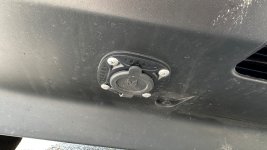
Beautiful install - really clean. Thanks for the pics. Was the power cable on your Noco long enough to make it to the port, or did you use the extension port (or lengthen the factory cord)?

Power cords on the NOCO are long enough to make it down and out the bumper grille.

I got the bumper mount splitter but decided I wanted to keep the charger and block heater separate and I also control the block heater using a smart outlet with home automation so it only comes on at x temp and when I'm home. No reason to run it if I'm away from home traveling for work.

My 5A Genius has been mounted on the PDC fuse cover since 2020 and is plugged in nearly 24x7x365 when it's at the house and unless I'm actually using the truck frequently.
 
Back
Top