
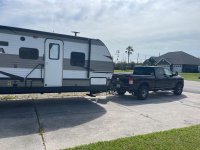
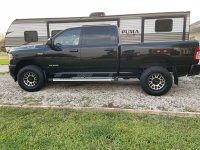
So we are upgrading from a 35ft 11k lb travel trailer and are looking at purchasing a 39ft Toy hauler with weight specs of 17000lb GVWR and 13500lb dry weight and a hitch weight of 2900lbs. My truck has the 4.10 gears and air bags already. My question is can I safely tow this rig? I called my Ram dealership and they said I would have no problem pulling 19k with the truck but I tend not to believe them and everything I have looked up online has different towing capacities on every site I looked at. Before I spend 60k on this rig I just want to get some reaffirmation that I’ll be able to pull it! We aren’t looking on going long hauls or anything…furthest trip would probably be a couple hundred miles. Thanks for the help!
Ram Heavy Duty Forum
You are using an out of date browser. It may not display this or other websites correctly.
You should upgrade or use an alternative browser.
You should upgrade or use an alternative browser.
2019 2500 6.4L - Moving from TT to 5th wheel help
- Thread starter Cfent3111
- Start date

H3LZSN1P3R
You're doing it wrong
Yea that dealer is wrong. The cummins 2500 is rated at 19k i believe hemi is only 14k ish iirc. The hemi will pull that trailer but it wont be fun and it wont be easy on fuel.

Yeah, I agree it’s not going to be a fun haul. I have a 150 series GD Reflection about 3000#’s lighter than what you are proposing and I wouldn’t go any more than my 5er with the same truck (2021) with bags and 3:73’s. It’s all personal opinion. Yes the truck will do it. I don’t think you will enjoy it, especially up and down hills. You will be knocking on the payload door too, not that I’m the tow police!
Sent from me
Sent from me
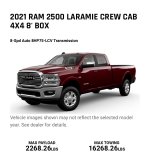


Ickbod is right, you do not have the payload capacity to legally tow that trailer.
"Legally" it's the RAWR. Nobody cares about that payload number.
I guess you are right."Legally" it's the RAWR. Nobody cares about that payload number.
H3LZSN1P3R
You're doing it wrong
That is his truck but the OP truck is clearly not a limited like Ickbod has so that number he posted is absolutely irrelevant also payload number means nothingIckbod is right, you do not have the payload capacity to legally tow that trailer.

CharlieL
Well-Known Member
I would be very concerned about the hitch weight on your setup. While many fifth wheels are advertised as a given hitch weight, that can turn out to be not the case once it's built. Mine is 200 lbs over the advertised weight (did add a front A/C as part of the build, though).So we are upgrading from a 35ft 11k lb travel trailer and are looking at purchasing a 39ft Toy hauler with weight specs of 17000lb GVWR and 13500lb dry weight and a hitch weight of 2900lbs. My truck has the 4.10 gears and air bags already. My question is can I safely tow this rig? I called my Ram dealership and they said I would have no problem pulling 19k with the truck but I tend not to believe them and everything I have looked up online has different towing capacities on every site I looked at. Before I spend 60k on this rig I just want to get some reaffirmation that I’ll be able to pull it! We aren’t looking on going long hauls or anything…furthest trip would probably be a couple hundred miles. Thanks for the help!
I suspect your GAWR is the same as my 2022 2500 diesel - 6,040 lbs. My fifth wheel has a hitch weight of 1,750, as built. When I CAT-weighed the truck in "ready to travel" mode (hitch, full tank, people, dogs, etc) the rear axle was at 3,620. With the 5'r hooked up, the CAT weight of the rear axle was 5,520. Was I over the "legal" payload - yes. But my concern is the GAWR, which I am about 500 pounds under so I am okay hauling my setup.
Have you had your truck's weight checked at a CAT weigh station? This would give you a good idea of what the "unloaded" weight on your rear axle is. Knowing that, you'll be in a good position to calculate how much more weight you can add. When figuring what the hitch weight of the 5'r will be, don't forget to add in the weight of your fifth wheel hitch (my Superglide is 277 lbs with the hitch plate).
Attachments
Last edited:

Lerker
Member
It continues to baffle me that so many drivers think the manufacturer's GVWR is meaningless. A quick google search produced the following from some legal firm:
"If you tow beyond the manufacturer’s limits you are treading on very thin legal ice. Understanding your responsibilities is critical if you intend to tow in a safe and prudent manner. Towing beyond any vehicle’s manufacturer’s weight ratings-or without regard to the properly equipped limitations a vehicle’s manufacturer places on the towing vehicle relates directly to the law of negligence and may expose you to liability."
I mean, it's kinda common sense, right?
"If you tow beyond the manufacturer’s limits you are treading on very thin legal ice. Understanding your responsibilities is critical if you intend to tow in a safe and prudent manner. Towing beyond any vehicle’s manufacturer’s weight ratings-or without regard to the properly equipped limitations a vehicle’s manufacturer places on the towing vehicle relates directly to the law of negligence and may expose you to liability."
I mean, it's kinda common sense, right?
H3LZSN1P3R
You're doing it wrong
Payload is not the axle capacity or a safe weight guideline it is for registration onlyIt continues to baffle me that so many drivers think the manufacturer's GVWR is meaningless. A quick google search produced the following from some legal firm:
"If you tow beyond the manufacturer’s limits you are treading on very thin legal ice. Understanding your responsibilities is critical if you intend to tow in a safe and prudent manner. Towing beyond any vehicle’s manufacturer’s weight ratings-or without regard to the properly equipped limitations a vehicle’s manufacturer places on the towing vehicle relates directly to the law of negligence and may expose you to liability."
I mean, it's kinda common sense, right?
CharlieL
Well-Known Member
Here we go again!!!It continues to baffle me that so many drivers think the manufacturer's GVWR is meaningless. A quick google search produced the following from some legal firm:
"If you tow beyond the manufacturer’s limits you are treading on very thin legal ice. Understanding your responsibilities is critical if you intend to tow in a safe and prudent manner. Towing beyond any vehicle’s manufacturer’s weight ratings-or without regard to the properly equipped limitations a vehicle’s manufacturer places on the towing vehicle relates directly to the law of negligence and may expose you to liability."
I mean, it's kinda common sense, right?
Personally, I have no problem taking the "risk" as, being a retired trial attorney, I am well educated in the "law of negligence" and the potential of "exposure to liability." I could just see a jury presented with the "GAWR versus payload" argument & would look for anyone with some mechanical aptitude to be on the jury.
I worry much more about my tires than I do about being over payload.
H3LZSN1P3R
You're doing it wrong
Well said. The people who say its a legal liability does not know how the law works they also usually make some silly claim that the insurance wont cover you…Here we go again!!!
Personally, I have no problem taking the "risk" as, being a retired trial attorney, I am well educated in the "law of negligence" and the potential of "exposure to liability." I could just see a jury presented with the "GAWR versus payload" argument & would look for anyone with some mechanical aptitude to be on the jury.
I worry much more about my tires than I do about being over payload.
I have a 6.4 with 4.10s also and pull a toy hauler it weighs 11500 to 12000lbs. It pulls it ok I can maintain at the speed limits. Some long hills of Utah are ok but not fun. We use this trailer a handful of times a summer. If I pulled any more weight or more often I would look into a Diesel. Over all I am happy with the 6.4 Hemi. I would not pull 17000 it. Good luck to you. We all have different needs.
Lerker
Member
Well said. The people who say its a legal liability does not know how the law works they also usually make some silly claim that the insurance wont cover you…
Okay, let me try from a different perspective...
WHY do you say it's okay to disregard GVWR? Where do you get that from? What evidence do you have? I'd change my opinion if presented better info. But it's gotta be real, not "I was a truck driver for 30 years" or "I just know" or some other nonsense like that.
I see throughout the owners manual it states GAWR AND GVWR must not be exceeded. I'd bet every owner's manual from every manufacturer for every vehicle says the same - GAWR and GVWR must not be exceeded. I take the published word from the owner's manual to be more factual than "word on internet forums".
Adhering to GVWR makes sense because an axle weight rating wouldn't capture vehicle driving dynamics such as braking and handling. I feel like this is corroborated all over the internet from folks who upgrade from a 2500 to a 3500, or SRW to DRW, and say the lesser vehicle pulled the trailer, "but it just wasn't comfortable." What they're really saying is they were over GVWR, felt it, and corrected to the appropriate tow vehicle. Right?
The only problem with my argument is the F450 which is obviously a beefed up F350, but they never changed its GVWR. So I don't know. Regardless, until I see something written, for safety and for liability, I'd recommend staying under GVWR.
CharlieL
Well-Known Member
Lerker, my position is that the 10k rating and door sticker payload is not what I use to calculate and limit the amount of weight my truck can safely handle based upon the hitch weight & fully loaded weight when towing my fifth wheel.Okay, let me try from a different perspective...
WHY do you say it's okay to disregard GVWR? Where do you get that from? What evidence do you have? I'd change my opinion if presented better info. But it's gotta be real, not "I was a truck driver for 30 years" or "I just know" or some other nonsense like that.
I see throughout the owners manual it states GAWR AND GVWR must not be exceeded. I'd bet every owner's manual from every manufacturer for every vehicle says the same - GAWR and GVWR must not be exceeded. I take the published word from the owner's manual to be more factual than "word on internet forums".
Adhering to GVWR makes sense because an axle weight rating wouldn't capture vehicle driving dynamics such as braking and handling. I feel like this is corroborated all over the internet from folks who upgrade from a 2500 to a 3500, or SRW to DRW, and say the lesser vehicle pulled the trailer, "but it just wasn't comfortable." What they're really saying is they were over GVWR, felt it, and corrected to the appropriate tow vehicle. Right?
The only problem with my argument is the F450 which is obviously a beefed up F350, but they never changed its GVWR. So I don't know. Regardless, until I see something written, for safety and for liability, I'd recommend staying under GVWR.
Read this article.
https://www.rvlifemag.com/load-capacity-of-3-4-ton-trucks/
H3LZSN1P3R
You're doing it wrong
Owners manuals are not guidelines of any laws.Okay, let me try from a different perspective...
WHY do you say it's okay to disregard GVWR? Where do you get that from? What evidence do you have? I'd change my opinion if presented better info. But it's gotta be real, not "I was a truck driver for 30 years" or "I just know" or some other nonsense like that.
I see throughout the owners manual it states GAWR AND GVWR must not be exceeded. I'd bet every owner's manual from every manufacturer for every vehicle says the same - GAWR and GVWR must not be exceeded. I take the published word from the owner's manual to be more factual than "word on internet forums".
Adhering to GVWR makes sense because an axle weight rating wouldn't capture vehicle driving dynamics such as braking and handling. I feel like this is corroborated all over the internet from folks who upgrade from a 2500 to a 3500, or SRW to DRW, and say the lesser vehicle pulled the trailer, "but it just wasn't comfortable." What they're really saying is they were over GVWR, felt it, and corrected to the appropriate tow vehicle. Right?
The only problem with my argument is the F450 which is obviously a beefed up F350, but they never changed its GVWR. So I don't know. Regardless, until I see something written, for safety and for liability, I'd recommend staying under GVWR.
I can go to register my truck at any GVWR I want and be legal to tow/haul it as long as i am not exceeding my axle weight or tire weight limits. The brakes and all the included vehicle running gear are all rated to at least the axle weights with a safety factor. You know the ONLY big difference between the 2500 and 3500 SRW? It’s the rear leaf springs instead of the coils. The brakes are the same the tires are the same the axle housings are the same front and rear (which AAM rates the rear at 10,900LBS)
Most states actually have laws showing that payload(gvwr) is not a weight limit the GAWR is the LEGAL limit.
CharlieL
Well-Known Member
The owner's manual for my truck (page 12) says: "When the truck camper is loaded, drive to a scale and weigh the front and rear wheels separately, to determine axle loads. Individual axle loads should not exceed either of the Gross Axle Weight Ratings (GAWR)." Page 212 - The GVWR is the total permissible weight of your vehicle including driver, passengers, vehicle, options and cargo. The label also specifies maximum capacities of front and rear axle systems (GAWR). Total load must be limited so GVWR and front and rear GAWR are not exceeded."I see throughout the owners manual it states GAWR AND GVWR must not be exceeded. I'd bet every owner's manual from every manufacturer for every vehicle says the same - GAWR and GVWR must not be exceeded. I take the published word from the owner's manual to be more factual than "word on internet forums".
I have no doubt that all owners manuals are written with input from the manufacturer's legal department, to avoid liability. I once had a then-existing client ask me to sue Chevrolet after he had been in an accident. His theory was the anti-collision braking system failed, causing him to rear end another car. First thing I did was find the owners manual for his car. Clear language said the system was not intended to prevent accidents and the driver needed to ensure they did not follow too closely. He didn't like being told that, as I'm certain he never read the manual. Needless to say, I did not sue Chevrolet.
Back on point - I think the OP's proposed setup is something to be avoided, and would far exceed the rear GAWR of a 2500.
Last edited:

mkmsr
Well-Known Member
- Messages
- 152
- Reaction score
- 327
- Points
- 63
I pull a 12k lbs fifth wheel with a 6.4 3500. No issues, does fin on the hills and mountains in the east. I would not go to 17k lbs with it though. Also that's a lot of pin weight and that's empty weight, no batteries or propane. My view is you are into dually territory by the time you add a hitch and other supplies and tool. Some will say you will offset the pin weight when you put heavy toys in the toy hauler but the people who have them will tell you is somewhere around 100-300 lbs per 1000 depending on the balance. Not enough to help in my opinion.