
ramblinChet
Drinks Alone
- Messages
- 644
- Reaction score
- 3,068
- Points
- 93
After much research, consultation, and consideration, I purchased a photovoltaic DC isolator from Benedict GmbH. This component may seem inconsequential compared to other larger and more expensive ones but improperly sized and/or wired DC isolators have probably been responsible for more fires and damage to solar systems than any other component. It is my understanding that many other DC isolators are polarized and can easily be wired improperly while other have long disconnect times which maintain a DC arc during disconnection under load. The product I purchased eliminates both of those potential issues.
One additional safety step each of us can employ prior to initiating a solar disconnect is to remove all AC and DC loads from the system. If you turn off your inverter (AC loads), and disconnect your batteries and other DC loads, the solar panels should theoretically be producing almost no current. This alone will greatly reduce the size and strength of a DC arc.
Over the years I have worked for Austrian, German, and Swiss, companies and with rare exception, they design, engineer, and produce the finest electrical and mechanical components throughout the world. And yes, this piece may cost 50-100% more compared to other similar ones but spending a few additional dollars for the finest components is a small price to pay when comparing against a failure, or fire, while alone in the wilderness. If I am required to perform maintenance on my system, or secure solar for some other reason, I want to be confident that my solar disconnect does not result in a fire.

The distributor in North America is Benedikt and Jäger USA, Inc., and after speaking with a technical representative my order was placed though Digi-Key, and shipped immediately. As an added measure of safety, I reached out to one of my closest friends who is an electro-mechanical genius and holds fifty-plus patents, and reviewed my choice with him. If any of you are interested in additional details regarding this component, I have attached a PDF to his post.

My onboard air system has suffered from a minor fault for quite some time - the locking head on the Milton single head air chuck inflator gauge is a poor match for my AEV Salta HD wheels. When I release the lever on the air chuck after pressing the chuck on to the Schrader valve, the lever contacts the wheel and forces the chuck head to loosen and leak much of the time. I guess that is one of the few downsides of having a recessed valve stem. I purchased this particular air chuck inflator gauge with a three foot hose so I can clip on the air chuck head and stand next to the tire and check the pressure as I inflate.
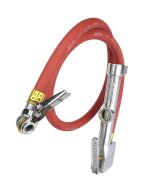
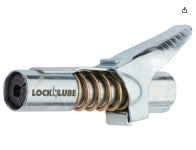
My solution to the aforementioned problem is to install the LockNFlate air chuck in place of the Milton air chuck. After a year or so of using it in a wide range of conditions, I will provide an update.


Most of time I do my best to order directly from the company for two reasons:

One additional safety step each of us can employ prior to initiating a solar disconnect is to remove all AC and DC loads from the system. If you turn off your inverter (AC loads), and disconnect your batteries and other DC loads, the solar panels should theoretically be producing almost no current. This alone will greatly reduce the size and strength of a DC arc.
Over the years I have worked for Austrian, German, and Swiss, companies and with rare exception, they design, engineer, and produce the finest electrical and mechanical components throughout the world. And yes, this piece may cost 50-100% more compared to other similar ones but spending a few additional dollars for the finest components is a small price to pay when comparing against a failure, or fire, while alone in the wilderness. If I am required to perform maintenance on my system, or secure solar for some other reason, I want to be confident that my solar disconnect does not result in a fire.
The distributor in North America is Benedikt and Jäger USA, Inc., and after speaking with a technical representative my order was placed though Digi-Key, and shipped immediately. As an added measure of safety, I reached out to one of my closest friends who is an electro-mechanical genius and holds fifty-plus patents, and reviewed my choice with him. If any of you are interested in additional details regarding this component, I have attached a PDF to his post.
My onboard air system has suffered from a minor fault for quite some time - the locking head on the Milton single head air chuck inflator gauge is a poor match for my AEV Salta HD wheels. When I release the lever on the air chuck after pressing the chuck on to the Schrader valve, the lever contacts the wheel and forces the chuck head to loosen and leak much of the time. I guess that is one of the few downsides of having a recessed valve stem. I purchased this particular air chuck inflator gauge with a three foot hose so I can clip on the air chuck head and stand next to the tire and check the pressure as I inflate.
My solution to the aforementioned problem is to install the LockNFlate air chuck in place of the Milton air chuck. After a year or so of using it in a wide range of conditions, I will provide an update.
- Six steel jaws lock onto any Schrader valve to create a secure, hands-free connection.
- 1/4” NPT thread compatible with most standard air hoses
- Hardened steel collet fits all standard Schrader valves [VG8/8V1 valve threads]
- Rated to 150 PSI - suitable for garage and industrial airline systems, auto and manual tire inflators, portable pressure gauges, and constant pressure systems
- Heavy-duty construction built to last and stand up to everyday use in even the busiest tire shops, service bays, and garages.
- AVAILABLE IN 2 STYLES: Open Flow or Closed Flow
- OPEN FLOW: Air passes through freely on or off the valve stem. For use with inflator gauges and automatic systems. If you are controlling your compressor's airflow through a trigger or foot pedal, then you want an OPEN flow.
- CLOSED FLOW: Chuck must engage the tire valve for air to flow. For use directly from a tank compressor's air hose. If you are putting the air chuck directly on the compressor hose, you want a CLOSED flow, so that air stops flowing when you aren't attached to the valve stem.
Most of time I do my best to order directly from the company for two reasons:
- All of the profit goes directly to the company and not a middle-man - I believe this is the best practice for small to medium sized companies.
- I increase my probability of receiving the latest version of the product - when you order from a warehouse or middle-man, the component may have been an older variant that has been on the shelf for some time.