

Rockcrawlindude
a rock crawlin’ dude
Use less throttle
If that doesn’t work
Use All of it
But seriously, the wheel hop is real
If that doesn’t work
Use All of it
But seriously, the wheel hop is real
Axle wrap ≠ power hop.I wonder if a solid link (rather than a damper) would reduce the power hop? Seems like most aftermarket “anti-axle wrap/power hop” solutions(not Ram in particular) are solid links rather than dampers.

I can’t remember experiencing wheel hop with a trailer attached (tongue weight)
I wonder if some of the guys with consistently heavy 2500s like @AnthonyD1978 or @jadmt (is he the one with the RTT?) experience it as much
Edit: come to think of it, I haven’t had it in a while. I have a topper and other crap now. I’ll monitor more closely


Guys have had success by swapping out the rear control arms to ones that use Johnny Joints. The factory joints are really dang squishy, and it allows a lot of deflection which is what permits axle hop to happen when you lose traction.So there’s not really a mechanical upgrade solution to the power hop? The oem power hop damper doesn’t seem to really do much, I get brutal power hop under even light throttle sometimes in snow/ice
Can't say I've seen that combo, most guys going this far with suspension are running full suspension system from Thuren and Carli. You're playing in a very narrow field of end-users where everyone figured out their own system per their desires.@MDethloff Thank you, once again, for the really helpful information. Have you ever seen a standard 2500 run stock rate springs, with the front swaybar removed and a single articulink radius arm? I am considering doing that or running a softer swaybar up front. (Mopar website still lists my status as "on order" a week later... is that a reason for concern?)
Axle wrap ≠ power hop.
We don’t get axle wrap, an extra link won’t help. It’s already 4 linked.
The Springs are too stiff for the amount of weight in bed of the naked truck. The tires aren’t being pushed into the surface with enough force (weight) so they’re chattering, basically.
It’s a weight/spring thing

Guys have had success by swapping out the rear control arms to ones that use Johnny Joints. The factory joints are really dang squishy, and it allows a lot of deflection which is what permits axle hop to happen when you lose traction.
Can't say I've seen that combo, most guys going this far with suspension are running full suspension system from Thuren and Carli. You're playing in a very narrow field of end-users where everyone figured out their own system per their desires.
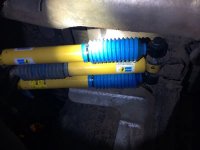
Axle wrap is exactly where axle hop comes from. The axle wraps up due to bushing deflection, then the tires break traction, and the axle unloads due to the built up torsion about its axis. Yes it's a linked truck, but those links have really squishy bushings at the ends that allow a lot of deflection. The leaf sprung Dodges have *less* axle wrap than the linked trucks because of this. The anti-hop bracket exists to damp the rapid unloading/re-loading of the axle when your tires break traction. It doesn't really work but I had a customer spend some engineering time on the problem and he picked out 2x shocks whose specs he liked and bolted both in, and said it helped but would have benefited more from 3x shocks there. The reality there is that emulsion shocks do a poor job of damping short shaft-movement events because of the emulsified gases ability to flow through the valving prior to real damping occurring, especially when they're churned up. They do ok but it's very much just a band-aid. Less deflective bushings prevent axle-wrap, more traction (increased weight, bigger tires, grippier tire/ground combo, airing down) prevents breaking traction which is where the hop begins.
The factory rear system *has* to use bushings, because it is technically a triangulated 4-link *plus* a trackbar, which would rip brackets off the frame if you ran heims. If you had a traditional triangulated 4-link with heims, then instead of axle wrap/hop you'd just do sick burnouts when you broke traction
The only couple times I've experienced it so far (holy crap it rattles your molars when it happens) is giving it WOT from an almost stop on wet pavement. You can feel the rear tires grip, release traction and then the hop (over and over really fast). Ease off and its fine. Should be worth noting I only experienced it with the factory Duratrac tires. Since putting on the studded snows the traction in wet seems much better. IMO Duratracs are horrible in the rain....
Regrettably no real off road or snow experience yet in the truck.

Unbolt the sway bar you will be much happier i removed mine@MDethloff Thank you, once again, for the really helpful information. Have you ever seen a standard 2500 run stock rate springs, with the front swaybar removed and a single articulink radius arm? I am considering doing that or running a softer swaybar up front. (Mopar website still lists my status as "on order" a week later... is that a reason for concern?)
Actually I had turned traction control off prior lol.I bet the traction control makes it worse with it constantly giving and cutting power.
Also, why are you going WOT in the wet? Sweet though! haha.

Unbolt the sway bar you will be much happier i removed mine
Disagree, again.Guys have had success by swapping out the rear control arms to ones that use Johnny Joints. The factory joints are really dang squishy, and it allows a lot of deflection which is what permits axle hop to happen when you lose traction.
Can't say I've seen that combo, most guys going this far with suspension are running full suspension system from Thuren and Carli. You're playing in a very narrow field of end-users where everyone figured out their own system per their desires.
Axle wrap is exactly where axle hop comes from. The axle wraps up due to bushing deflection, then the tires break traction, and the axle unloads due to the built up torsion about its axis. Yes it's a linked truck, but those links have really squishy bushings at the ends that allow a lot of deflection. The leaf sprung Dodges have *less* axle wrap than the linked trucks because of this. The anti-hop bracket exists to damp the rapid unloading/re-loading of the axle when your tires break traction. It doesn't really work but I had a customer spend some engineering time on the problem and he picked out 2x shocks whose specs he liked and bolted both in, and said it helped but would have benefited more from 3x shocks there. The reality there is that emulsion shocks do a poor job of damping short shaft-movement events because of the emulsified gases ability to flow through the valving prior to real damping occurring, especially when they're churned up. They do ok but it's very much just a band-aid. Less deflective bushings prevent axle-wrap, more traction (increased weight, bigger tires, grippier tire/ground combo, airing down) prevents breaking traction which is where the hop begins.
The factory rear system *has* to use bushings, because it is technically a triangulated 4-link *plus* a trackbar, which would rip brackets off the frame if you ran heims. If you had a traditional triangulated 4-link with heims, then instead of axle wrap/hop you'd just do sick burnouts when you broke traction
Axle wrap is the winding up of the axle. Axle hop is what occurs when the axle has been wound up and then the tires break traction. The wrap still occurs with more weight, but the increased traction prevents the breaking free of the tires, and thus prevents the hop. I guarantee you there is axle wrap on these trucks, there is a lot of movement of those axles, especially under heavy trucks with large tires. But that doesn't mean they're getting hop, because they might not be breaking traction. The bushings in the radius arms and control arms of these trucks have a lot of deflection.Disagree, again.
If it was axle wrap then more weight would make it worse, not better. Lower tire pressure would hurt, not help.
Unloaded trucks aren’t axle wrapping.
Obviously there is bushing deflection, it is the only way the suspension can travel and that’s how bushings work. Without bushings we would flex like a radio flyer wagon. Both of us know that bushings deflect and that’s not what we’re debating. We both know that the deflection of the bushings would cause a shift in the rotational orientation of the axle, most noticeable by the change of pinion angle. This is acceptable movement assuming the bushings are in good condition. This is not “axle wrap”.Axle wrap is the winding up of the axle. Axle hop is what occurs when the axle has been wound up and then the tires break traction. The wrap still occurs with more weight, but the increased traction prevents the breaking free of the tires, and thus prevents the hop. I guarantee you there is axle wrap on these trucks, there is a lot of movement of those axles, especially under heavy trucks with large tires. But that doesn't mean they're getting hop, because they might not be breaking traction. The bushings in the radius arms and control arms of these trucks have a lot of deflection.
Unloaded trucks are ABSOLUTELY axle wrapping, just less so than loaded trucks.
We're saying almost the same thing. Axle wrap in industry terms is the undesirable degree of rotational deflection, but I am saying that it always exists to some degree in the technical definition of it being any amount of rotation. Axle hop requires axle wrap to exist. Yes, adding weight reduces hop, but we aren't taking a truck from 0 pounds to 9,000 pounds, we're taking the truck from 8,000 pounds to 9,000 pounds - an unladen truck isn't entirely different from a laden one, but it does make a distinct difference to have load in the bed. All of my points were technical and all stand. The one thing that is not agreeable here is that linked suspensions cannot exhibit axle wrap - they absolutely do, absolutely, no question. The axle rotates due to bushing deflection just like a leaf sprung truck's axle rotates due to leaf deflection. It's the same thing but to different degrees and with a very slightly different motion, but is effectively the same. The axle "wraps" up with bushing deflection and then unloads. You actually can feel axle wrap in certain circumstances if you're experienced with feeling minute feedback from suspension, in a low speed / high torque setting like rock crawling. Especially with worn bushings.Obviously there is bushing deflection, it is the only way the suspension can travel and that’s how bushings work. Without bushings we would flex like a radio flyer wagon. Both of us know that bushings deflect and that’s not what we’re debating. We both know that the deflection of the bushings would cause a shift in the rotational orientation of the axle, most noticeable by the change of pinion angle. This is acceptable movement assuming the bushings are in good condition. This is not “axle wrap”.
Axle wrap is a term that describes excessive and unwanted movement. Leaf springs can do this, links cannot.
People aren’t FEELING axle wrap. They’re feeling the tires “hop” on the ground which could also look like the bed shaking. This is caused by the axle shifting weight left to right and the tires feel like they’re bouncing. Grabbing traction and losing it and shifting weight back and forth. In order for the tires to move the vehicle, they have to push the axle forward, but they’re pushing it up. It’s wasted energy. This is inherent to the geometry of the rear axle and the light weight nature of the rear end of a pickup truck.
You can easily test this by adding 1000lb to the bed of your truck. The wheel hop will be gone.
