
Ram Heavy Duty Forum
You are using an out of date browser. It may not display this or other websites correctly.
You should upgrade or use an alternative browser.
You should upgrade or use an alternative browser.
Smart alternator
- Thread starter joeycamp
- Start date

- Messages
- 5,183
- Reaction score
- 5,375
- Points
- 113
It’s not a smart alternator, but you will want a DC-DC for that lithium battery anyways. The voltage drop from the 7 pin is huge
I have a small DC-DC charger installed in my 5th wheel that uses the OE wiring on the truck and trailer, even at 18A peak the OE wiring is a tad small if the batteries are low. But it works better than the 7 pin alone.
I have a small DC-DC charger installed in my 5th wheel that uses the OE wiring on the truck and trailer, even at 18A peak the OE wiring is a tad small if the batteries are low. But it works better than the 7 pin alone.
I’m on my second fifth wheel with lithium batteries and do not use a DC-DC charger. Not at all necessary unless you depend on the truck to charge your camper battery. The wire size in the truck is small enough to restrict the charging rate and make it safe for your alternator. If you add one you will have to upgrade the wiring in your truck.
Thank you. This is what I was hoping. My biggest concern was burning something out on the truck. I’m not too concerned with the lithium being charged. All we will run is the residential fridge going down the road with the inverter. The longest trip is maybe six hours. An occasional overnight stop at Cracker Barrel.
So there’s no need to run larger gauge wire from the battery? Like I keep hearing.
What is the dc to dc charger you use? I’d like to do the same.
So there’s no need to run larger gauge wire from the battery? Like I keep hearing.
What is the dc to dc charger you use? I’d like to do the same.
- Messages
- 5,183
- Reaction score
- 5,375
- Points
- 113
I’m on my second fifth wheel with lithium batteries and do not use a DC-DC charger. Not at all necessary unless you depend on the truck to charge your camper battery. The wire size in the truck is small enough to restrict the charging rate and make it safe for your alternator. If you add one you will have to upgrade the wiring in your truck.
Not necessary to upgrade the wiring for a small DC-DC charger.
It’s also not good for the lithium battery to not have the proper charge/float voltage even if you don’t rely on the truck for charging.
Thank you. This is what I was hoping. My biggest concern was burning something out on the truck. I’m not too concerned with the lithium being charged. All we will run is the residential fridge going down the road with the inverter. The longest trip is maybe six hours. An occasional overnight stop at Cracker Barrel.
So there’s no need to run larger gauge wire from the battery? Like I keep hearing.
What is the dc to dc charger you use? I’d like to do the same.
I have a Victron 12/12-18 charger. It works on the existing wiring, but you’ll want bigger wiring if you want a faster charge rate from the truck. If you just want a low charge and good float voltage the existing wiring is adequate.
Virtually all alternators on the market in the past 10 - 15 years are smart alternators.
The difference is that some mfg run the algorithm to be more aggressive vs not on fuel savings.
No matter what anyone tells you, you need a BTB charger to properly charge a house battery mounted in the truck , regardless of if it is AGM or LiFe.
_____________
For a trailer use, your best bet is to install a 2 kW inverter in the truck and feed 120 vac back to the trailer.
Plan to use half of that or less unless you have a commercial duty inverter.
The difference is that some mfg run the algorithm to be more aggressive vs not on fuel savings.
No matter what anyone tells you, you need a BTB charger to properly charge a house battery mounted in the truck , regardless of if it is AGM or LiFe.
_____________
For a trailer use, your best bet is to install a 2 kW inverter in the truck and feed 120 vac back to the trailer.
Plan to use half of that or less unless you have a commercial duty inverter.
- Messages
- 5,183
- Reaction score
- 5,375
- Points
- 113
Virtually all alternators on the market in the past 10 - 15 years are smart alternators.
But not on the vehicle in question.
dieselscout80
Well-Known Member
- Messages
- 1,062
- Reaction score
- 721
- Points
- 113
First I don’t know anything about DC to DC charging.
How are is the power from the truck for a DC to DC charger connected to a trailer?
Does one have to have a separate set of quick connects for the DC to DC charging?
How are is the power from the truck for a DC to DC charger connected to a trailer?
Does one have to have a separate set of quick connects for the DC to DC charging?

Ritchie_Rich
Active Member
According to rv forums, a dc to dc charger isn’t necessary, but it is beneficial.
Yes, there is a separate quick connect for DC to DC. I ran 6awg cable (should have used 4awg but I had the 6 on hand) from the battery to the rear bumper and have an Anderson connector. Then, the DC to DC charger is mounted in the camper. I have 6awg with an Anderson on it going from the tongue to the charger. I'm running the Victron XS so it auto detects when the truck is running and will turn on and off.First I don’t know anything about DC to DC charging.
How are is the power from the truck for a DC to DC charger connected to a trailer?
Does one have to have a separate set of quick connects for the DC to DC charging?
- Messages
- 5,183
- Reaction score
- 5,375
- Points
- 113
First I don’t know anything about DC to DC charging.
How are is the power from the truck for a DC to DC charger connected to a trailer?
Does one have to have a separate set of quick connects for the DC to DC charging?
Depends on the size of the DC-DC charger. A small one can use the existing wiring, but the larger ones need separate wires with disconnects.
Let's suppose that you want to run ~ 50 amps @ 12 volts to the trailer battery.
The round trip distance from the truck alternator / battery to the trailer LiFe battery is at least 40 ft, probably more.
You go to the blue sea wizard for voltage drop here :
 circuitwizard.bluesea.com
Enter the information and it will tell the wire size required.
It will kick back 2 awg wire for a 3% voltage drop.
So that is your best case scenario, running 2 awg and related connectors between batteries.
The charge voltage of LiFe is higher than the starter battery charge voltage in the summer, and lower in the winter, so it "might" work in the summer, but won't work very well in the winter.
__________________
The only practical 2 awg connector is an anderson SB 175 or similar chemical resistant type rated for low temperatures.
When you disconnect that setup, there will be a very exciting DC arc flash. It isn't a big deal for us guys, but wives and kids will not find it to be a comfortable situation.
So that means adding in some breakers and hoping that you remember to turn them off.
______________
The alternative is an inverter in the truck that converts the 12 volt DC --- 120 vac and you just run a 10 awg wire with some RV type plugs between vehicles.
Plugging it in and disconnecting will be just like you are used to.
The round trip distance from the truck alternator / battery to the trailer LiFe battery is at least 40 ft, probably more.
You go to the blue sea wizard for voltage drop here :
Circuit Wizard - Blue Sea Systems
circuitwizard.bluesea.com
Enter the information and it will tell the wire size required.
It will kick back 2 awg wire for a 3% voltage drop.
So that is your best case scenario, running 2 awg and related connectors between batteries.
The charge voltage of LiFe is higher than the starter battery charge voltage in the summer, and lower in the winter, so it "might" work in the summer, but won't work very well in the winter.
__________________
The only practical 2 awg connector is an anderson SB 175 or similar chemical resistant type rated for low temperatures.
When you disconnect that setup, there will be a very exciting DC arc flash. It isn't a big deal for us guys, but wives and kids will not find it to be a comfortable situation.
So that means adding in some breakers and hoping that you remember to turn them off.
______________
The alternative is an inverter in the truck that converts the 12 volt DC --- 120 vac and you just run a 10 awg wire with some RV type plugs between vehicles.
Plugging it in and disconnecting will be just like you are used to.
- Messages
- 5,183
- Reaction score
- 5,375
- Points
- 113
Let's suppose that you want to run ~ 50 amps @ 12 volts to the trailer battery.
The round trip distance from the truck alternator / battery to the trailer LiFe battery is at least 40 ft, probably more.
You go to the blue sea wizard for voltage drop here :
Circuit Wizard - Blue Sea Systems
Enter the information and it will tell the wire size required.
It will kick back 2 awg wire for a 3% voltage drop.
So that is your best case scenario, running 2 awg and related connectors between batteries.
I would put truck to trailer battery length at 30’ one way for a travel trailer, more on a 5th wheel. There is no good reason to try and get alternator voltage to the trailer batteries hoping for more than 5-10A charge rate without a DC-DC charger.
Big advantage of a DC-DC charger is that they don’t care about a 3% voltage drop, the input range on my charger is 8-17V.
That’s a good calculator , but it’s for ABYC standards which assumes marine grade tinned copper wires. ABYC allows for higher amperage on wires than other wire size calculators. The voltage drop portion will be very similar to non-ABYC, but the allowed amperage is higher with marine grade wiring and specs. I’m using all marine grade wiring and ABYC standards to build my camper van.
The alternative is an inverter in the truck that converts the 12 volt DC --- 120 vac and you just run a 10 awg wire with some RV type plugs between vehicles.
Plugging it in and disconnecting will be just like you are used to.
I personally wouldn’t want to run a 120V inverter off the alternator, even with the two alternator option, that needed 10awg. That’s a 30A rated wire, meaning the inverter would be pulling well over 300A to support that much output, simply not needed and too much DC draw for driving down the road and charging IMO.
I would put truck to trailer battery length at 30’ one way for a travel trailer, more on a 5th wheel. There is no good reason to try and get alternator voltage to the trailer batteries hoping for more than 5-10A charge rate without a DC-DC charger.
Big advantage of a DC-DC charger is that they don’t care about a 3% voltage drop, the input range on my charger is 8-17V.
That’s a good calculator , but it’s for ABYC standards which assumes marine grade tinned copper wires. ABYC allows for higher amperage on wires than other wire size calculators. The voltage drop portion will be very similar to non-ABYC, but the allowed amperage is higher with marine grade wiring and specs. I’m using all marine grade wiring and ABYC standards to build my camper van.
I personally wouldn’t want to run a 120V inverter off the alternator, even with the two alternator option, that needed 10awg. That’s a 30A rated wire, meaning the inverter would be pulling well over 300A to support that much output, simply not needed and too much DC draw for driving down the road and charging IMO.
The idea ( and I am a follower of this concept not the creator ) is that the power draw is set by the size of the battery charger in the trailer.
For instance a 500 watt battery charger in the 5th wheel will only draw ( 500 watts ) + ( inefficiencies ) so perhaps 700 watts. That is ~ 70 amps, which is well within the capabilities of a ram alternator.
The 10 awg marine grade stranded wire is more for durability, but you can use less. The price difference is not that much.
2 kW inverters are not that expensive anymore and have more cooling capability than a 1 kW, so they are loping vs working hard.
____________
I agree with you that the marine wire calculator is focused on 3% loss and allows higher temperature operation. The second part of the calculation is to look at an NEC ampacity chart and use the "amp rating" for the lowest rated insulation - even though we all use a much higher quality wire. So here is a link to the NEC chart:
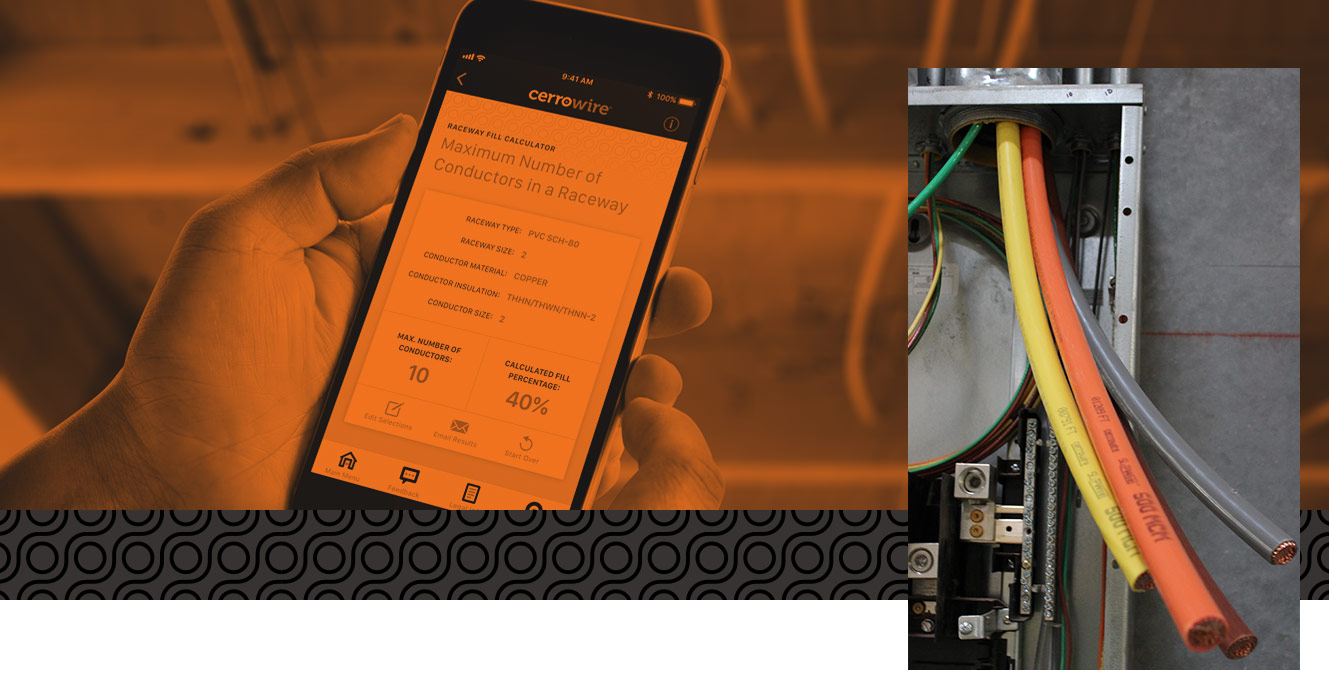
Cerrowire Resources - Ampacity Charts
Ampacity is the maximum current that a conductor can carry continuously under the conditions of use without exceeding its temperature rating. Cerrowire's ampacity chart helps calculate the load requirement for a circuit.
 www.cerrowire.com
Following down the most left hand column - down to 2 awg - it shows an official rating of 95 amps vs our plan which would be 50 amps. This means we are using it at 50% of the most conservative rating.
_________________
A viable alternative to the 120 vac path is to use something like a sterling 120 amp 12 - 12 volt BTB charger.
Set it to run at ~ 60% rating. That is what is going to happen anyway due to how these things work.

Sterling Power battery to battery charging system - 12v 120 amp DC powered charger- BB12120
Part # BB12120 Now Available. Our Newest DC to DC charger in a 12v 120amp version.
www.sterling-power-usa.com
There are other brands as well.
Either path is nominally a similar price point and similar performance. It is more a philosophical decision on which path vs one being dramatically better than the other.
Both will end up moving 500 - 700 watts from the truck to the trailer battery.
Total installed cost and effort will be roughly the same.
Thank you. This is what I was hoping. My biggest concern was burning something out on the truck. I’m not too concerned with the lithium being charged. All we will run is the residential fridge going down the road with the inverter. The longest trip is maybe six hours. An occasional overnight stop at Cracker Barrel.
So there’s no need to run larger gauge wire from the battery? Like I keep hearing.
What is the dc to dc charger you use? I’d like to do the same.
A residential refrigerator is really two loads.
- Refrigerator itself
- Inverter standby power
Not always, but for many situations, the power usage of these will be in the range of 1 kW-hr per day ( each). So a nominal budget of 2 kW-hr per day.
So a ( 500 watt charger ) x ( 4 hour drive ) will roughly keep up.
A 12 volt battery of sufficient size to run this for 24 hours is roughly:
( 2 000 watt-hr ) / ( 12 volt ) ~ 200 amp-hr minimum and really double that size is more viable.
This is why a lot of RV trailers have 600 watts of solar on them now, or they put the panels in the sunshine and run a cord to the RV.
Some people like to use 24 volt in the trailer, so that would be
( 2 000 watt-hrs ) / ( 24 volt ) ~ 100 amp-hr.
Total energy stored is the same.