
What's new
Ram Heavy Duty Forum

Register a free account today to become a member! Once signed in, you'll be able to participate on this site by adding your own topics and posts, as well as connect with other members through your own private inbox!

Let’s Talk: Lifters & Valvetrain Failure

mbarber84

Moderator
Staff member
Messages
2,944
Reaction score
4,776
Points
113
Location
Washington County, PA
Edit: This thread will serve as a merged resource for discussion regarding 2019+ 6.7 Lifter and valvetrain failures.


The 2025+ lifter and valvetrain is the same as previous 2019-2024 engines. There are some dimensional changes (ie: lengths of push rods) due to the head design change. But the overall operating principles and general design elements are the same. The actual lifter bodies and rollers are 100% identical. There was no design revision in the valvetrain from an overall layout perspective.
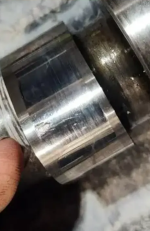
 
The 2025+ lifter and valvetrain is the same as previous 2019-2024 engines. There are some dimensional changes (ie: lengths of push rods) due to the head design change. But the overall operating principles and general design elements are the same. The actual lifter bodies and rollers are 100% identical. There was no design revision in the valvetrain from an overall layout perspective.
Didn't the block change back away from CGI?
 
Yes the block went back to grey iron but that didn’t change the valvetrain.
It has been proposed that one of the modes of valvetrain failure comes from failure to hold tolerances on the slots that receive the lifter alignment pins. I've heard it said (and believe) that CGI was a contributing factor in difficulty holding said tolerances. If so, the block is not irrelevant to valvetrain longevity.

This doesn't really make sense to me because there are plenty of other critical tolerances held in a block, but if true and it allows the lifters to get a little sideways (and skid instead of roll) then it matches one of the several observed valvetrain failure modes.

So, one might change their oil often and mitigate valvetrain issues that come from deposits (I don't believe the TSB would've blamed deposits if deposits weren't actually a thing) and any impact that fuel dilution might have. On the other hand, you obviously can't oil change your way out of other design/hardware problems (skidding rollers, bad metallurgy on cams/lifters, etc.) I believe the 2019-2024 valvetrain failures arise from both.
 
Last edited:
It has been proposed that one of the modes of valvetrain failure comes from poor machining and failure to hold tolerances on the slots that receive the lifter alignment pins. I've heard it said (and believe) that CGI was a contributing factor in difficulty holding said tolerances. If so, the block is not irrelevant to valvetrain longevity.

This doesn't really make sense to me because there are plenty of other critical tolerances held in a block, but if true and it allows the lifters to get a little sideways (and skid instead of roll) then it matches one of the several observed valvetrain failure modes.

So, one might change their oil often and mitigate valvetrain issues that come from deposits (I don't believe the TSB would've blamed deposits if deposits weren't actually a thing) and any impact that fuel dilution might have. On the other hand, you obviously can't oil change your way out of other design/hardware problems (skidding rollers, bad metallurgy on cams/lifters, etc.) I believe the 2019-2024 valvetrain failures arise from both.
The CGI block was not, and is not, the cause of valvetrain (lifter) issues. The anti-rotation machining in the block can become damaged if the lifters are not manufactured correctly. But that damage is a casualty of the QC problem. If the lifters are manufactured correctly, the block and the anti-rotation machining in the lifter bores does not receive any damage.

There were / are no metallurgy issues with the cam. The lifter QC is the root cause of both the cam damage and the block damage.
 
flan,
Based on what you stated above, it sounds like you have changed the oil frequently. What is your plan to get this lifter issue resolved?
It is my understanding that the 2025+ lifters are "improved" from the previous generation, but I have not seen any specific details.
Does anyone have the specs of the 2025+ lifters and how they differ from previous generation? If so, can you post it here? Thanks
I will install Hamilton cams solid tappet setup.

 
I will install Hamilton cams solid tappet setup.

flan,
Yes, I have read about that flat tapped kit. I feel confident that would fix it for good. It says $3400 for the kit--I wonder what would be the total labor cost to have the kit installed? I would think at least $2500 labor?
The point is--a person would most likely NOT be able to sell the truck for $6000 more due to having the kit installed. Meaning you got the truck fixed, but it cost you dearly... making your total ownership cost very expensive.
 
flan,
Yes, I have read about that flat tapped kit. I feel confident that would fix it for good. It says $3400 for the kit--I wonder what would be the total labor cost to have the kit installed? I would think at least $2500 labor?
The point is--a person would most likely NOT be able to sell the truck for $6000 more due to having the kit installed. Meaning you got the truck fixed, but it cost you dearly... making your total ownership cost very expensive.
Yes it’s quite a disappointment after owning many Cummins trucks to have to spend so much so early on to make it the way it should have left the factory. I have seen numbers in the 6-7k range for installed cost. Given time maybe ram will make things right with owners in and out of warranty like they did with the cp4.2 issue.
 
Hate to say it but I knew as soon as he played the initial sound of the truck he was chasing a problem he couldn’t fix with the conversion. This exact same misdiagnosis is, and has been, happening for a long time now in shops all across the country. This is exactly why Ram put out the “cease and desist” TSB.

Theres some pretty high confidence that the source of that specific ticking has been pinpointed, but whether or not it ever sees the light of day remains unknown at this point.
 
Hate to say it but I knew as soon as he played the initial sound of the truck he was chasing a problem he couldn’t fix with the conversion. This exact same misdiagnosis is, and has been, happening for a long time now in shops all across the country. This is exactly why Ram put out the “cease and desist” TSB.

Theres some pretty high confidence that the source of that specific ticking has been pinpointed, but whether or not it ever sees the light of day remains unknown at this point.
My duramax had typewriter tick for 300k miles until it died in an accident. They're not wrong. Diesels make noises and sound travels through metal engine components in a way that will amplify some cylinders more than others, and be different depending on what the engine has been up to lately (in cylinder deposits that influence the combustion event). If they hadn't made a valvetrain that cannibalizes itself over "deposits," and a CGI block that can't control alignment of the lifters, people wouldn't be suspicious of every little peep it makes. Cam lobes with chunks missing cannot be unseen/unheard.
 
My duramax had typewriter tick for 300k miles until it died in an accident. They're not wrong. Diesels make noises and sound travels through metal engine components in a way that will amplify some cylinders more than others, and be different depending on what the engine has been up to lately (in cylinder deposits that influence the combustion event). If they hadn't made a valvetrain that cannibalizes itself over "deposits," and a CGI block that can't control alignment of the lifters, people wouldn't be suspicious of every little peep it makes. Cam lobes with chunks missing cannot be unseen/unheard.
The valvetrain doesn’t consume itself over deposits. I’ve yet to see a lifter with “deposits” in it.

The CGI block isn’t the source of the lifters rotating in the bores.

The cam lobes only get damaged when the lifters above them are out-of-spec.

Remember to take your tinfoil hat off every once in a while, I’ll bet it gets pretty sweaty under that thing.
 
The valvetrain doesn’t consume itself over deposits. I’ve yet to see a lifter with “deposits” in it.

The CGI block isn’t the source of the lifters rotating in the bores.

The cam lobes only get damaged when the lifters above them are out-of-spec.

Remember to take your tinfoil hat off every once in a while, I’ll bet it gets pretty sweaty under that thing.
My truck is a 2014 so I have zero dogs in the fights. Strange FCA said deposits rather than telling us the real reason 15w-40 is bad. They should've called you first with whatever evidence they have. You sure like to point to the lifter when it's clear that the lifter, the cam, and the block all have to work together for that system to not fall apart. Inconveniently, issues with all three have been noted. Mis machining of the alignment slots, defective lifters, and defective cams. I get your point, it would be really nice if there was only one component to blame. We could just wish away the rest of the issues.

PS: In true oil-waster fashion my 2014 got its semi-annual oil change today.
 
My truck is a 2014 so I have zero dogs in the fights. Strange FCA said deposits rather than telling us the real reason 15w-40 is bad. They should've called you first with whatever evidence they have. You sure like to point to the lifter when it's clear that the lifter, the cam, and the block all have to work together for that system to not fall apart. Inconveniently, issues with all three have been noted. Mis machining of the alignment slots, defective lifters, and defective cams. I get your point, it would be really nice if there was only one component to blame. We could just wish away the rest of the issues.
Please provide an example where the cam was the definitive root cause of valvetrain failure. You’re talking about a failure that represents 0.2 to 0.4% of total component production across the entirety of six years of truck production. That’s an infinitesimally small failure rate.

Meanwhile, the same tests for spalling on the lifter rollers returned an 18% failure rate. And that’s only one of three manufacturers used for that component.

The cams get damaged because they have bad lifters riding on them in the vast majority of failures. The same is true of the blocks. I’m “pointing to the lifters” as the culprit because they indeed are.

The research that Cummins conducted included serious investigation into both the block and the cam as potential contributory factors. Both were ruled out after they conducted their analysis.
 
Please provide an example where the cam was the definitive root cause of valvetrain failure. You’re talking about a failure that represents 0.2 to 0.4% of total component production across the entirety of six years of truck production. That’s an infinitesimally small failure rate.

Meanwhile, the same tests for spalling on the lifter rollers returned an 18% failure rate. And that’s only one of three manufacturers used for that component.

The cams get damaged because they have bad lifters riding on them in the vast majority of failures. The same is true of the blocks. I’m “pointing to the lifters” as the culprit because they indeed are.

The research that Cummins conducted included serious investigation into both the block and the cam as potential contributory factors. Both were ruled out after they conducted their analysis.
Sounds like you were a critical part in that investigation. Nice work. Maybe the deposits publicity team should've consulted.

Even by your numbers... 0.2 to 0.4% of 2.6 million, yeah, that's "infinitesimally" small.
 
I just called my local RAM dealer--the Service Advisor states they charge $250-$270 (NOT including tax) to do an Engine oil and filter change. He said that is using "conventional" oil (he did not mention what brand oil).
I can do my own (using Rotella T6 full synthetic and Mopar oil filter) for $125 (tax included). And I KNOW it is done right.
When they get the Fleetguard engine oil filter fiasco worked out--I will be able to do it for $95 total. Right now I am forced to pay $50 for the Mopar brand oil filter.
I do not. Nor do I let the dealership(s) touch my truck. There is a local garage 10 miles from my house that I use. I provide the parts and they supply the labor. I get to stand right next to the guy while he works, which provides me the opportunity to look the truck over while it's up on a lift and not crawl around on my back.I forget what they charge me but it's not much and I tip the tech for a job well done.

edit: Other than the fact it had a CP4 I really, really liked the 6.7 in my Ford. I was starting to stress about this perceived valve train issue requiring all new tappets etc. and wondering if going to Ram might have been a mistake. I feel better after watching the video and learning about the TSBs on the subject.
 
Last edited:
The pushrods are problematic as well, lots of scored balls at the top of the piece. Overall still a junk design weather it’s the cause of the noise or not.
 
The pushrods are problematic as well, lots of scored balls at the top of the piece. Overall still a junk design weather it’s the cause of the noise or not.
Round top and constant contact from zero lash.
Not a great move.
And one that sounds like it might be getting a revision in the near future. Doubtful anything will happen between now and new years, but maybe after the start of the new year.
 
Back
Top