What's new
Ram Heavy Duty Forum

Register a free account today to become a member! Once signed in, you'll be able to participate on this site by adding your own topics and posts, as well as connect with other members through your own private inbox!

Blackstone oil analysis on first oil change

kevin588127

Well-Known Member
Messages
525
Reaction score
509
Points
93
Here are the results of my first oil change. This is my first ever new vehicle. I took delivery from MD and immediately drove 1000 miles home following the break in procedure as best as I could. I decided to change the oil at the 1500 mile mark because...new engine and unknown oil. I think the manual recommends 8k or something like that. My previous hemi 1500 always got changed around 5k. Levels were always normal and Blackstone usually recommended extending my intervals. This one will get changed again at 6500 and I'll probably send that one off for an analysis as well. Anybody else do this?
 

Attachments

  • Screenshot_20230106-155821-693~2.png
    Screenshot_20230106-155821-693~2.png
    360.7 KB · Views: 99
Here are the results of my first oil change. This is my first ever new vehicle. I took delivery from MD and immediately drove 1000 miles home following the break in procedure as best as I could. I decided to change the oil at the 1500 mile mark because...new engine and unknown oil. I think the manual recommends 8k or something like that. My previous hemi 1500 always got changed around 5k. Levels were always normal and Blackstone usually recommended extending my intervals. This one will get changed again at 6500 and I'll probably send that one off for an analysis as well. Anybody else do this?
Way to early to be changing the oil but never bad to send it off for analysis
 
Way to early to be changing the oil but never bad to send it off for analysis
Not according to the analysis. Says the oil exhibited characteristics of 5k oil. I've had several engines built over the year. Every builder recommended changing the oil after break in. Apples to oranges but I'd rather err on the side of caution.
 
Not a lot of good reason to sample break in oil, and you’re seeing why. If you’re going to sample then do it again at the next OCI. You’re under warranty, so run it out to the OEM OCI.

I’ve done lots of UOA’s and enjoyed seeing the data. I quit doing it on an engine under warranty thou, as you will never get anything done to your motor based solely on a UOA. Save your money while you’re under warranty.

The only real benefit to a UOA is knowing the TBN for extending OCI’s, and Blackstone charges extra for that and you didn’t pay for it. IMHO a UOA without TBN is useless. This is one of a couple reasons I don’t use Blackstone anymore.
 
It was more of a curiosity thing. I've never had break in oil done before. Which company are you using for testing?
 
OAI testing is who I’ve used the most.
 
Not according to the analysis. Says the oil exhibited characteristics of 5k oil. I've had several engines built over the year. Every builder recommended changing the oil after break in. Apples to oranges but I'd rather err on the side of caution.
Thats because your first 1-2k miles is producing the most break in deposits in the oil. So your 1.5k mile test will be almost the same as the 5k test. Extended intervals are always better in these newer engines unless you are racing

I usually wait a minimum of 10k miles before having any oil tested
 
Thats because your first 1-2k miles is producing the most break in deposits in the oil. So your 1.5k mile test will be almost the same as the 5k test. Extended intervals are always better in these newer engines unless you are racing

I usually wait a minimum of 10k miles before having any oil tested
Extended oil changes on a hemi? I guess I'm coming from the 5.7 world and the general consensus is that extended oil changes are part of the lifter failure issue.
 
Extended oil changes on a hemi? I guess I'm coming from the 5.7 world and the general consensus is that extended oil changes are part of the lifter failure issue.
Extended intervals will not cause lifter failures extended idle will and not using the correct oil like the 5w20 on the 5.7 and the 0w20 for the 6.7. The oem 7500 mile interval is good and will not cause any harm
 
Extended intervals will not cause lifter failures extended idle will and not using the correct oil like the 5w20 on the 5.7 and the 0w20 for the 6.7. The oem 7500 mile interval is good and will not cause any harm

Actually that's incorrect. The lifter failure is caused by the needle bearings seizing up, which means varnish/gunk/deposits in the very finicky bearings, or just a plain bad part. To mitigate that, definitely change at 5000 to 7000 depending on usage, and run a high quality synthetic (I run Redline 5w-30, Mobil 1 0w-40, and/or HPL 0w-30). The trick there high amounts of moly, and some esters in the oil as a strong detergent.

Idling does nothing for lifter failure. There are many failures where all the other lifters in the same engine are in perfect condition even though they were subject to the same idling. We also have many trucks that are idling for hours at a time (Truck Central on YT) accumulating a couple thousand idle hours and no failures whatsoever, even on just plain synthetic oil. The idling myth came about due to higher than average failiure in cop/taxi cars, but correlation is not causation; a more probable correlation is poor oil maintenance as these cars are subject to severe duty and need their oil changed every 320 hours (once a month if run 12 hours/day) according to the service manual and I'm sure very few cop cars are getting that kind of treatment.

And if you're working your hemi hard, you want 5w-30 or 0w-40 etc, something nice and thick, stay away from the 20 weights as they are too thin for high temperatures and will shear down too quickly. The 20 weights are only there for CAFE reasons. You can probably get away with 20 weight in a 5.7 if your truck is just on grocery duty, but you should never run that water in a truck that works and gets hot.

 
Actually that's incorrect. The lifter failure is caused by the needle bearings seizing up, which means varnish/gunk/deposits in the very finicky bearings, or just a plain bad part. To mitigate that, definitely change at 5000 to 7000 depending on usage, and run a high quality synthetic (I run Redline 5w-30, Mobil 1 0w-40, and/or HPL 0w-30). The trick there high amounts of moly, and some esters in the oil as a strong detergent.

Idling does nothing for lifter failure. There are many failures where all the other lifters in the same engine are in perfect condition even though they were subject to the same idling. We also have many trucks that are idling for hours at a time (Truck Central on YT) accumulating a couple thousand idle hours and no failures whatsoever, even on just plain synthetic oil. The idling myth came about due to higher than average failiure in cop/taxi cars, but correlation is not causation; a more probable correlation is poor oil maintenance as these cars are subject to severe duty and need their oil changed every 320 hours (once a month if run 12 hours/day) according to the service manual and I'm sure very few cop cars are getting that kind of treatment.

And if you're working your hemi hard, you want 5w-30 or 0w-40 etc, something nice and thick, stay away from the 20 weights as they are too thin for high temperatures and will shear down too quickly. The 20 weights are only there for CAFE reasons. You can probably get away with 20 weight in a 5.7 if your truck is just on grocery duty, but you should never run that water in a truck that works and gets hot.
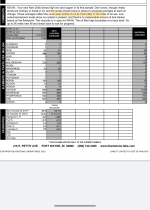
Definitely didn't intend to start a lifter/oil debate. There is plenty of that on the FB pages. My trucks are tow pigs and 50-75 percent of their usage is as such. I believe it qualifies for severe duty. I choose 5k intervals and that works out to about twice a year. Maybe I'm throwing money away, maybe not. I was able to sell my 1500 for exactly what I paid for it 7 years and 78k miles ago. I had meticulous records and the buyer was thrilled with the condition of the truck, both mechanically and physically. To each their own though.

I do think the long idle can be a factor on some trucks. My 1500 had decent idle psi, always around 50. Many others I've seen had idle pressures in the 30s. I believe one of the theories is that some areas are harder to push oil to them and thus have early failures on those lifters. Nothing I can do about that except run a decent oil and filter and cross my fingers that I'm not one of the unlucky ones.
 
My 1500 had decent idle psi, always around 50. Many others I've seen had idle pressures in the 30s. I believe one of the theories is that some areas are harder to push oil to them and thus have early failures on those lifters. Nothing I can do about that except run a decent oil and filter and cross my fingers that I'm not one of the unlucky ones.

I don't think the clearances involved can be that widely variable though, so that some get 50 and some get 30 with all else being equal. What oil did you run in your 1500?

When I was running factory 5w-20 oil and oem filter my hot idle often sunk in the high 20's, now it's in low 40's. Just from changing to better/thicker oil, and a higher quality oil filter. A lot of guys on the ramforum that switched to Redline report having higher oil pressures afterwards.
 
I don't think the clearances involved can be that widely variable though, so that some get 50 and some get 30 with all else being equal. What oil did you run in your 1500?

When I was running factory 5w-20 oil and oem filter my hot idle often sunk in the high 20's, now it's in low 40's. Just from changing to better/thicker oil, and a higher quality oil filter. A lot of guys on the ramforum that switched to Redline report having higher oil pressures afterwards.
I ran mobile 1 5w-20 with a mobile 1 filter for about the first 40k. After that switched back and forth between PUP or amsoil 5w-20 and Mopar filters. My pressures were always between 50-60.
 
Actually that's incorrect. The lifter failure is caused by the needle bearings seizing up, which means varnish/gunk/deposits in the very finicky bearings, or just a plain bad part. To mitigate that, definitely change at 5000 to 7000 depending on usage, and run a high quality synthetic (I run Redline 5w-30, Mobil 1 0w-40, and/or HPL 0w-30). The trick there high amounts of moly, and some esters in the oil as a strong detergent.
300k km of hard work on my 2011 with 5w20 never an issue.

The bearing seize due to lack of oil which the thicker oils cause and the low oil pressure at idle.
 
The 3.6 V6 Mopar uses has the EXACT same problem with the roller bearings on their rocker arms. Totally different valvetrain, oiling setup, and oil viscosity. My money is on Chrysler using a supplier for these bearings that doesn't harden the bearing parts correctly.
 
300k km of hard work on my 2011 with 5w20 never an issue.

The bearing seize due to lack of oil which the thicker oils cause and the low oil pressure at idle.

Nope, the thicker oil provides something called MOFT, which is what protects the bearing. As HTHS falls below 3.5 with thinner viscosity, it's been proven that more wear occurs exponentially. Many 30 weights keep HTHS above 3.5. Most 20 weights and under start to fall below.

There is no lack of oil anywhere in the hemi. As I said already, one lifter fails and all the other are in perfect condition; you can't describe that behaviour by saying "lack of oil", that makes no sense whatsoever.

In addition, these are positive displacement oil pumps, meaning, they pump the same volume regardless of viscosity. The oil pressure goes UP when you add a thicker oil, not down. If you're concerned about low oil pressure at idle you need to run thicker oil, not thinner.

Keep in mind that the current hemi design occurred like 20 years ago, 10w-30 was very common and oils were generally much thicker back then. The actual manuals used to call for 5w-30 and 0w-40 (still does) in the 6.4.
 
Back
Top