What's new
Ram Heavy Duty Forum

Register a free account today to become a member! Once signed in, you'll be able to participate on this site by adding your own topics and posts, as well as connect with other members through your own private inbox!

Trickle Charger On '22 Cummins

Your service advisor was right. Hook it to the battery as shown in the photo on the first page of this thread. Please note that the NEGATIVE charger terminal is correctly connected to the terminal of the IBS in the photo.

Thanks…. positive to the positive terminal and the negative to the IBS.


Sent from my iPhone using Tapatalk
 
So if we are not using a trickle charger when the truck is running, it shouldn't matter if you are on the post or the IBS, right? If this is an issue, wouldn't actually changing the batteries also cause an issue potentially? I am just not entirely sure what the problem is we are trying to solve for. I don't eat crayons but glue may be another story. :)

It supposedly matters because the IBS is still in play with the vehicle off.

Yes having dead batteries and pulling them out to charge would have the same potential issue, which is why it's recommended to charge them in the rig thru the IBS. That's not always possible and it won't strand you, just good practice.

Going to the negative terminal of the drivers side battery will also push current thru the IBS similar to an amp draw when it chargers the passenger battery.

Bottom line is that it's too easy to charge thru the IBS instead of around it.

Pretty sure I’m over thinking this, but my understanding is the system is in parallel. So, wouldn’t I need to hook up positive to one battery and negative to the other battery? Or put a tender on each battery?

The Ram service advisor told me I could hook up a tender to one battery and it will charge both.

They are in parallel so it's one battery bank. The positives are connected and the negatives are connected, which is why you don't need to hook up to both. Single alternator trucks only hook to one battery.
I’m asking this question because my truck only has 7000 miles on it and I’ve already had to replace one battery. The dealership said “the charge level on the passenger side battery was questionable.“ So, they just replaced it.

During the winter, I don’t put many miles on this truck, so I want to hook something up but I want to make sure I hook it up correctly

Thanks

If the charge level is different you likely have a bad battery. Since the system is one big battery a single bad battery will often cause the other one to fail, which is why you want to replace them in pairs. Unfortunately warranty sees it differently.

Hook it up to the IBS on the drivers side or to the passenger side terminal and you'll be good.
 
It supposedly matters because the IBS is still in play with the vehicle off.

Yes having dead batteries and pulling them out to charge would have the same potential issue, which is why it's recommended to charge them in the rig thru the IBS. That's not always possible and it won't strand you, just good practice.

Going to the negative terminal of the drivers side battery will also push current thru the IBS similar to an amp draw when it chargers the passenger battery.

Bottom line is that it's too easy to charge thru the IBS instead of around it.


They are in parallel so it's one battery bank. The positives are connected and the negatives are connected, which is why you don't need to hook up to both. Single alternator trucks only hook to one battery.


If the charge level is different you likely have a bad battery. Since the system is one big battery a single bad battery will often cause the other one to fail, which is why you want to replace them in pairs. Unfortunately warranty sees it differently.

Hook it up to the IBS on the drivers side or to the passenger side terminal and you'll be good.

Thanks for all of the clarification. Yeah, RAM would only replace the one battery of course.


Sent from my iPhone using Tapatalk
 
Doesn't the direction of the charge flow both ways? I just don't understand how the IBS can read the charge of the battery while it is off but all of the sudden a charger might make it go bonkers. I will have to read more up on this particular issue to really understand it. If the IBS won't prevent the truck from starting, and within a couple of minutes of running the IBS gets its new readings, it just seems like whatever gains (?) would be had via charging differently would be minimal. However, as you said, it is fairly easy to hook to the other side of the IBS I guess.
 
Doesn't the direction of the charge flow both ways? I just don't understand how the IBS can read the charge of the battery while it is off but all of the sudden a charger might make it go bonkers. I will have to read more up on this particular issue to really understand it. If the IBS won't prevent the truck from starting, and within a couple of minutes of running the IBS gets its new readings, it just seems like whatever gains (?) would be had via charging differently would be minimal. However, as you said, it is fairly easy to hook to the other side of the IBS I guess.
It doesn't determins the state of charge. It only measures the current going into and out of the batteries and battery temperature and sends that info to another module in the truck. Maybe the BCM. The state of charge is determined by that module using the IBS data and probably other parameters.
 
Last edited:
It doesn't determins the state of charge. It only measures the current going into and out of the batteries and battery temperature and sends that info to another module in the truck. Maybe the BCM. The state of charge is determined by that module using the IBS data and probably other parameters.
Thanks! That is very helpful.
 
Doesn't the direction of the charge flow both ways? I just don't understand how the IBS can read the charge of the battery while it is off but all of the sudden a charger might make it go bonkers. I will have to read more up on this particular issue to really understand it. If the IBS won't prevent the truck from starting, and within a couple of minutes of running the IBS gets its new readings, it just seems like whatever gains (?) would be had via charging differently would be minimal. However, as you said, it is fairly easy to hook to the other side of the IBS I guess.
At the end of the day, it doesn’t really matter how you hook up the trickle charger. If it’s hooked straight to the negative post, it’s still going to charge the battery like it normally would, and stop charging when it doesn’t need to, and the IBS will pick up on the SOC after an ignition cycle.
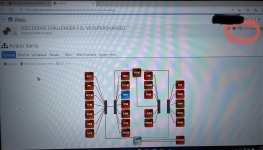
Where it really matters is when using wiTECH to do extended diagnostics, and a charger needs to be hooked up to maintain SOC during a flash. Since the BCM is receiving the IBS info, and reporting the SOC on wiTECH, if the charger is hooked up to the negative post, the IBS won’t reflect the maintained SOC. If the reported voltage drops below a certain threshold, wiTECH won’t allow the flash to be performed.
Next time I get a chance, I can get some screenshots of the difference in how the voltage is reported by having the charger on the negative post, vs the IBS post.

56F4C929-223E-4BC5-BBF7-155C04823424.jpeg
 
At the end of the day, it doesn’t really matter how you hook up the trickle charger. If it’s hooked straight to the negative post, it’s still going to charge the battery like it normally would, and stop charging when it doesn’t need to, and the IBS will pick up on the SOC after an ignition cycle.
Where it really matters is when using wiTECH to do extended diagnostics, and a charger needs to be hooked up to maintain SOC during a flash. Since the BCM is receiving the IBS info, and reporting the SOC on wiTECH, if the charger is hooked up to the negative post, the IBS won’t reflect the maintained SOC. If the reported voltage drops below a certain threshold, wiTECH won’t allow the flash to be performed.
Next time I get a chance, I can get some screenshots of the difference in how the voltage is reported by having the charger on the negative post, vs the IBS post.
Very helpful explanation and this scenario highlights the need. Thank you.
 
I have my tender hard wired to the positive post of the driver side battery and the negative to the body ground right beside the driver side battery. All this ibs talk is giving me ibs! Is mine ok? I’m now second guessing haha.

That’s exactly how mine is hooked up. I spoke to a ram technician at the dealership and he pointed out where to hook it up. He said if I hook it to the IBS I could break and it’s also a Torque specific. He said there’s no need to hook it up to that.


Sent from my iPhone using Tapatalk
 
That’s exactly how mine is hooked up. I spoke to a ram technician at the dealership and he pointed out where to hook it up. He said if I hook it to the IBS I could break and it’s also a Torque specific. He said there’s no need to hook it up to that.


Sent from my iPhone using Tapatalk
It seems to be working fine.
 
I have my tender hard wired to the positive post of the driver side battery and the negative to the body ground right beside the driver side battery. All this ibs talk is giving me ibs! Is mine ok? I’m now second guessing haha.

That’s exactly how mine is hooked up. I spoke to a ram technician at the dealership and he pointed out where to hook it up. He said if I hook it to the IBS I could break and it’s also a Torque specific. He said there’s no need to hook it up to that.


Sent from my iPhone using Tapatalk
Anywhere that isn’t directly on the battery’s negative ground post would be after the IBS, and be accounted for.
 
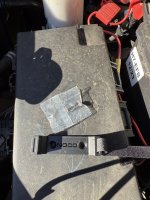
So question if I use self tapping screws to mount to the top of fuse box is that an issue if they clear everything inside? The NOCO 12v 2a only comes with a screw on mount with self tappers.
 

Attachments

  • IMG_0472.jpeg
    IMG_0472.jpeg
    763.9 KB · Views: 16
Use double sticky back tape.
Too late I just sent it. There is a dead zone inside the box with no fuses or relays I measured it out on the lid and mounted it. No issues as the box isn’t sealed water tight anyway and the mount has the screw heads countersunk. With the screws in there is still almost 2 1/2 inches from the tips to the fuse mount plate.
 
Too late I just sent it. There is a dead zone inside the box with no fuses or relays I measured it out on the lid and mounted it. No issues as the box isn’t sealed water tight anyway and the mount has the screw heads countersunk. With the screws in there is still almost 2 1/2 inches from the tips to the fuse mount plate.

The box was water tight where it counts, top down… but it likey will be fine if you’re careful if you ever rinse the dust off with a hose.
 
So question if I use self tapping screws to mount to the top of fuse box is that an issue if they clear everything inside? The NOCO 12v 2a only comes with a screw on mount with self tappers.
Too bad but too late I guess. Engine compartment IS NOT waterproof!
On my 2015 I've had a partially plugged up heater core (fixed it now) and the 1st winter I've had it I ended up bungee strapping a power inverter to the top of the drivers side battery - there was enough room in there, and then running a power cord through a firewall inside the cab and running a small space heater blowing on the windshield to keep it from freezing. Guess what happened? Whenever it wasn't freezing and was raining, the inverter would get wet and quit working, there's no seal that seals the hood shut all the way around and I think the water was making their way in above the headlight splashing onto the inverter.

I didn't try to compare the seals between my 2015 and 2019 to see if it would have worked there but I just wouldn't advise it. Your Fuse box lid has now holes in it and if gets wet, it would wreck havoc with electrical. For the same reason this is a bad spot to install a NOCO charger unless it's water tight, which I think they might be.
 
Too bad but too late I guess. Engine compartment IS NOT waterproof!
On my 2015 I've had a partially plugged up heater core (fixed it now) and the 1st winter I've had it I ended up bungee strapping a power inverter to the top of the drivers side battery - there was enough room in there, and then running a power cord through a firewall inside the cab and running a small space heater blowing on the windshield to keep it from freezing. Guess what happened? Whenever it wasn't freezing and was raining, the inverter would get wet and quit working, there's no seal that seals the hood shut all the way around and I think the water was making their way in above the headlight splashing onto the inverter.

I didn't try to compare the seals between my 2015 and 2019 to see if it would have worked there but I just wouldn't advise it. Your Fuse box lid has now holes in it and if gets wet, it would wreck havoc with electrical. For the same reason this is a bad spot to install a NOCO charger unless it's water tight, which I think they might be.
It’s not that bad. The fuse box cover was never watertight to begin with. Two self tapping screws going into a countersunk bracket are going to have a pretty tight seal against anything but a pressure washer and guess what if your spraying your fuse box with that water is going to intrude anyway. Just to be on the safe side I took somebody else’s suggestion backed them off a little raised the bracket and squeezed some permatex black under it then tightened it back down.
 
Back
Top