
Ram Heavy Duty Forum
You are using an out of date browser. It may not display this or other websites correctly.
You should upgrade or use an alternative browser.
You should upgrade or use an alternative browser.
Please Post Payload Sticker from Driver's Door Jamb.
- Thread starter Stumblefoot
- Start date

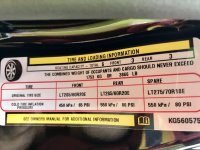

This is why I want to see my dream package.Here is my payload sticker. Description of the truck is in my signature.View attachment 263
The OUTDOORSMAN...
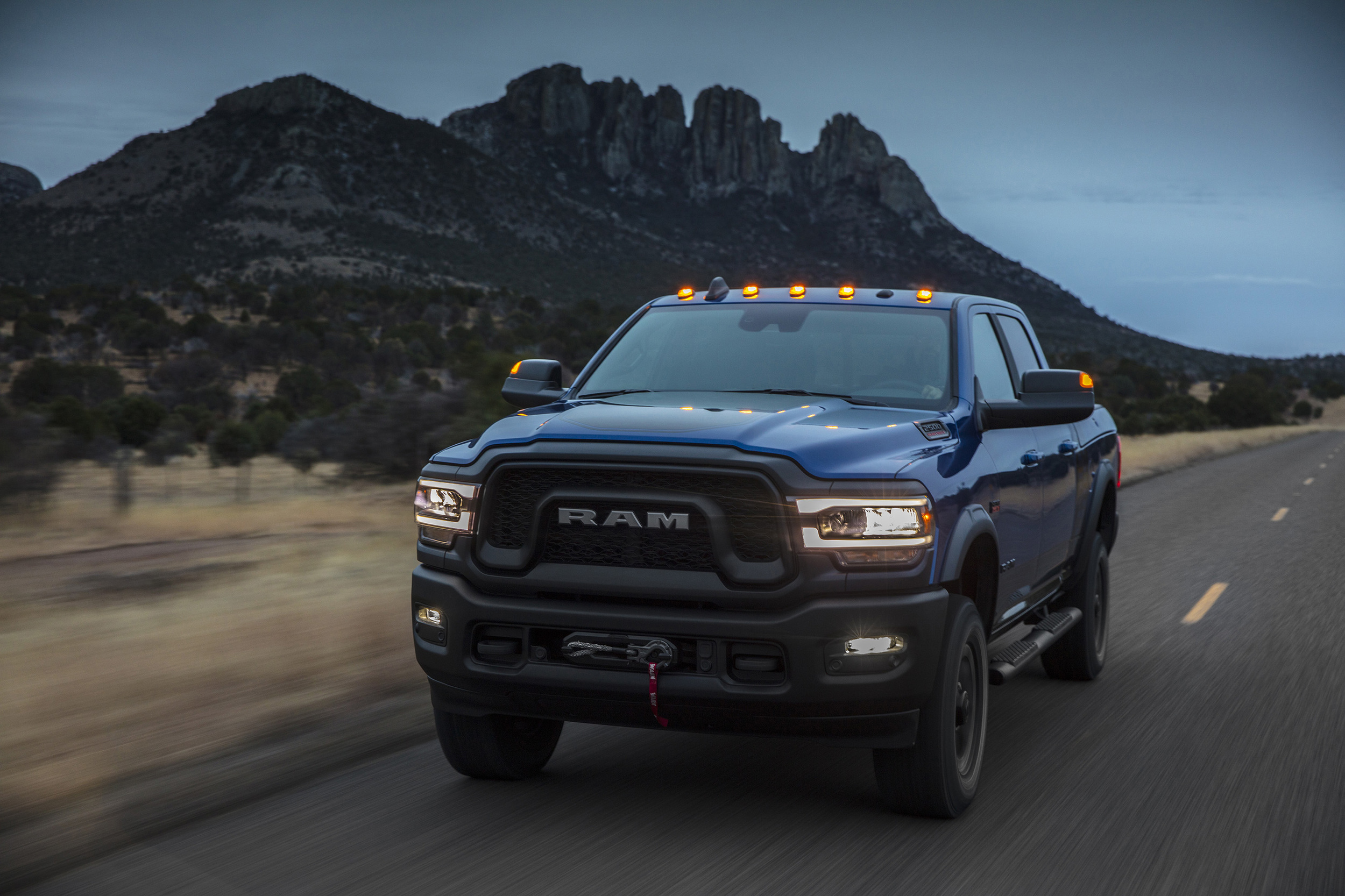
Outdoorsman Package.
The original outdoorsman package never really seemed substantial to me. I want a Powerwagon but don't want to give up payload and towing. So, since the 2018 already has the offroad package(still missing an eLocker rear) I would like to see Ram add some substance into that package. Originally...
 hdrams.com
Or they could go back to their History...call it the PROSPECTOR or the TRAILDUSTER.
I see people towing large travel trailers with the Powerwagon all the time.
I always envision the conversation going like this...Me...Hey, you got alot of squat there. PW...yeah. the wdh barely did anything. Me...do you realize how overloaded you are? PW...this thing has 3000lbs of payload and 17000lbs of towing. ME...nope, 1100 and about 7000 usable lbs of towing.
PW...gulp, but it tows it like it isn't back there.
Off road, doing work...throw all you want at it...it is a Heavy Duty workhorse...heading down the highway...might want to think twice.
Ramajama over at the 5th Gen site has a great camping setup with his Powerwagon. It can be done...but he did his homework with an open mind.

texas.yankee
Active Member
- Messages
- 156
- Reaction score
- 110
- Points
- 43
2500 Longhorn diesel with everything except snow and ramboxes. It hurts so good.


Joe2bear
Member
- Messages
- 43
- Reaction score
- 16
- Points
- 8
Why is everyone so bummed about their arbitrary door sticker?
The capability has always been (and always will) be based on the RAWR and FAWR. As that is how your axle, suspension, brakes , tires and wheels are set up to handle.
10k is simply a DOT registration number (Payload sticker), not the capability of the truck.
The capability has always been (and always will) be based on the RAWR and FAWR. As that is how your axle, suspension, brakes , tires and wheels are set up to handle.
10k is simply a DOT registration number (Payload sticker), not the capability of the truck.

jpaeth
Well-Known Member
- Messages
- 182
- Reaction score
- 272
- Points
- 63
I think at some level we would like to be able to LEGALLY operate our vehicles on the road. Yeah, I've put more than is on my door sticker in the bed of my 1/2-ton truck and lived to tell the tale... but at the end of the day, if I'm going to be towing big and heavy for long distances of highway, I want to be legal.Why is everyone so bummed about their arbitrary door sticker?
The capability has always been (and always will) be based on the RAWR and FAWR. As that is how your axle, suspension, brakes , tires and wheels are set up to handle.
10k is simply a DOT registration number (Payload sticker), not the capability of the truck.
Why is everyone so bummed about their arbitrary door sticker?
The capability has always been (and always will) be based on the RAWR and FAWR. As that is how your axle, suspension, brakes , tires and wheels are set up to handle.
10k is simply a DOT registration number (Payload sticker), not the capability of the truck.
GAWR
Front 5775
Rear. 6000
Base weight
Front 4627.74
Rear. 2857.15
Capacity
Front 1147.26
Rear. 3142.85
So both axles together give 11775
Capacity is 4290.11
Now this is for a base truck...so a loaded Longhorn or limited are going to be much less.
And my guess is some other component takes away from GAWR.
My usual explanation is you have a receiver hitch rated at 18000, a hitch rated at 13000, but you got a 5000 lb. Ball....5000 is your limit.
But even at GAWR....there isn't much more capacity.
Legal stories have been all over.
I now also found that Pennsylvania law says a trailer over 10k means a Class A CDl(non-commercial)
I guess we never know what will be the law when we get busted...but I plan to be close at least


Gondul
Prince of Pintops
- Messages
- 1,738
- Reaction score
- 1,614
- Points
- 113
Why is everyone so bummed about their arbitrary door sticker?
The capability has always been (and always will) be based on the RAWR and FAWR. As that is how your axle, suspension, brakes , tires and wheels are set up to handle.
10k is simply a DOT registration number (Payload sticker), not the capability of the truck.
Can you please explain why you think the sticker is 'arbitrary'?

Don-T
Active Member
- Messages
- 267
- Reaction score
- 244
- Points
- 43
The GVW rating is certainly not arbitrary (random, chosen on a whim). It is a number set for class two trucks by the federal government. The manufacturers decide whether they want to build to the requirements for the class and if they do the truck is rated accordingly. I don’t see why people have any issues with it as everyone who does their research knows the 2500 with a Diesel engine will have low capabilities due to their curb weight. I myself would not buy a 2500 unless I were getting one with a gasoline engine. Since I want the Diesel engine to pull my camper, I have a 3500 truck which is limited to 14k pounds instead of 10k pounds. I would ask why the manufacturers even build 2500s with Diesel engines but I am sure the reason is - People will buy them, it is not the manufacturers concern what people due with them. That is until you need warranty work.Why is everyone so bummed about their arbitrary door sticker?
The capability has always been (and always will) be based on the RAWR and FAWR. As that is how your axle, suspension, brakes , tires and wheels are set up to handle.
10k is simply a DOT registration number (Payload sticker), not the capability of the truck.
D
Deleted member 80
Guest
14K with a SRW?
Don-T
Active Member
- Messages
- 267
- Reaction score
- 244
- Points
- 43
That is what I get for typing before I have my coffee. I meant to say class three truck insted of class two which is rated to 10k pounds. My truck is actually rated to 12,300. The payload rating is 3719 pounds. If I ordered a truck similarly equipped but class two the payload would be somewhere around 1400 pounds as the truck weighs over 8600 pounds.14K with a SRW?
My point is people really should do their homework before ordering/buying and get the right truck.
2 1/2 years ago I was told by a Texas DPS trooper that they have the authority to stop and weigh any vehicle they believe may be overloaded. They can have scales delivered to their location to weight the vehicle in question and if found over any of the ratings the truck can be impounded until the load is corrected. I asked him if anyone was ever caught and impounded and he said one time but it was a 1/2 ton pickup with the rear bumper nearly on the ground.
He also told me when he stops a pickup pulling a camper he checks the GVW tags on the truck and trailer and if they are over 26k pounds and the driver doesn’t have a Class A license the vehicle gets parked or towed and the driver gets ticketed for improper license. He said he has done that many times as he is the resident officer in Livingston Tx which is a big RV town as Escapees is there.
Last edited:
Joe2bear
Member
- Messages
- 43
- Reaction score
- 16
- Points
- 8
Can you please explain why you think the sticker is 'arbitrary'?
To Clarify, the RAWR and FAWR are what the vehicle is set up to handle and should never be exceeded. The 10k is arbitrary, the proof is in the set ups they can use (Reg cab, crew cab, mega cab) but they all use the same 10k weight waiting even though they weigh different and have the same exact set up (Frame, brakes, axles etc). The RAWR and FAWR (Some axles weight rating difference can be upwards to a 1000 pounds) all change depending on set up and changes the GCVWR. These numbers simply cannot change while the all 10k class remains the same. Regarding if its legal, there are too many stories on that subject. It would also be hard to prove you are driving unsafe if you are under your RAWR and FAWR ratings.
10k is simply a means of DOT regulation for registration purpose to keep the truck in its class. Hence why you get a 3500 truck (With the same frame, axle, brakes, tries and rims) with the a higher payload capacity due to the class restriction. Ram might not be the best example of this, but Ford 250 and 350 are virtually the same, from top to bottom. The difference is maybe one leaf spring, in which an overload spring can easily make that even. But your still at a 10k payload, compared to their 12500 (3500). . There is always room on a 2500 for payload. 3500 not so much. Payload for that truck is typically where you should be on a 3500.
Last edited:
And now I am more confused as to what the arbitrary thought is.
A Ram 2500 and 3500 are very different components in the suspension...the dually obviously being more. A 3500 to 4500 is even more different component wise.
And yes all the trucks have similar GVWR, because they share components...2500 to 2500. 3500 to 3500. And then each individual truck has a completely different payload capacity due to cabs, beds, options etc.
Yes. There is capacity left in the truck. But. That 10000 GVWR isn't arbitrary. For the truck to perform safely under various driving scenarios this is what is decided.
I can get a Dakota to pull what my 2500 does...but it sure isnt safe and definitely would not be legal.
And a person who has a truck and lives near sea level in the flat...they could easily overload the truck...but someone who lives at altitude towing up and down grades, will probably have to be close to capacity, or even under.
As with everything YMMV, and only you can decide what is safe and comfortable for your decision.
Good times for payload and capacity...some semi trucks a decade or so ago couldn't do what these RAM trucks are doing today.
A Ram 2500 and 3500 are very different components in the suspension...the dually obviously being more. A 3500 to 4500 is even more different component wise.
And yes all the trucks have similar GVWR, because they share components...2500 to 2500. 3500 to 3500. And then each individual truck has a completely different payload capacity due to cabs, beds, options etc.
Yes. There is capacity left in the truck. But. That 10000 GVWR isn't arbitrary. For the truck to perform safely under various driving scenarios this is what is decided.
I can get a Dakota to pull what my 2500 does...but it sure isnt safe and definitely would not be legal.
And a person who has a truck and lives near sea level in the flat...they could easily overload the truck...but someone who lives at altitude towing up and down grades, will probably have to be close to capacity, or even under.
As with everything YMMV, and only you can decide what is safe and comfortable for your decision.
Good times for payload and capacity...some semi trucks a decade or so ago couldn't do what these RAM trucks are doing today.
Joe2bear
Member
- Messages
- 43
- Reaction score
- 16
- Points
- 8
And now I am more confused as to what the arbitrary thought is.
A Ram 2500 and 3500 are very different components in the suspension...the dually obviously being more. A 3500 to 4500 is even more different component wise.
And yes all the trucks have similar GVWR, because they share components...2500 to 2500. 3500 to 3500. And then each individual truck has a completely different payload capacity due to cabs, beds, options etc.
Yes. There is capacity left in the truck. But. That 10000 GVWR isn't arbitrary. For the truck to perform safely under various driving scenarios this is what is decided.
I can get a Dakota to pull what my 2500 does...but it sure isnt safe and definitely would not be legal.
And a person who has a truck and lives near sea level in the flat...they could easily overload the truck...but someone who lives at altitude towing up and down grades, will probably have to be close to capacity, or even under.
As with everything YMMV, and only you can decide what is safe and comfortable for your decision.
Good times for payload and capacity...some semi trucks a decade or so ago couldn't do what these RAM trucks are doing today.
Just to clarify, I was talking about DOT/ Registration versus what the truck is built to do (or can do potentially). You can actually take a 2500 to a DOT inspection and get the payload increased, you just fall into a higher registration class, so its definitely not about safety if you are staying within the RAWR and FAWR. its about the compliance with the class. But manufactures do not build these trucks trying to build only to that number (10k), that would actually be costly to do because the fames, axles, suspension, brakes, tires and wheels would have to be different from their counter part (3500 SRW), which they are not (With the exception of the suspension of a Ram 2500 with the coil springs versus leaf springs, but that rating is shown on the RAWR and FAWR).
The example I used was F250 to F350 (as an easier example), as they are actually the same axle (Depending on package, Sterling versus Dana), brakes, tires, wheels and sometimes (Depending if you get the camper package) springs. But their payload is set to 10k versus 12300 (350), I believe the camper package adds a leaf spring to the 250 in which makes it exactly the same exact truck as a F350 (GVWR becomes the same). Not to confuse it further, but if you go the manufactures website of the axles for Sterling and Dana. Their rating is actually close to 10k per axle (20k), way beyond what the RAWR and FAWR (6k and 6040). in which proves that rating is not Based on the axle itself but ALL of the components. The Sterling and Dana are very close in weight rating from each other, I think maybe a 500-1000 pound difference.
To answers your question about 3500 to 4500. I believe Ford uses the same frame across all those platforms (Not sure about Ram), the difference is in the bed configuration, axles. I think possibly the 450 has bigger brakes than its counterparts but I could be wrong about that. But I wouldn't let people believe that 10k number on a 2500 is the safe limit, its not. The safe limit is their RAWR and FAWR, that combined on a 2019 Big Horn Megacab 4X4 (For example) is 12040. That weight rating takes into account the brakes, axles, suspension, tires and wheels. This has been a big subject of debate and many have clarified this about what the 10k rating is actually meant for.
orlando bull
Well-Known Member
- Messages
- 241
- Reaction score
- 344
- Points
- 63
Everyone has to make their own decision on what is important to them. The 10k GVWR is indeed arbitrary in the 2500. The truck is capable of more and is limited by a classification. Some places have (much) higher registration fees for a truck over 10k. Across the board, Ford, GM, Ram all have this same magical 10k number in their 3/4 ton trucks.
I haven't researched the 19s, but, when I was starting my initial research on an HD truck, I looked at the 18s and everything I found said that the ONLY difference in the 2500-3500 was the rear springs. Same axles, same frame, everything. Springs are obviously a huge thing... I personally think that Ram went to the coil springs to improve ride because of the 10k limit. They knew that if people used the truck only up to that limit, then, the ride would be better than leaf springs. Certainly the truck can go with more weight, but, the coils are not as stiff and could cause issues at some point.
For me personally, I was pulling 7000lb plus with my F150 and it was uncomfortable. I never weighed it, but, I suspect that loaded for camping, I was over my GVWR. At the end of the day, with my whole world in the truck (wife, toddler, and twins on the way), I felt an immense pressure of being over loaded. I went 3500 because I didn't want to upgrade trailers in a few years and find myself right back there wondering if I was overloading my truck. A 2500 would have done anything and everything that I needed it to do today, but, after making one mistake with my last truck, I didn't want to risk doing it again.
(and honestly, I didn't feel a huge difference in unloaded ride when I test drove both)
I haven't researched the 19s, but, when I was starting my initial research on an HD truck, I looked at the 18s and everything I found said that the ONLY difference in the 2500-3500 was the rear springs. Same axles, same frame, everything. Springs are obviously a huge thing... I personally think that Ram went to the coil springs to improve ride because of the 10k limit. They knew that if people used the truck only up to that limit, then, the ride would be better than leaf springs. Certainly the truck can go with more weight, but, the coils are not as stiff and could cause issues at some point.
For me personally, I was pulling 7000lb plus with my F150 and it was uncomfortable. I never weighed it, but, I suspect that loaded for camping, I was over my GVWR. At the end of the day, with my whole world in the truck (wife, toddler, and twins on the way), I felt an immense pressure of being over loaded. I went 3500 because I didn't want to upgrade trailers in a few years and find myself right back there wondering if I was overloading my truck. A 2500 would have done anything and everything that I needed it to do today, but, after making one mistake with my last truck, I didn't want to risk doing it again.
(and honestly, I didn't feel a huge difference in unloaded ride when I test drove both)
ghaynes754
Member
- Messages
- 51
- Reaction score
- 68
- Points
- 18
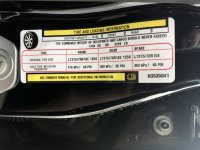
3500 Longhorn MegaCab. Sunroof, Diesel, 66RFE, SRW pretty much all options other than the air suspension. Sticker is accurate according to my trip to the CAT scales.
3500 Longhorn MegaCab. Sunroof, Diesel, 66RFE, SRW pretty much all options other than the air suspension. Sticker is accurate according to my trip to the CAT scales.
View attachment 335
Ramboxes?
ghaynes754
Member
- Messages
- 51
- Reaction score
- 68
- Points
- 18
No ram boxes.
Gondul
Prince of Pintops
- Messages
- 1,738
- Reaction score
- 1,614
- Points
- 113
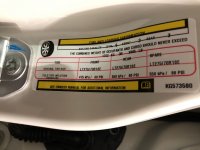
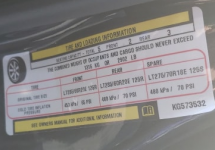
Courtesy of the dealer here is my payload sticker... quite happy with the payload.
I intentionally went light on the build to make sure that even if I loaded the TT up to it's GVWR, I would still have enough payload for everything that is going in the truck.
2019 RAM 2500 Limited | Maximum Steel | 4x4 | 6.4L | 6'4" bed | ASD | 20" wheels | Level 1 Package | 3.73 gears | Tow Technology Group
I intentionally went light on the build to make sure that even if I loaded the TT up to it's GVWR, I would still have enough payload for everything that is going in the truck.
2019 RAM 2500 Limited | Maximum Steel | 4x4 | 6.4L | 6'4" bed | ASD | 20" wheels | Level 1 Package | 3.73 gears | Tow Technology Group